 Poland · 13th century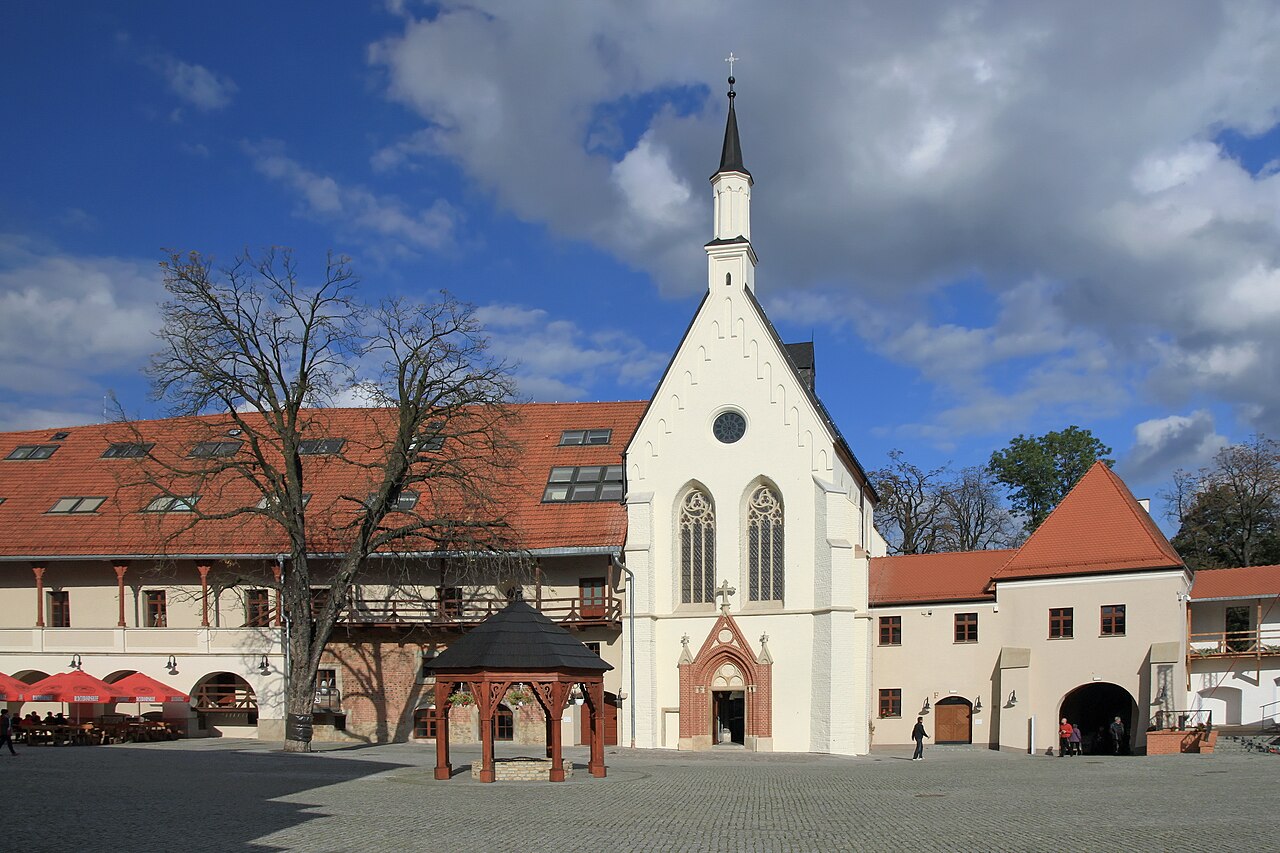
Racibórz Castle is a stronghold mentioned in Gesta principum Polonorum of Gallus Anonymus in an entry dated to the year 1108. The first brick sections were likely built around the mid-13th century.
It is speculated that the first mention of the Racibórz stronghold dates back to around 845 in a text known as the Bavarian Geographer. It mentions the Golensizi tribe inhabiting the Upper Oder Basin, which had five strongholds. Based on research, it is presumed that one of these strongholds was Racibórz. It is also assumed that it could have been Eburium, the legendary capital of the Quadi. The Latin work Commentarius belli adversum Turcas ad Viennam... by Wespazjan Kochowski, which discusses John III Sobieski's expedition to Vienna, describes the 24th of August, the day when the king arrived at the Racibórz Castle, as follows:From Tarnowskie Góry through Gliwice and Rudy, marching along the road amidst forests to Racibórz, where once was the capital of the Quadi, and later the seat of Polish princes of royal blood, where after passing through, heavy troops were left under the care of Hetman Jabłonowski, and the king, along with a strong army, swiftly entered Austrian territory.Wespazjan Kochowski also mentions Racibórz in the poem Dzieło Boskie albo Pieśni Wiednia wybawionego published in 1684, where in chapter XLVII one can read:Here [in Tarnowskie Góry] briefly pausing, he [the king] moved where the Quadi once had their capital in Racibórz, from there through the Moravian mountains leading into the land of the Marcomanni, further to Olomouc (...)F.A. Larisch, a German regionalist, believed that Claudius Ptolemy mentioned Racibórz.
Władysław K. Zieliński also mentions this in his work Szląsk (pruski) słowem i ołówkiem na podstawie najnowszych źródeł przedstawiony published in 1889:According to Count Larisch, Racibórz was already known as Eburium under Ptolemy, as the capital of the Buri of the tribe of the Suevi [which was the name for the Quadi who invaded Italy and Spain]. This name was probably transformed by the later Slavic inhabitants into Hrad-Ebur or Hrad-Ibur, from which the present name Racibórz (Hrad-Rad-Rac-ibor) originated.
Around the year 1000, there was supposed to be a border fortress in Racibórz. Around 1038, the Racibórz fortress, like the entire Silesia, fell under Czech rule.
Text adapted from “Racibórz Castle” on Wikipedia, CC BY-SA 4.0.
Racibórz Castle ranks #4,280 of 9,035 worldwide in the atlas's castle fame ranking, and #163 of the 397 mapped in Poland. Founded c. 1250, it is older than 67% of the atlas's dated landmarks, one of 1090 atlas entries founded in the 13th century. The nearest day-trip guide is Rybnik, 20 km away. See how Poland compares in the castle statistics.
View on the interactive castle map →