 Poland
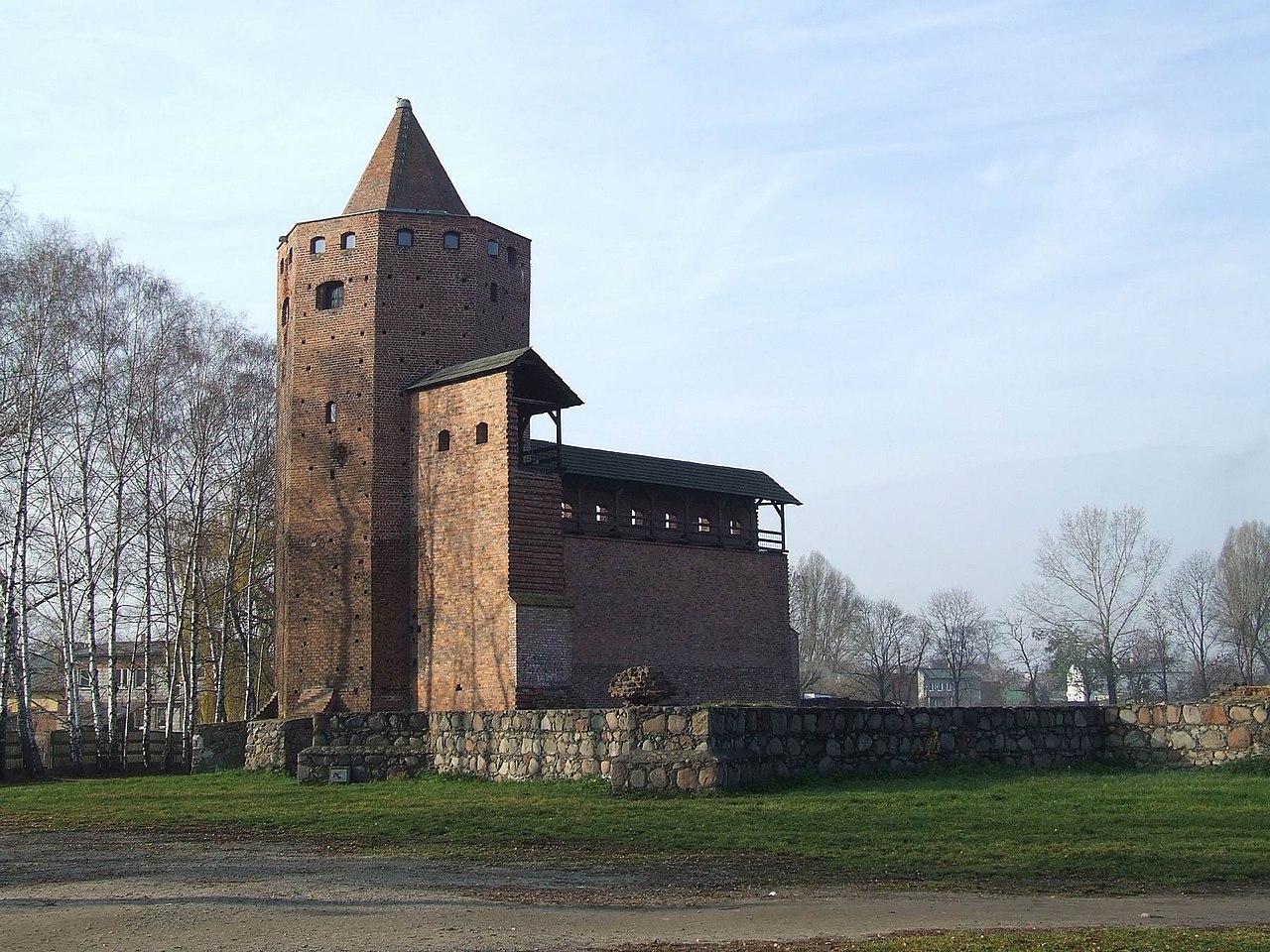
Rawa Mazowiecka Castle ranks #6,442 of 9,040 worldwide in the atlas's castle fame ranking, and #244 of the 397 mapped in Poland. The nearest day-trip guide is Warsaw, 73 km away. See how Poland compares in the castle statistics.
Rawa Mazowiecka Castle (Polish: Zamek w Rawie Mazowieckiej) is a Gothic architectural style square formation castle located in Rawa Mazowiecka, in the lowlands of the river Rawka and the river Rylka. Currently it is a renovated ruin. It was renovated after the 1958 hurricane, which partially destroyed the whole castle, before the renovation there was only the tower, after the renovation, the structure was rebuilt.
According to the scriptures of Jan Długosz, the castle was built by Casimir III the Great, and the stronghold's function was to protect the southern borders of Masovia.
In 1562, the parliament in Piotrków designated Rawa as the seat of the Tax Commission for the army, and therefore the so-called the Rawa treasury for the needs of the army established by Sigismund II Augustus. During this period, the castle was also the seat of the starosta of Rawa, municipal courts were held there and archives were located there.
In 1601, the Swedish general Carl Carlsson Gyllenhielm, the illegitimate son of Prince Charles of Suderman (who later became King of Sweden as Charles IX Vasa), was imprisoned in the Rawa Castle. Gyllenhielm commanded the Swedish army, which capitulated in 1601 at the Battle of Kokenhausen, fought against Polish troops. Until he was exchanged for Prince Karol Korecki in 1613, he was in Polish captivity, where for six and a half years he walked in chains, which today hang in his tomb in the cathedral in Strängnäs. During the Swedish invasion of Poland, the castle was captured by the enemy in 1655, plundered and partially blown up. In 1665 king John Casimir stayed in the castle, and troops loyal to him were stationed near the city during the Lubomirski Rebellion.
Text adapted from “Rawa Mazowiecka Castle” on Wikipedia, CC BY-SA 4.0.
View on the interactive castle map →