 Germany · 12th century
Ronneburg Castle ranks #4,413 of 9,040 worldwide in the atlas's castle fame ranking, and #360 of the 714 mapped in Germany. Founded 1200, it is older than 75% of the atlas's dated landmarks, one of 763 atlas entries founded in the 12th century. Its Wikipedia articles were opened 2,372 times in the last 60 days, more than 73% of the atlas. 4 more atlas landmarks stand within 25 km. The nearest day-trip guide is Frankfurt, 31 km away. See how Germany compares in the castle statistics.
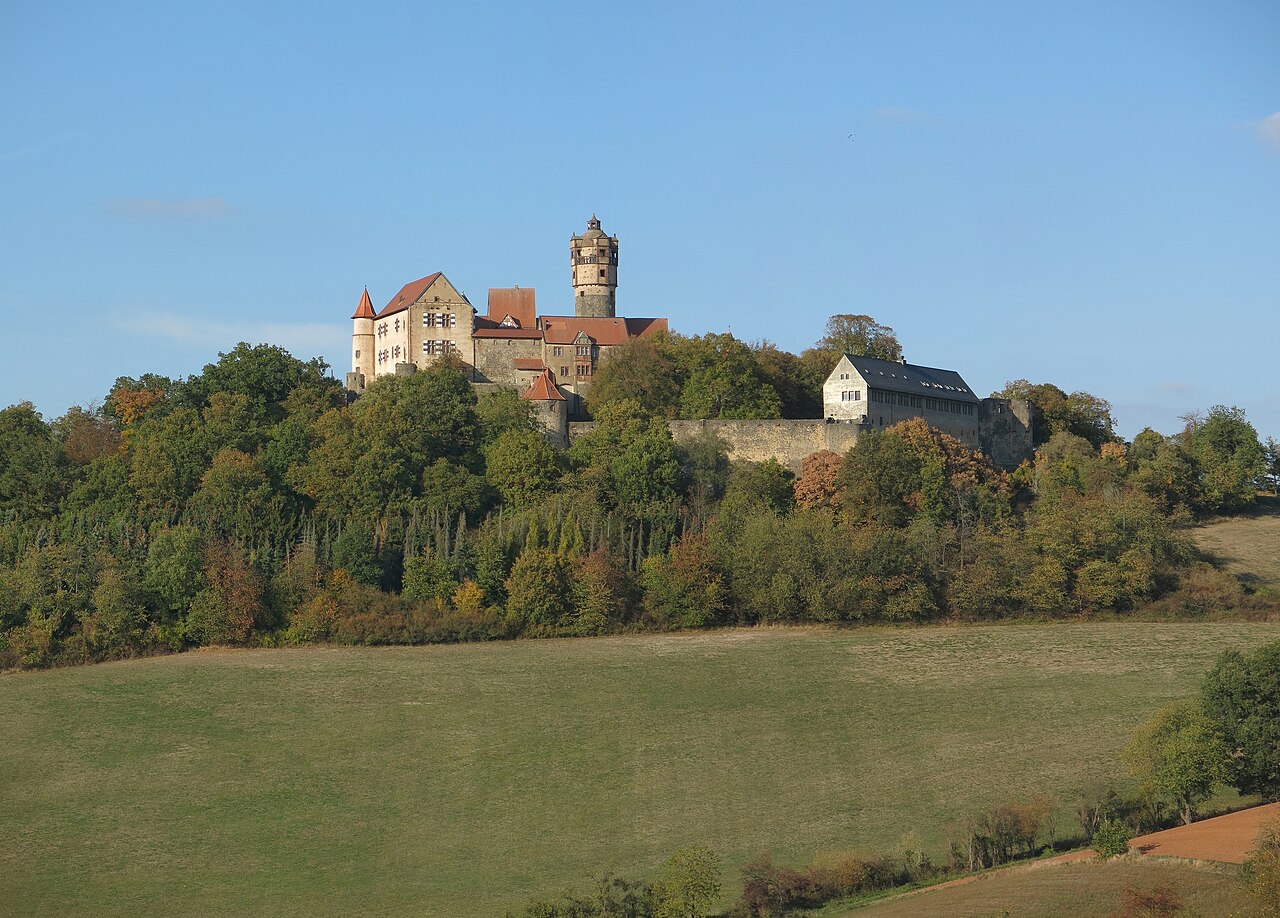
Ronneburg Castle (German: Burg Ronneburg) is a castle in Ronneburg in the Main-Kinzig district of Hesse, Germany. It is a hilltop castle situated near the near Altwiedermus village on a steep basalt cone. Its position makes it visible from afar. It lends its name to the Ronneburg hill country.
Originally founded in the 13th century as a Mainz castle to secure the territory, Ronneburg Castle came under the ownership of the Ysenburgs in 1476. Its greatest significance was in the 16th century when it served as the residence of the Ysenburg-Büdingen-Ronneburg collateral line. The castle showcases Renaissance architecture, including the distinctive domed helmet of the keep, the Zinzendorf Building, and the New Bower. During the Thirty Years' War, the core castle was substantially damaged by fire, and a few years later, it was plundered. Subsequently, Ronneburg Castle lost its role as a fortress and noble seat, becoming a refuge for social fringe groups like the Moravian Brethren. Its status as a historical monument was acknowledged around 1900. The well-preserved medieval and early modern castle buildings have since made it a popular regional excursion destination
Text adapted from “Ronneburg Castle” on Wikipedia, CC BY-SA 4.0.
View on the interactive castle map →