 Austria · 17th century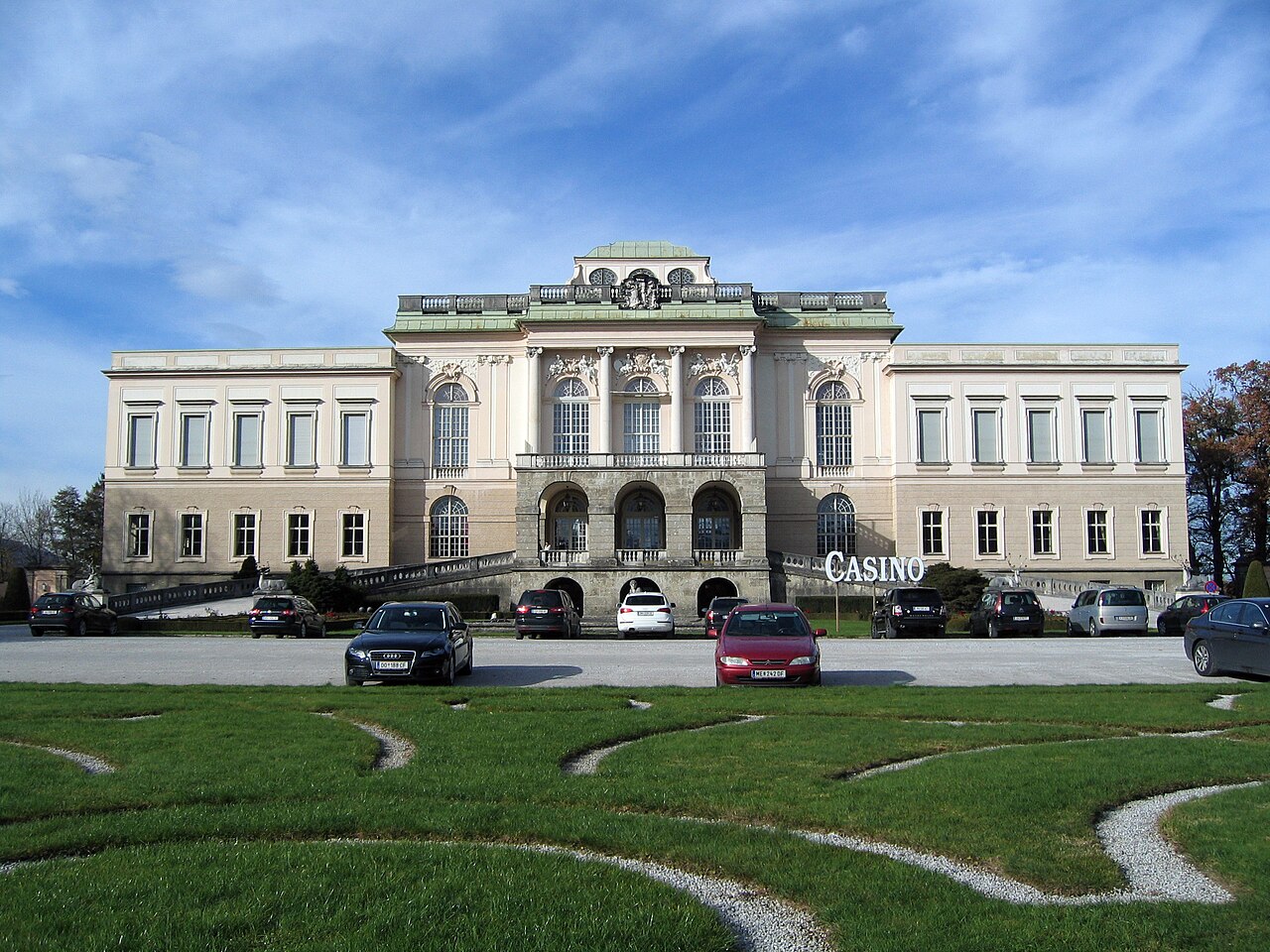
Schloss Klessheim is a Baroque palace located in Wals-Siezenheim, 4 km (2.5 mi) west of Salzburg, Austria. The palace was designed and constructed by Austrian architect Johann Bernhard Fischer von Erlach for Prince-Archbishop Johann Ernst von Thun in 1700. It became the summer residence of the Archbishops of Salzburg. Since 1993, the palace has been used by Salzburg Casino.
In the late 17th century, Prince-Archbishop Johann Ernst von Thun purchased the small aristocratic estate and Kleshof manor house at this site. In 1700, he commissioned Austrian architect Johann Bernhard Fischer von Erlach to expand the manor house and construct an elegant palace. Influenced by the north Italian Mannerist style, Fischer von Erlach worked on the palace, which was called Lustschloss Favorita, between 1700 and 1709. Construction was interrupted following the archbishop's death in 1709. His successor, Archbishop Franz Anton von Harrach cancelled work in favor of Schloss Mirabell. Schloss Klessheim was completed in 1732 under Archbishop Count Leopold Anton von Firmian, who curtailed the original plans significantly.
The completed palace contained a ceremonial hall with an extended terrace and ramp leading to the gardens, an entrance with an impressive Triton Fountain, a loggia and an entrance hall and staircase. The interior stucco work was done by Paolo d'Allio and Diego Francesco Carlone, according to plans by Fischer von Erlach.
In the late 18th century, an English landscape garden was added under the rule of Archbishop Count Hieronymus von Colloredo. After Salzburg's secularisation in 1803, Klessheim Palace fell to the Austrian House of Habsburg-Lorraine. In 1866 it became the permanent residence of Archduke Ludwig Viktor of Austria (1842–1919), a younger brother of Emperor Franz Joseph I. The archduke had the palace extended according to plans designed by Heinrich von Ferstel and died here in 1919. His Habsburg heirs sold the palace to the Austrian state of Salzburg.
After the Austrian Anschluss in 1938, Adolf Hitler, when staying at his nearby Berghof residence, used Schloss Klessheim for conferences and to host official guests like Benito Mussolini, Miklós Horthy, Ion Antonescu, Jozef Tiso and Ante Pavelić.
Text adapted from “Schloss Klessheim” on Wikipedia, CC BY-SA 4.0.
Schloss Klessheim ranks #1,015 of 9,079 worldwide in the atlas's castle fame ranking, and #20 of the 240 mapped in Austria. Founded 1690, it is older than 22% of the atlas's dated landmarks — one of 721 atlas entries founded in the 17th century. Its Wikipedia articles were opened 7,077 times in the last 60 days, more than 90% of the atlas. 11 more atlas landmarks stand within 25 km. The nearest day-trip guide is Salzburg, 4 km away. See how Austria compares in the castle statistics.
View on the interactive castle map →