 Romania · 18th century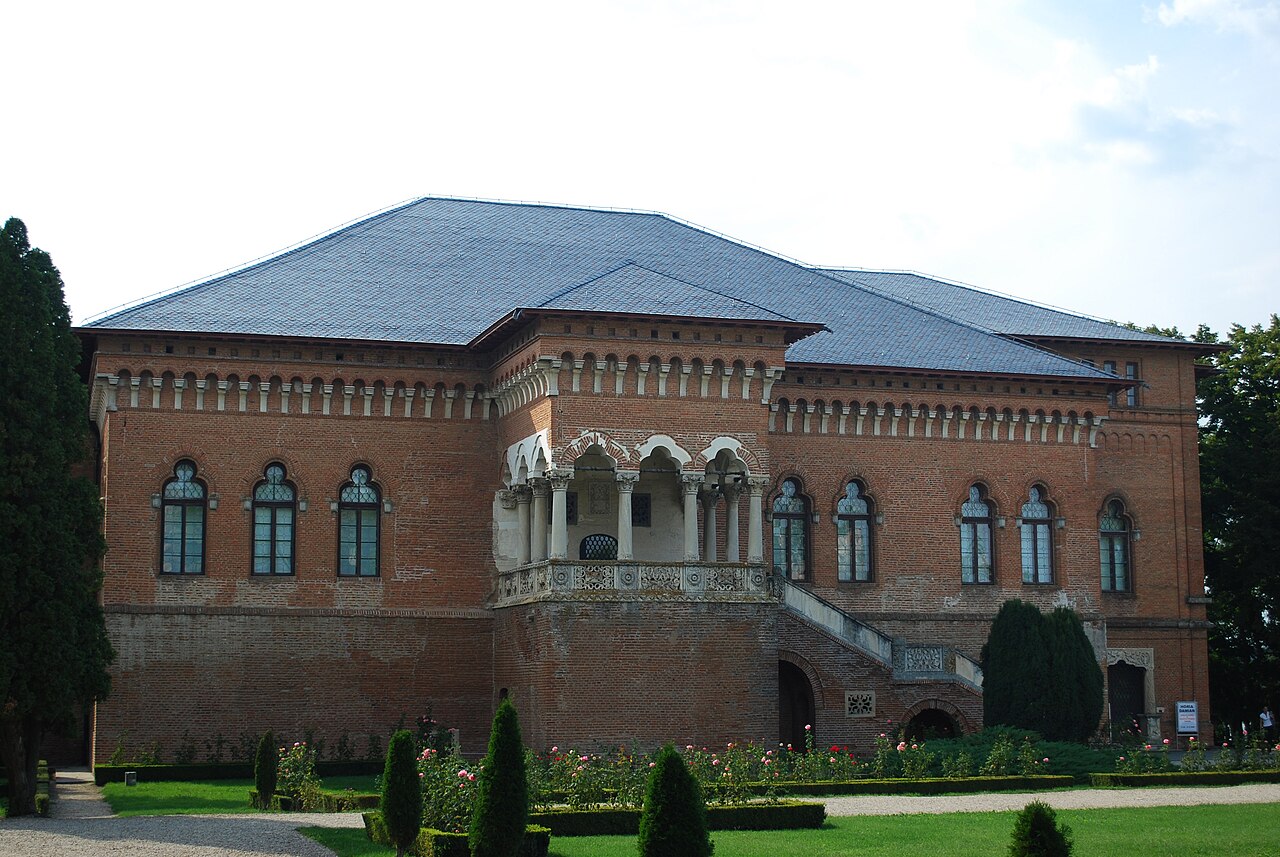
Mogoșoaia Palace (Romanian: Palatul Mogoșoaia, pronounced [paˈlatul moɡoˈʃo̯aja]) is situated about 10 kilometres (6.2 mi) from Bucharest, Romania. It was built between 1698 and 1702 by Constantin Brâncoveanu in what is called the Romanian Renaissance style or Brâncovenesc style. The palace bears the name of the widow of the Romanian boyar Mogoș, who owned the land it was built on.
After 1714, when Constantin Brâncoveanu was executed with his entire family in Constantinople, all the family's wealth was confiscated by the Ottomans and the palace was converted into an inn. Rebought by Prince Ștefan Cantacuzino, he returned it to Brâncoveanu's grandson Constantin, and remained with the family until the early nineteenth century.
The palace was devastated by the Ottomans during the Russo-Turkish War of 1768–1774. It was later granted by prince Grigore to his daughter, Zoe Mavrocordat, who had married George D. Bibescu, sovereign Prince of Wallachia. The palace remained within Bibescu family and was renovated by Nicolae Bibescu.
In November 1916, during the Romanian Campaign of World War I, the palace at Mogoșoaia was bombed by the German air forces.
Bought from Marie-Nicole by her cousin (and head of the princely house), Prince George Bibesco, the palace was given to his wife, Princess Martha. He later deeded the land to her, too. Martha spent her private fortune for the reconstruction. In the late 1920s and the 1930s, the palace became the meeting place for politicians and for the international high society.
When Prince George died in 1941, he was buried in the small, white 1688 church on the grounds of the palace.
During World War II, Prince Antoine Bibesco (a cousin of George Bibesco) and his wife Elizabeth Bibesco refused to flee the country. When Elizabeth died of pneumonia on April 7, 1945, she was buried in the Bibesco family vault on the grounds of Mogoșoaia. Neither Elizabeth Bibesco's husband, Antoine, nor George Bibesco's wife, Martha, could be buried beside them, as they both died during the Communist regime. After 1945, the palace was forcibly nationalized by the communist authorities, and the owners, Valentina and Dimitrie Ghika-Comănești, were arrested. Some of its precious art collections disappeared during this period. In 1957, it eventually became a museum.
Text adapted from “Mogoșoaia Palace” on Wikipedia, CC BY-SA 4.0.
Mogoșoaia Palace ranks #1,180 of 9,079 worldwide in the atlas's castle fame ranking, and #12 of the 126 mapped in Romania. Founded 1702, it is older than 21% of the atlas's dated landmarks — one of 696 atlas entries founded in the 18th century. Its Wikipedia articles were opened 4,898 times in the last 60 days, more than 86% of the atlas. 8 more atlas landmarks stand within 25 km. The nearest day-trip guide is Bucharest, 15 km away. See how Romania compares in the castle statistics.
View on the interactive castle map →