 Croatia · 13th century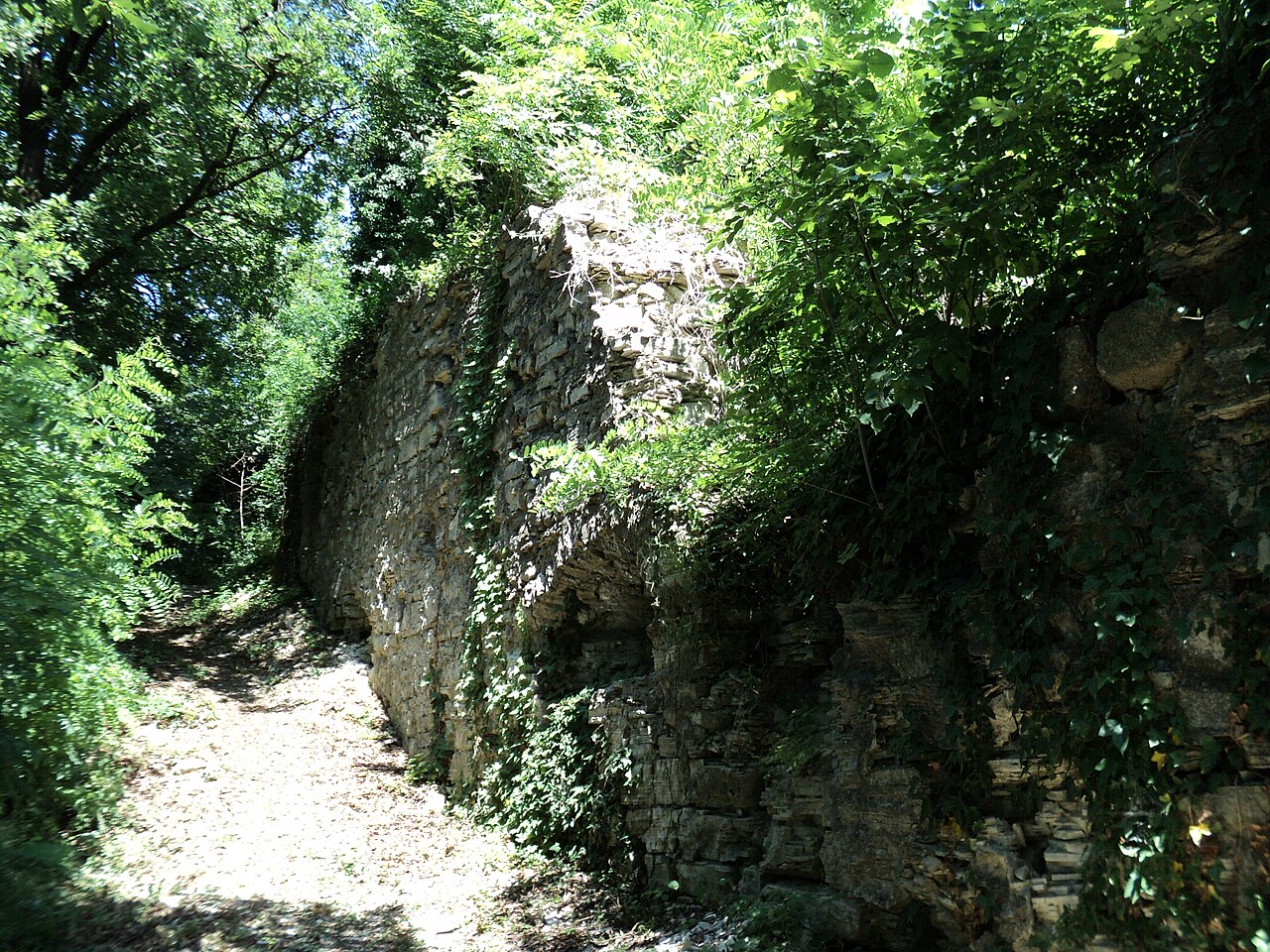
Susedgrad Castle (Hungarian: Szomszédvár), or earlier also only Sused, is a ruined medieval fortress on the far-western hill of mount Medvednica, while also marking the far-western part of modern-day Zagreb, Croatia.
As written on billboard near Susedgrad ruins, the fortress overwatched an important crossroad at Krapina-Sava confluence, and therefore enabled control over nearby land and waterways. Archeological and paleontological findings suggest that the place was settled since antiquity. Nearby quarries are also believed to exist since antiquity, supplying stone for building forts and churches in the surrounding area.
Written sources from 1299 and 1287 indicate that the castle was constructed somewhere throughout the second half of 13th century, when it was owned by Cistercian order. It is then mentioned in 1316 in one charter of king Charles I of Hungary as his property. The castle was a royal property until 1345 it was given by king Louis The Great to Nikola III. Aka - Toth, who supported king Louis in his wars. Nikola III. also gained control over significant possessions in Hrvatsko Zagorje, which would subsequently evolve in what would later be known as Susedgrad-Stubica Segniory. The family branch which controlled Susedgrad became known as Toths of Susedgrad. Toths however died out, and their last heiress - Doroteja, married to Nicolas Henning, whose family in 1439 took over rights to Aka's possessions.
Hennings held complete control over the castle, until 1502 when they died out, after which several contestants laid claims to the castle through the female line. Legal dispute arose over the question, whether such "female" claims are legal, or does the king owns a right to give the castle to the new owner. In the end, emperor Ferdinand gave one half of the estates to Styrian noble Andrew Teuffenbach who changed his last name to Henning through his mother's line, while he gave another half to Andras Bathory, also a Henning descendant.
Andrew Teuffenbach - Henning died in 1563, while his wife Ursula Meknitzer Henning lived on. While he was alive, Teuffenbach leased half of his Susedgrad estate to his wife Ursula Meknitzer, while he leased the other part to Andras Batory. Since he was often away in Hungary, Batory sold his complete rights to both Susedgrad and Stubica to Ferenc Tahy for 50 000 Forints, who thus became a majority owner.
Text adapted from “Susedgrad” on Wikipedia, CC BY-SA 4.0.
Susedgrad ranks #3,512 of 9,079 worldwide in the atlas's castle fame ranking, and #32 of the 79 mapped in Croatia. Founded c. 1300, it is older than 61% of the atlas's dated landmarks — one of 1080 atlas entries founded in the 13th century. 8 more atlas landmarks stand within 25 km. The nearest day-trip guide is Zagreb, 11 km away. See how Croatia compares in the castle statistics.
View on the interactive castle map →