Palace & château
Novi Dvori of Zaprešić
🇭🇷 Croatia · 17th century
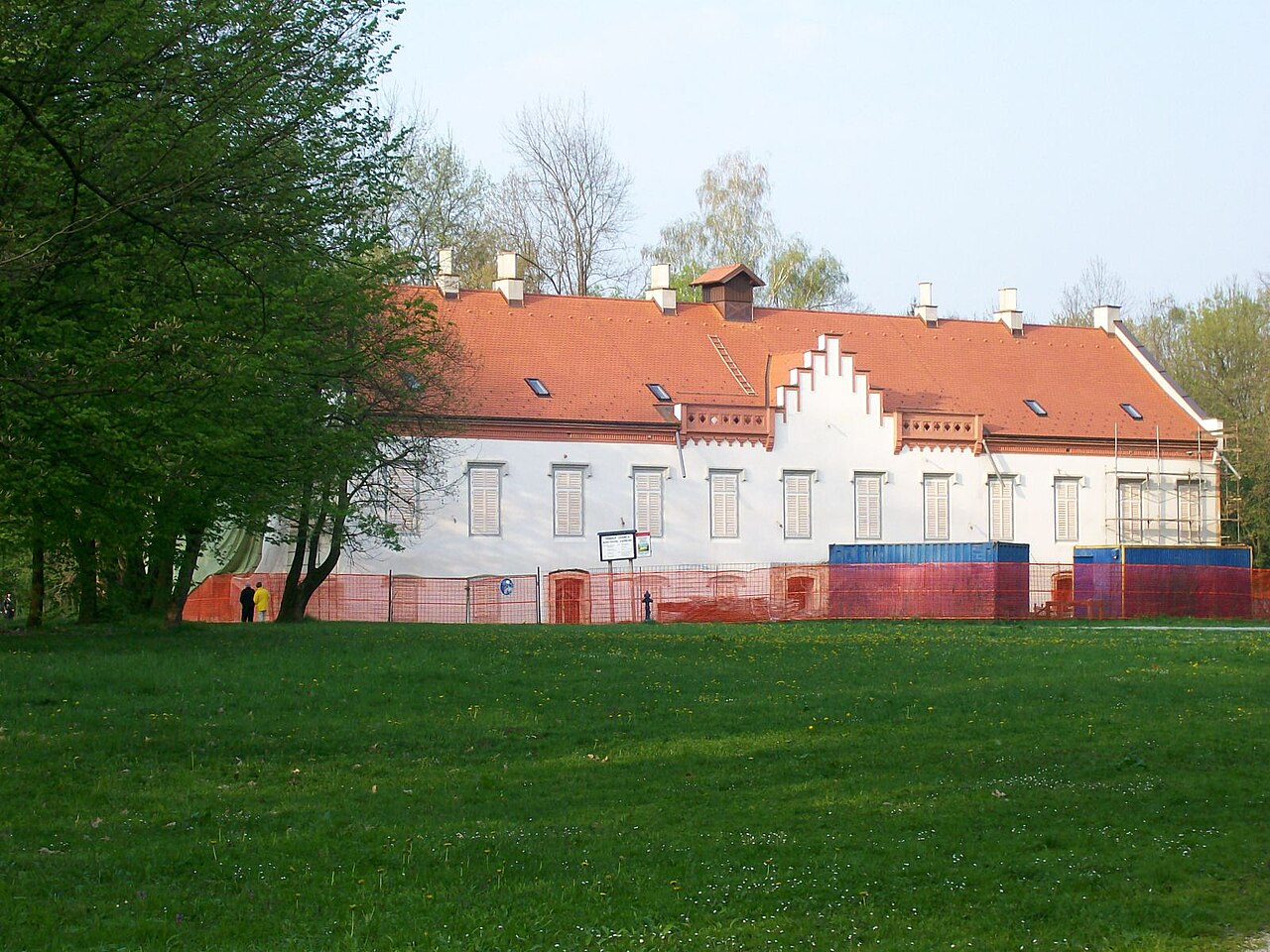
Novi Dvori of Zaprešić, or Novi Dvori of Jelačić, is a feudal estate in the northwestern part of Zaprešić, Croatia. The estate consists of a castle, an old granary renovated into a museum, a circular threshing machine, a neo-gothic chapel and the Jelačić family tomb.
During the process of disintegration of larger Susedgrad-Stubica seigniory, Novi dvori (Curia Nova), are mentioned as independent entity as early as the beginning of the 17th century. Historian Stjepan Laljak links the estate's foundation with the abandonment of nearby Susedgrad Castle, also owned by Zrinski, which was once a seat of the Susedgrad seigniory but lost its purpose and became abandoned. According to a document dated in 1852, the Novi Dvori manor was first constructed in 1611 as an ordinary one story manor house mostly made of wood. This initial 17th century concept of a manor, consisted of what is today a western part of the building and its shape has been preserved only in the cellar.
Throughout the history, the owners of this estate were Zrinski family, Čikulin family, Sermage family, Festetics family and Erdödy family. Almost each of these owners gradually expanded the manor to the east. In the second half of the 18th century Peter Troilo Sermage turned the manor house into a castle and added several economic buildings such as barns, granaries and circular threshing machine to the estate. By the 19th century, the castle became the property of Alexander Erdödy. The same family eventually sold the estate to ban Josip Jelačić in 1851.
Although the law of the Triune Kingdom of Croatia, formally obliged each candidate for the position of Ban, to possess its own estate on Croatian soil, this criterion was briefly ignored upon Jelačić's appointment due to the Revolutions of 1848. This was subsequently commented by Jelačić using the following words:
"I have always lived for my Homeland and everything I did, I did out of loyalty and fidelity, not for those 400 000 forints that I spent for buying the land estate in sense of our Constitution, which asks for Croatian ban to also be the landowner in our Kingdom."
Written agreement on sale of the estate was made on March 23, 1852, despite Jelačić de facto buying the estate a year earlier. The new owner had both the estate and the castle reconstructed and annexed.
Text adapted from “Novi Dvori” on Wikipedia, CC BY-SA 4.0.
Novi Dvori of Zaprešić ranks #5,082 of 8,134 worldwide in the atlas's castle fame ranking, and #43 of the 61 mapped in Croatia. Founded 1611, it is older than 31% of the atlas's dated landmarks — one of 626 atlas entries founded in the 17th century. 11 more atlas landmarks stand within 25 km. The nearest day-trip guide is Zagreb, 15 km away. See how Croatia compares in the castle statistics.
View on the interactive castle map →Frequently asked questions
Where is Novi Dvori of Zaprešić?
Novi Dvori of Zaprešić stands in Croatia, at 45.87209°, 15.80556°.
When was Novi Dvori of Zaprešić built?
The atlas dates its founding to 1611. Earlier structures may have stood on the site; this is the earliest documented founding year.
How famous is Novi Dvori of Zaprešić?
In this atlas's fame ranking: #5,082 of 8,134 worldwide, and #43 in Croatia. Fame here combines how many Wikipedia language editions cover a landmark with how many people read them.
What is the nearest castle to Novi Dvori of Zaprešić?
Susedgrad, about 6 km away.
More castles in Croatia
- Drežnik Castle Croatia · 12th century
- Fortica Fortress in Otočac Croatia · 17th century
- Oršić Castle in Gornja Stubica Croatia · 18th century
- Kaštel Fortress Croatia
More palaces & châteaux
- Astwell Castle England
- Beaufort Castle (Scotland) Scotland · 19th century
- Walferdange Castle Luxembourg · 19th century
- Palacio de los Reyes de Navarra, Estella Spain