 Turkey · 17th century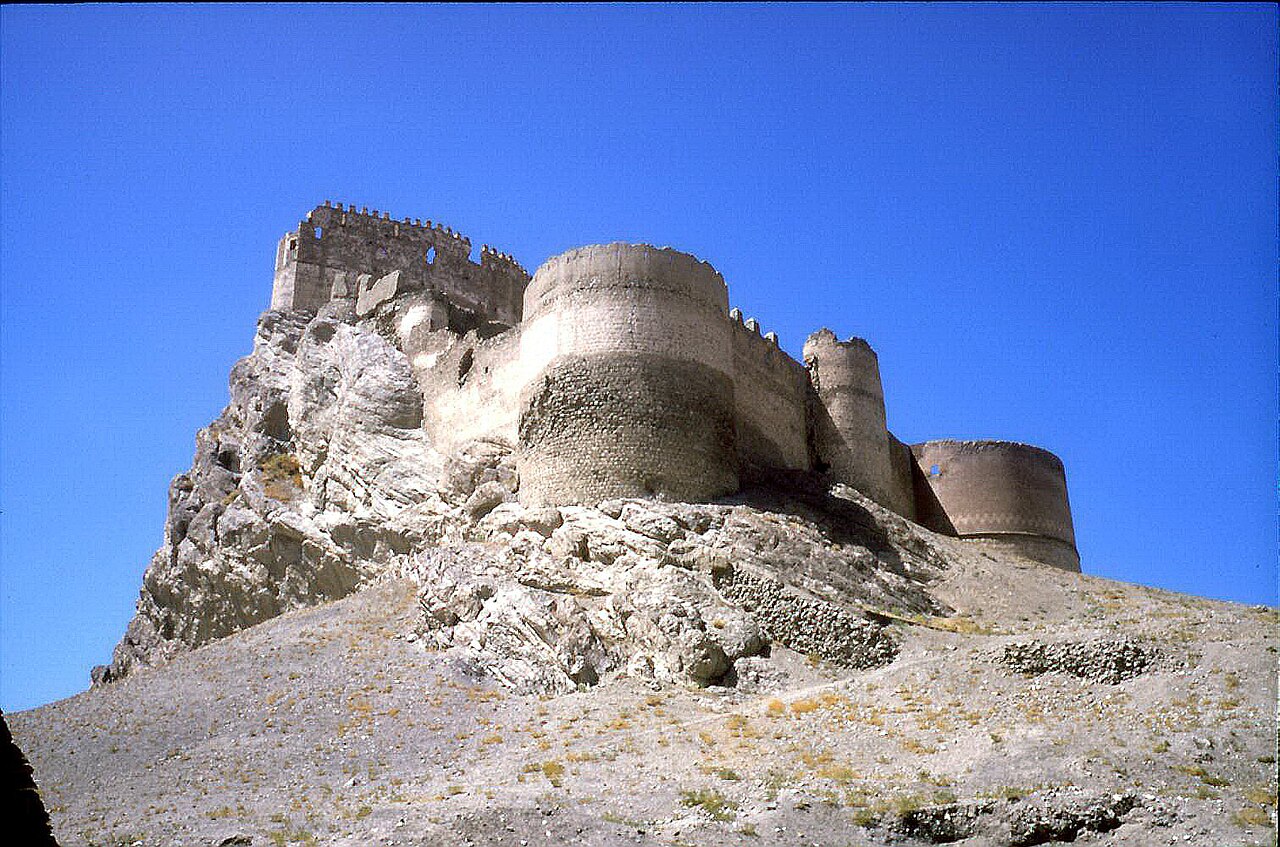
Hoşap Castle (Turkish: Hoşap kalesi, Kurdish: Kela Xoşebê, Armenian: Խոշաբ բերդ, romanized: Khoshab Berd) is a large 17th-century castle located in the village of Hoşab, Gürpınar District, Van, Turkey. It is at a distance of approximately 50 km to the city center of Van.
The castle was built upon the foundations of a medieval Armenian fortress, preceded by an Urartian stronghold, with the eastern stretches and towers preserving the layout of the original Armenian structure. The Armenian structure had only two walls, one located near the keep and one at the present-day intermediate walls. Most of the surviving masonry, including the entrance tower and outer walls, was built or rebuilt in 1649 by Sarı Süleyman Bey, chief of the Kurdish Mahmudi tribe. The Mahmudi tribe which occupied the fortress of Hoşap were originally of Yezidi origin and migrated to the region from the Jazira Region. Hoşap means "fresh water" in Persian. The fortress received its name from the river of the same name. It was mentioned by 13th century Arab chronicler Yakut by the name Khavshab in the Ashevatsyats province of Vaspurakan.
The former town of Hoşap lay on the flat ground north of the castle rock and in the enclosed space on the opposite side of the castle from the road; the present village extends into this space. The town was defended at one corner by the castle and elsewhere by a wall, which originally started from the ends of the castle’s two cliffs. Built of mud, and toothed with the remains of mud battlements, the wall of the early Ottoman period can still be seen in stretches.
On the north of the former town it now starts from a point beyond but the line of the cliff, near the Van road and extends along a natural ridge eastwards. From the castle’s southerly cliff the wall crosses the low saddle to the north-east. The two walls meet at the summit of the next hill, in order to keep control of all the land commanding the town. Beyond this hill’s summit stretches a seemingly empty expanse of low, spreading hills.
Until the 1850s, the fortress-city of Khoshab had about 1,500 families, including 1,000 Armenians. The Armenians of Khoshab were engaged in agriculture, crafts, and trade and had two churches within the fortress that were destroyed upon their expulsion, while the Kurds were mostly engaged in animal husbandry.
Text adapted from “Hoşap Castle” on Wikipedia, CC BY-SA 4.0.
Hoşap Castle ranks #1,908 of 9,079 worldwide in the atlas's castle fame ranking, and #41 of the 129 mapped in Turkey. Founded 1643, it is older than 27% of the atlas's dated landmarks — one of 721 atlas entries founded in the 17th century. Its Wikipedia articles were opened 2,367 times in the last 60 days, more than 73% of the atlas. See how Turkey compares in the castle statistics.
View on the interactive castle map →