 Germany · 10th century
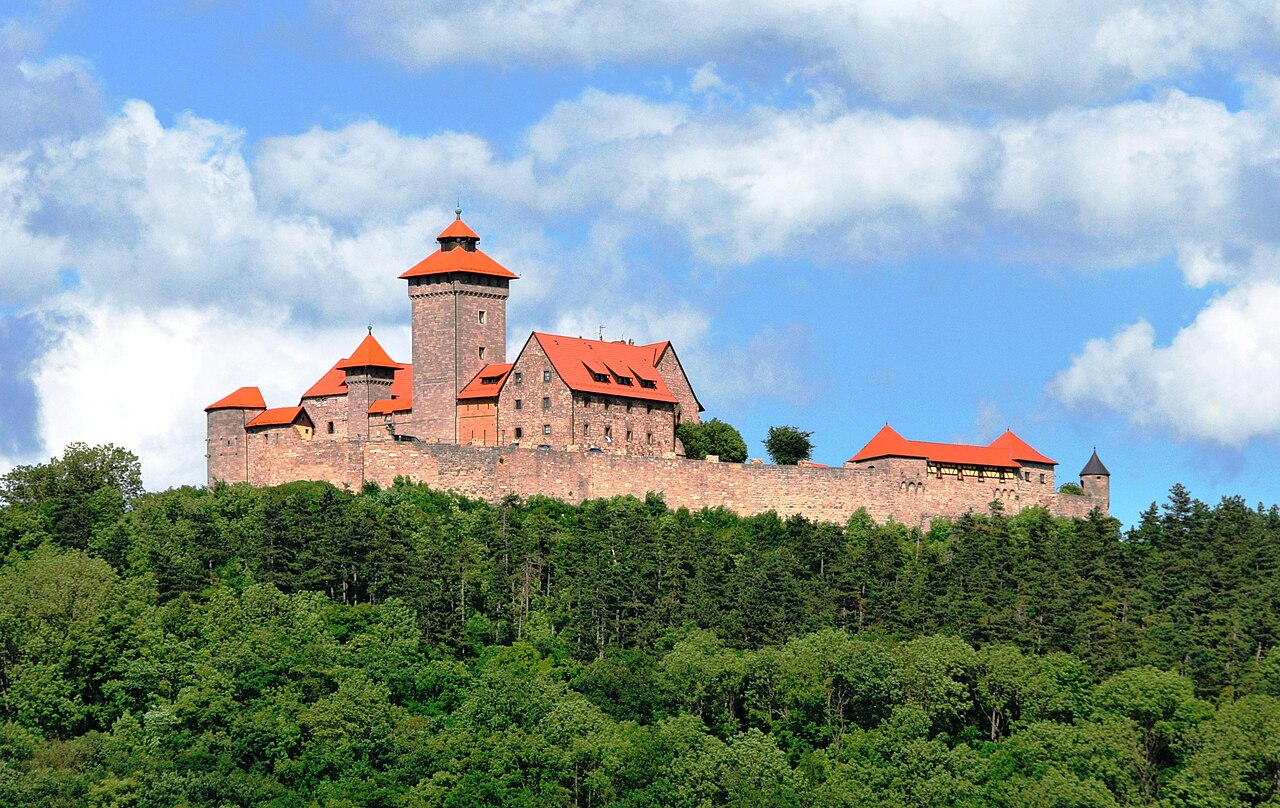
Wachsenburg Castle ranks #4,568 of 9,040 worldwide in the atlas's castle fame ranking, and #380 of the 714 mapped in Germany. Founded 930, it is older than 94% of the atlas's dated landmarks, one of 192 atlas entries founded in the 10th century. Its Wikipedia articles were opened 2,075 times in the last 60 days, more than 70% of the atlas. 7 more atlas landmarks stand within 25 km. It is one of the 38 landmarks on the atlas's regional map of Thuringia. See how Germany compares in the castle statistics.
Wachsenburg Castle (German: Veste Wachsenburg) is a castle in Amt Wachsenburg in the Ilm-Kreis, Thuringia, Germany. It is one of the Drei Gleichen, three hilltop castles east of Gotha. It was originally built in the 10th century. The castle was extensively reconstructed in the 17th and 19th century. The well-preserved castle (most recently restored in the 1990s) now houses a museum, a hotel and a restaurant.
It was built by Hersfeld Monastery. The castle is approximately 93 metres (305 ft) deep. During its history, Wachsenburg Castle has had its fair share of troubles. In 1441 CE a notorious robber baron took control of the castle and made it his base for his raids on the merchants of Erfurt.
Text adapted from “Wachsenburg Castle” on Wikipedia, CC BY-SA 4.0.
View on the interactive castle map →