 Japan · 16th century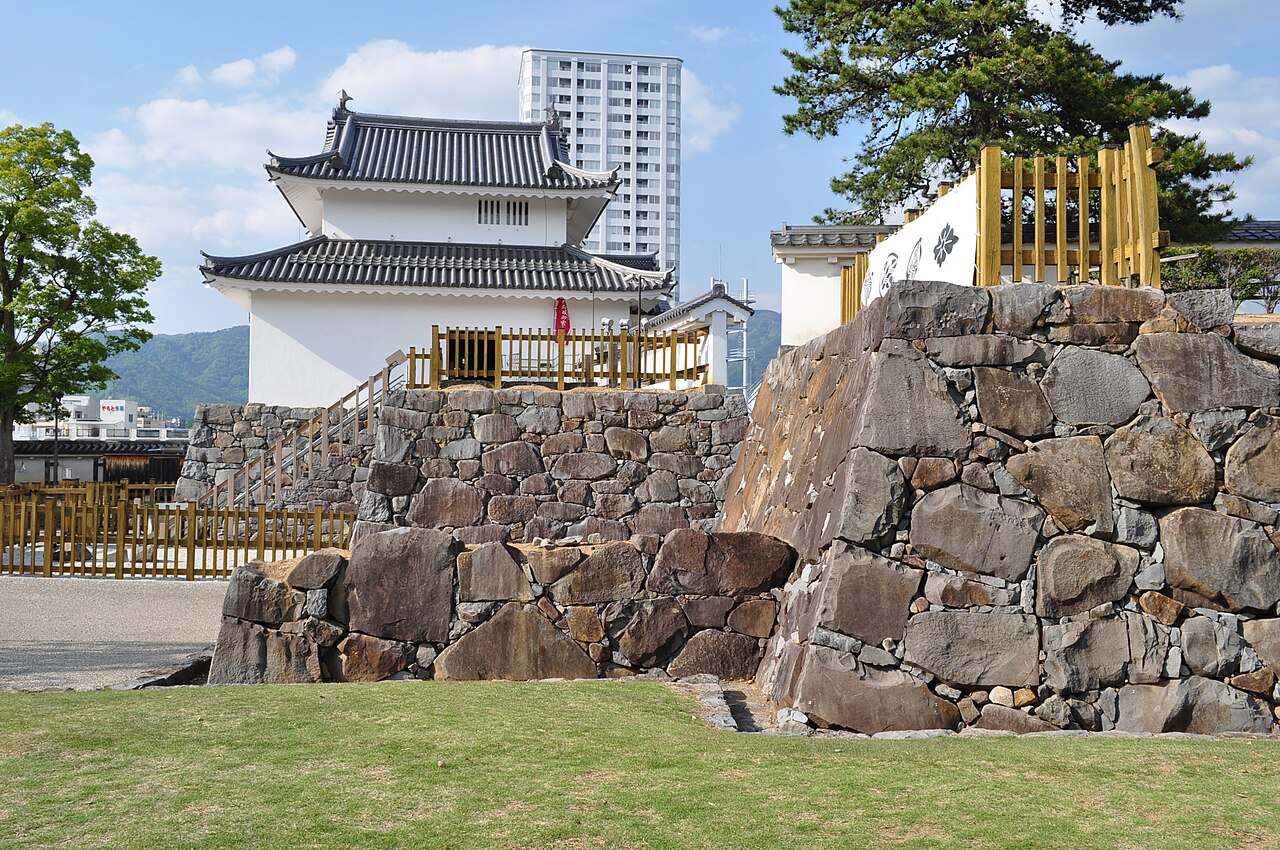
Kōfu Castle (甲府城, Kōfu jō) was a Japanese castle located in the city of Kōfu, Yamanashi Prefecture, in the Chubu region of Japan. The site has been protected as a National Historic Site since 2019. The castle is also known as Maizuru Castle, and the present-day surroundings are called Maizuru Castle Park (舞鶴公園, Maizuru-jō Kōen).
Kōfu Castle is located in the physical center of the city of Kōfu on a small hill. The city itself is located at the confluence of the Kamanashi River and the Fuefuki River. During the Sengoku Period after the local warlord (Takeda Shingen) seized control of the province from his father. He made Tsutsujigasaki Castle his seat. Before this time, the Kōfu area was subject to frequent flooding, and it was only through massive flood control projects which were undertaken by Takeda Shigen over a 20-year period that the area was considered inhabitable. After Takeda Shingen's death, his son Takeda Katsuyori was defeated by a coalition of the Oda clan and the Tokugawa clan in 1582.
Oda Nobunaga placed his general Kawajiri Hidetaka in charge of Kai Province, but Nobunaga was assassinated only three months later and vengeful former Takeda clan retainers assassinated Kawajiri soon afterwards. The vacant province was fought over by Tokugawa Ieyasu and the Late Hōjō clan, with Ieyasu emerging victorious. However, after the 1590 Siege of Odawara, Toyotomi Hideyoshi forced Ieyasu to exchange his holdings for new territories in the Kantō region and gave Kai Province to his retainer Kato Mitsuyasu (1537–1593).
Kato originally governed from the old Tsutsujigasaki palace, but as that site had minimal defenses and had little room for expansion, he began work on a new castle at Ichijyomodoriyama, a small hill a short distance away, which had a small fort guarding the valley. This was later called "Kōfu Castle". He died before the completion of the new castle, and was succeeded by Asano Nagamasa (1547–1611), Hideyoshi's step-brother-in-law. Asano completed the castle in 1593.
Kōfu Castle was originally T-shaped, with the main body spreading on the ridge of the hill from east-to-west, separated into three or four layers of terraces over a 200 by 100 meters area. The front of the castle protruded north-to-south and had the main gate.
Text adapted from “Maizuru Castle Park” on Wikipedia, CC BY-SA 4.0.
Maizuru Castle Park ranks #1,670 of 9,035 worldwide in the atlas's castle fame ranking, and #101 of the 295 mapped in Japan. Founded 1583, it is older than 33% of the atlas's dated landmarks, one of 886 atlas entries founded in the 16th century. Its Wikipedia articles were opened 5,031 times in the last 60 days, more than 87% of the atlas. 3 more atlas landmarks stand within 25 km. The nearest day-trip guide is Sagamihara, 73 km away. See how Japan compares in the castle statistics.
View on the interactive castle map →