Castle
Zug Castle
🇨🇭 Switzerland · 10th century
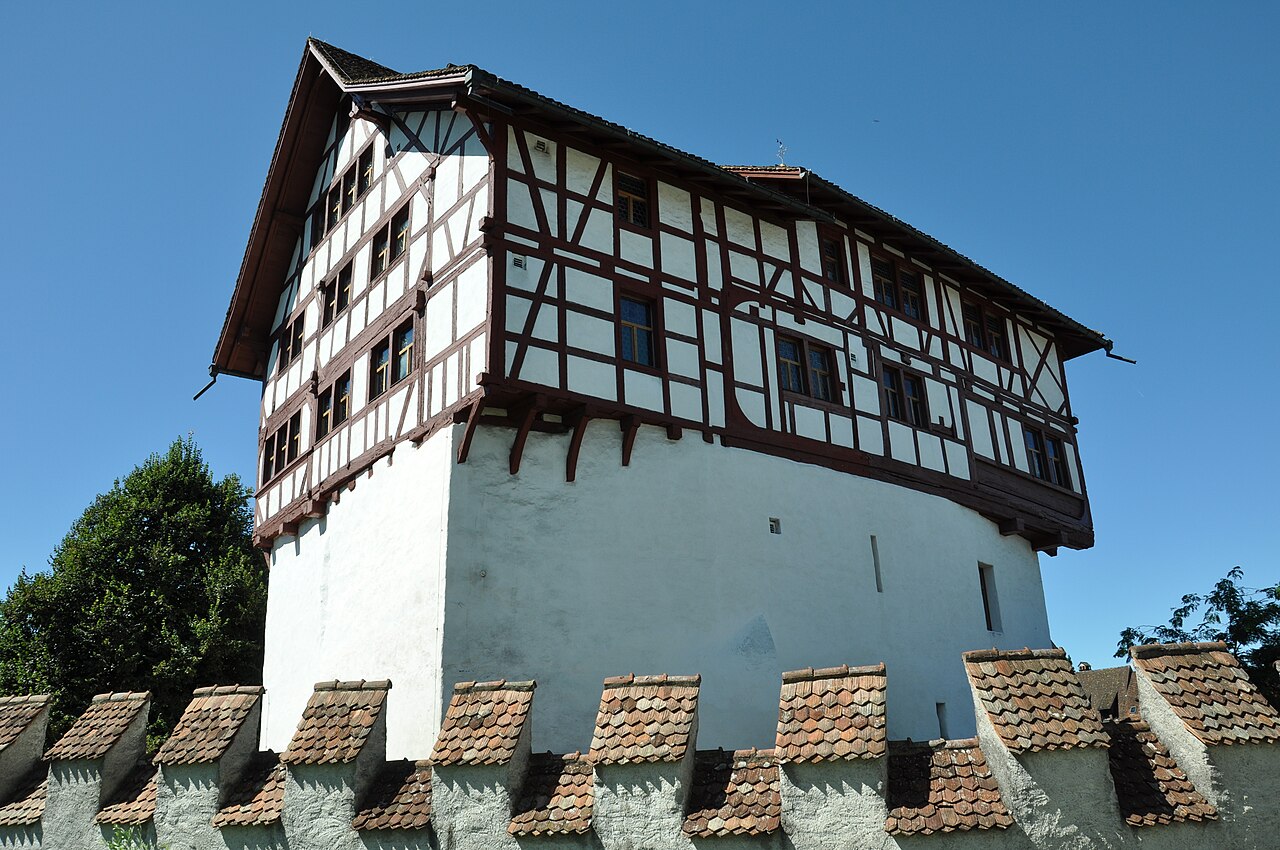
Zug Castle is a castle in the municipality of Zug of the Canton of Zug in Switzerland. It is a Swiss heritage site of national significance.
The first castle on the site was probably a wooden manor house built around 1000 and owned by a ministerialis family in service to either the Counts of Aargau or of Lenzburg. Based on archeological excavations, it was built on an island between two small streams and surrounded by a wooden palisade. While the local nobleman occupied the house and island, his men built a village along the streams. Later the streams were dammed to prevent flooding.
Around the end of the 11th century, the original house expanded. A 70–90 centimeters (2.3–3.0 ft) tall stone wall was built around the house. However all the buildings inside the wall remained wooden. According to tradition, the castle was attacked and damaged during the 12th century.
In the 13th century, Zug came under the control of the Kyburgs. They founded the city of Zug (around 1200) and had the ruined castle was rebuilt in stone. A 9 by 9 m (30 by 30 ft) tower with 2 m (6.6 ft) thick first story walls was built. The walls taper slightly and upper story walls are only about 1.5 m (4.9 ft) thick to a height of 16 m (52 ft). The tower was surrounded by two semi-circular walls to the north and east. By the end of the 13th century the town was surrounded by an, up to 16 m (52 ft) high, wall and additional defensive works.
When the Kyburg family died out in 1264, the city and castle of Zug were inherited by the Habsburgs. The castle living quarters were expanded and a number of buildings were added between the tower and city wall. After the Habsburg defeat at the Battle of Morgarten in 1315, Zug became a Habsburg stronghold in an increasingly hostile Swiss Confederation. The surrounding cities of Zurich, Lucerne and Glarus joined the Confederation and the nearby villages began to side with the Swiss, however, Zug city remained strongly tied to the Habsburgs. When the Confederation invaded Zug, the surrounding villages immediately surrendered. After a two-week siege, Zug Castle and city fell to the Swiss. The castle was not damaged in the siege and became a Confederation castle. After Zug joined the Confederation as a full member, the castle gradually lost its importance.
Text adapted from “Zug Castle” on Wikipedia, CC BY-SA 4.0.
Zug Castle ranks #6,693 of 8,134 worldwide in the atlas's castle fame ranking, and #145 of the 201 mapped in Switzerland. Founded c. 1000, it is older than 92% of the atlas's dated landmarks — one of 138 atlas entries founded in the 10th century. 8 more atlas landmarks stand within 25 km. The nearest day-trip guide is Winterthur, 40 km away. See how Switzerland compares in the castle statistics.
View on the interactive castle map →Frequently asked questions
Where is Zug Castle?
Zug Castle stands in Switzerland, at 47.1652°, 8.51671°.
When was Zug Castle built?
The atlas dates its founding to c. 1000. Earlier structures may have stood on the site; this is the earliest documented founding year.
How famous is Zug Castle?
In this atlas's fame ranking: #6,693 of 8,134 worldwide, and #145 in Switzerland. Fame here combines how many Wikipedia language editions cover a landmark with how many people read them.
What is the nearest castle to Zug Castle?
St. Andreas Castle, about 4 km away.
More castles in Switzerland
- Frohburg Castle Switzerland · 11th century
- Nidau Castle Switzerland · 12th century
- Hochjuvalt Castle Switzerland · 13th century
- Alt-Haldenstein Castle Switzerland · 11th century
More castles
- Tapiau castle Russia · 13th century
- Bouvigne Castle Netherlands · 16th century
- Kasteel de Essenburgh Netherlands
- Vaalsbroek Castle Netherlands