 イタリア · 16世紀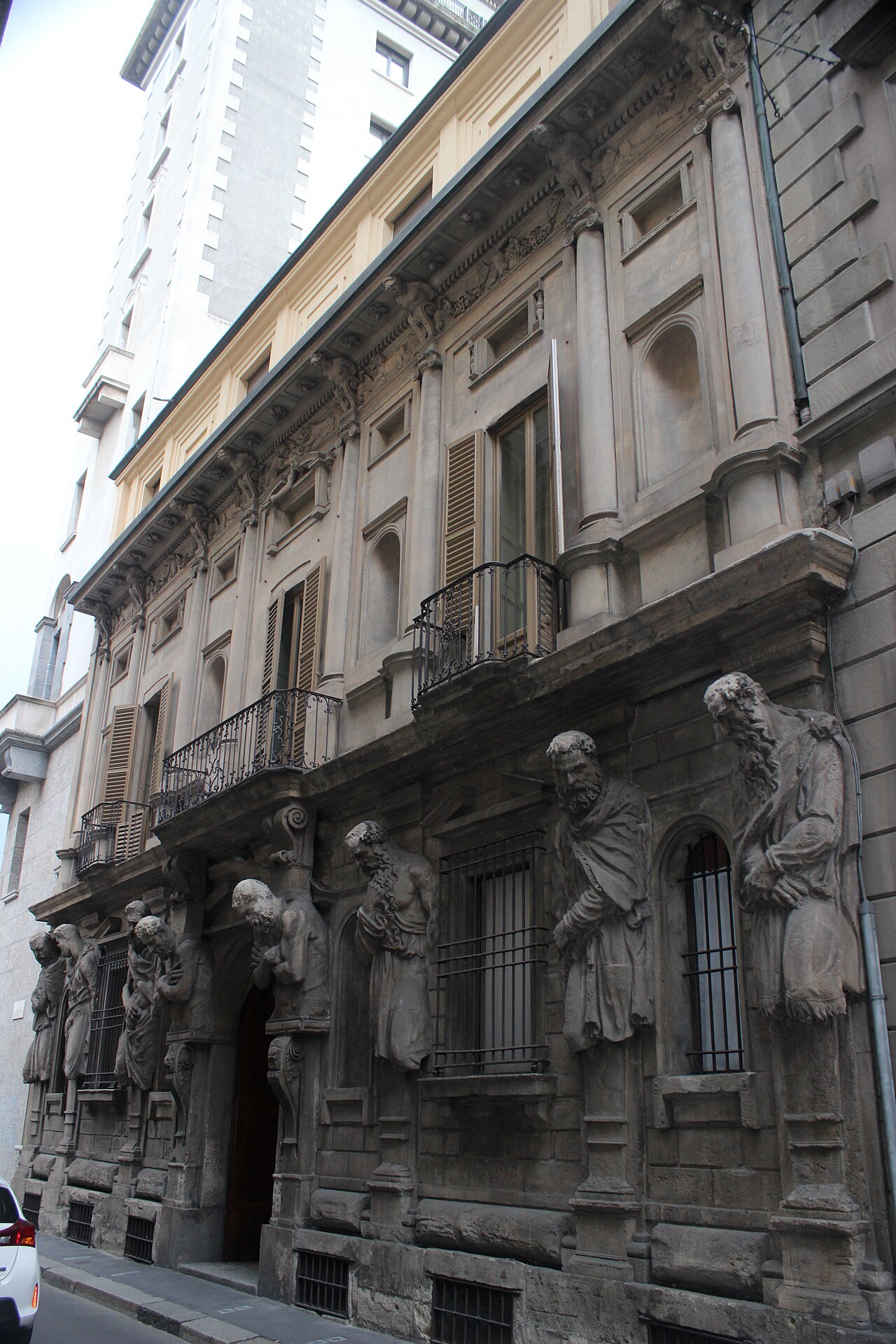
カーサ・デリ・オメノーニは、北イタリアのミラノにある歴史的な邸館で、同名の通りヴィア・デリ・オメノーニ(3番地)に位置する。彫刻家レオーネ・レオーニが自身のために設計し、そこで生活も仕事もした。その名は、正面を飾る8体のアトラス像に由来し、これらはミラノ方言で「オメノーニ」(「大きな男たち」)と呼ばれ、おそらくレオーニの下絵に基づいてアントニオ・アボンディオが彫ったものである。ライオン(「レオーニ」家への言及)は装飾に繰り返し現れる主題であり、とりわけコーニスの下に置かれた大きなレリーフは、2頭のライオンがサテュロスを引き裂く様子を表している。この邸館の全体的な様式と装飾には、ミケランジェロの芸術への言及がいくつも含まれていると指摘されている。1929年にピエロ・ポルタルッピによって改変された内側の中庭には、メトープとトリグリフを備えた列柱廊がある。
芸術家であり歴史家であるジョルジョ・ヴァザーリはこの邸館への称賛を表し、それは pieno [...] di capricciose invenzioni(「気まぐれな創意に満ちている」)と述べた。当時、この邸館には注目すべき美術品と古美術のコレクションも収められていたが、それは時とともに散逸した。1615年に遡る目録によれば、ティツィアーノ、パルミジャニーノ、ミケランジェロの絵画があった。目録にはまたレオナルド・ダ・ヴィンチの素描帖への言及もあり、研究者はこれを現在アンブロジアーナ図書館に保存されているアトランティコ手稿と同定している。
邸館は19世紀と20世紀に大幅に修復・改造された。ほとんど変わらないまま残っているのは正面だけで、鉄製のバルコニーと屋根裏階が加えられたのを除いてである。
レオーネ・レオーニ、次いでその息子ポンペオ・レオーニの所有となった後、この家はポンペオの娘婿ポリドーロ・カルキによって売却され、時とともにベルジョイオーゾ家、ポッツィ家、ベザーナ家など、ミラノの著名な複数の家門の所有となった。また、楽譜出版社カーサ・リコルディの本拠、ファシスト党の本部、そして劇場としても用いられた。建物はパラッツォ・ポッツィ・ベザーナに隣接している。
英語版ウィキペディア「Casa degli Omenoni」より機械翻訳、CC BY-SA 4.0。
Casa degli Omenoniは、アトラスの城の知名度ランキングで世界2,480位(全9,035件中)、イタリアの555件では192位にランクされています。約1550年に創建され、アトラスの年代判明済みの城の36%より古い城です(16世紀に創建されたアトラス収録の886件のひとつ)。 Wikipediaの記事は直近60日で1,450回読まれ、アトラス収録の61%より多くの読者を集めています。半径25キロ以内にはアトラス収録の城が18件あります。最寄りの日帰りガイドは1キロ先のミラノです。イタリアが他とどう比べられるかは、城の統計をご覧ください。
インタラクティブ地図で見る →