Ruïne
Rio Castle
🇬🇷 Griekenland · 15e eeuw
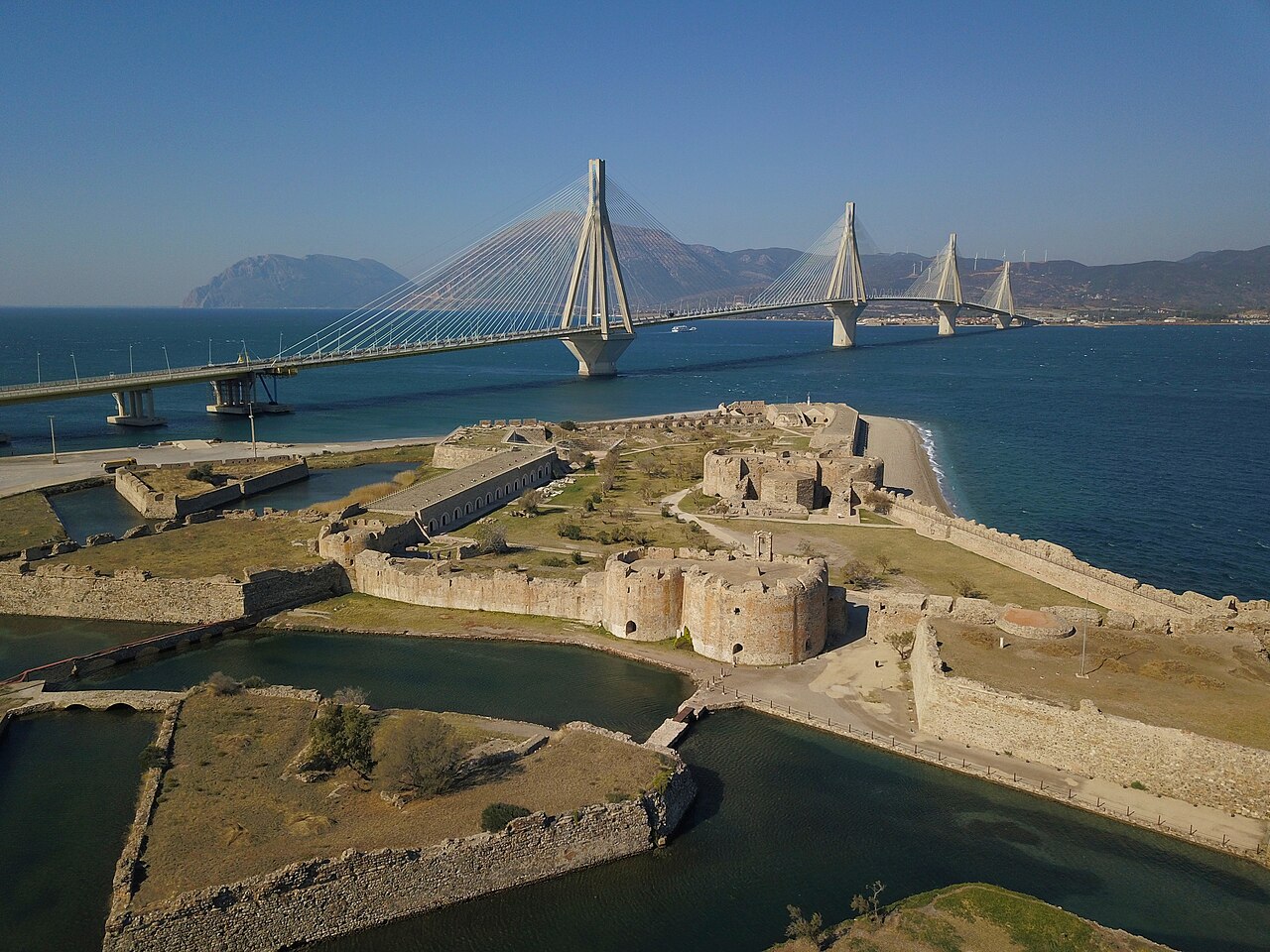
Kasteel Rio (Grieks: κάστρο του Ρίου), historisch bekend als het Kasteel van de Morea (Italiaans: Castello de Morea) tegenover zijn tegenhanger, het Kasteel van Roemelië bij Antirrio, ligt aan de noordpunt van het schiereiland Rio in Achaea, Griekenland, bij de ingang van de Golf van Korinthe. De Rio-Antirrio-brug ligt ernaast, en aan weerszijden liggen de lokale veerbootaanlegplaatsen. Tegenwoordig wordt het gebruikt voor culturele doeleinden, vooral concerten, en is het een toeristische attractie.
Het kasteel werd gebouwd door de Ottomaanse sultan Bayezid II in 1499 boven de ruïnes van een oude Poseidontempel, binnen drie maanden. Samen met zijn tweelingkasteel, het Kasteel van Antirrio, moesten ze de ingang van de Golf van Korinthe beschermen en kregen ze de bijnaam "de kleine Dardanellen". Het kasteel ligt aan de kust; de noordzijde wordt beschermd door de zee, de zuidzijde door een brede, met zeewater gevulde gracht en twee buitenbastions (ravelijnen), die door stenen bruggen met het hoofdfort verbonden zijn. Het heeft twee poorten: de centrale, landzijdig gerichte poort, en de zeepoort.
In 1533 werd het kort veroverd door de Genuezen onder Andrea Doria, maar later dat jaar heroverden de Ottomanen het. In 1687, tijdens de Morea-oorlog, werd het ingenomen door de Venetianen onder Francesco Morosini. De Venetianen bouwden het kasteel om en versterkten het met de toevoeging van torens, waarmee het zijn uiteindelijke vorm kreeg. De Venetianen voegden ook de kleine kapel van de Levengevende Bron (Zoodochos Pege) toe. De Ottomanen heroverden het in 1715 en bleven er totdat ze het overgaven aan de Franse generaal Nicolas Joseph Maison. Tussen 1831 en 1912 werd het kasteel gebruikt als militaire en later burgerlijke gevangenis, waarvan de gevangenen door de gemeente Patras vaak werden ingezet voor het schoonmaken van de straten van Rio.
Machinaal vertaald uit “Rio Castle” op de Engelstalige Wikipedia, CC BY-SA 4.0.
Rio Castle staat op plaats 3.821 van 8.134 in de bekendheidsranglijst van deze atlas en op plaats 53 van de 134 die de atlas in Griekenland in kaart brengt. Gebouwd in 1499, en daarmee ouder dan 46% van de gedateerde bouwwerken in de atlas — een van de 455 bouwwerken in de atlas die uit de 15e eeuw stammen. Binnen 25 km staan nog 6 andere bouwwerken uit de atlas. De dichtstbijzijnde dagtripgids is Patras, 8 km verderop. Zie hoe dat zich verhoudt in de kastelenstatistiek.
Bekijk op de interactieve kastelenkaart →Veelgestelde vragen
Waar ligt Rio Castle?
Rio Castle ligt in Griekenland, op 38.3114°, 21.7812°.
Wanneer werd Rio Castle gebouwd?
De atlas dateert de stichting op 1499. Er kunnen eerdere bouwwerken hebben gestaan; dit is het oudste gedocumenteerde bouwjaar.
Hoe bekend is Rio Castle?
In de bekendheidsranglijst van deze atlas: plaats 3.821 van 8.134 wereldwijd, plaats 53 in Griekenland. Bekendheid combineert het aantal Wikipedia-taalversies met het aantal lezers.
Welk kasteel ligt het dichtst bij Rio Castle?
Antirrio Fortress, ongeveer 2 km verderop.
Meer kastelen in Griekenland
- Gardiki Castle, Corfu Griekenland · 13e eeuw
- Araklovon Castle Griekenland · 8e eeuw
- Neratzia Griekenland
- Siphae Griekenland
Meer ruïnes
- Yam Fortress Rusland · 14e eeuw
- Markeli Bulgarije
- Şeytan Castle Turkije
- Kasteel van Chanteloup Frankrijk · 16e eeuw