Ruïne
Suoyang City
🇨🇳 China · 2e eeuw v.Chr.
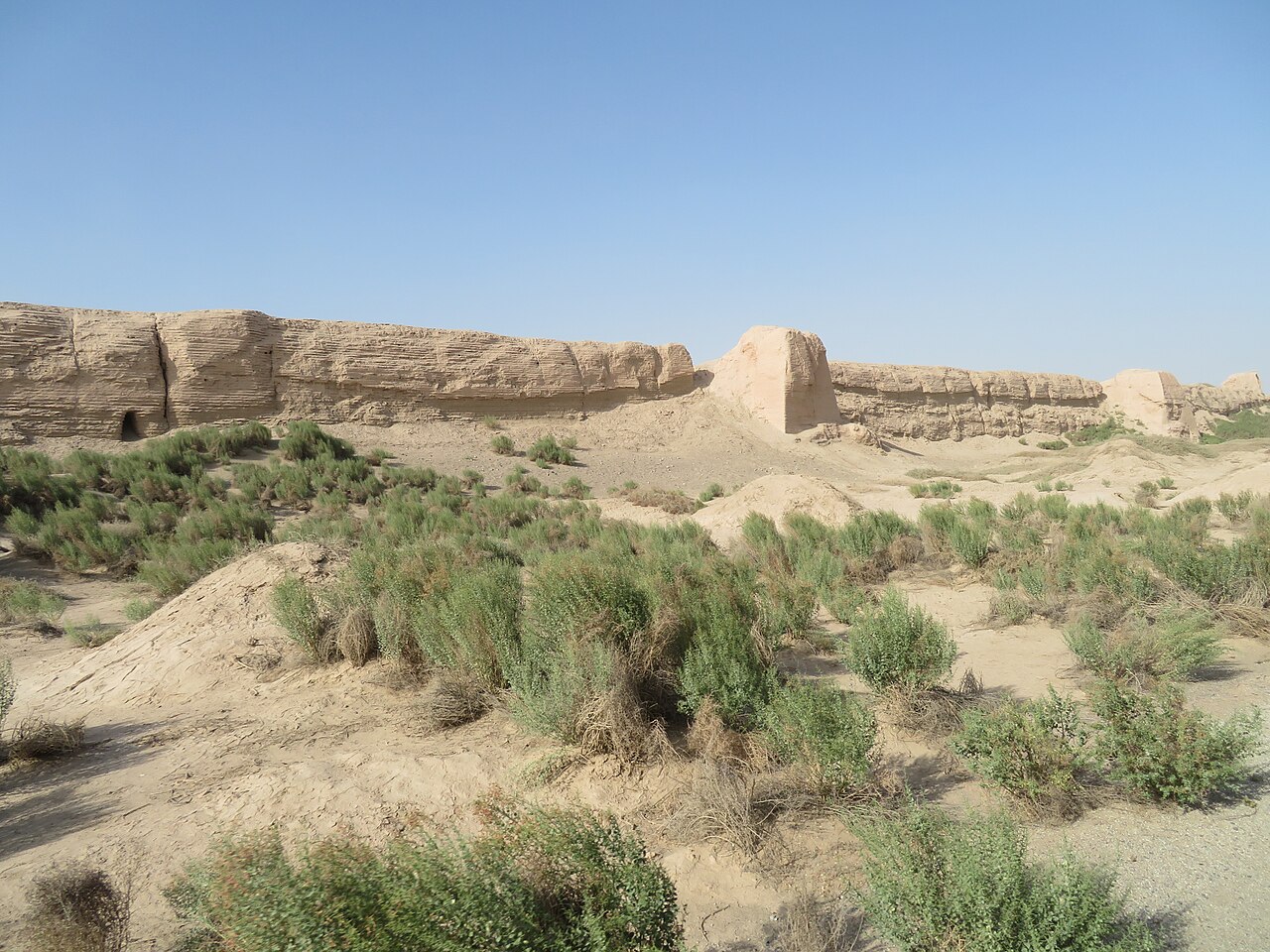
Suoyang City (Chinees: 锁阳城; pinyin: Suǒyáng Chéng), ook Kuyu (苦峪) genoemd, is een verlaten zijderoutestad in het district Guazhou van de provincie Gansu, in het noordwesten van China. De stad werd in 111 v.Chr. door keizer Wu van Han oorspronkelijk gesticht als het district Ming'an, en in 295 n.Chr. door keizer Hui van de Westelijke Jin-dynastie verplaatst en op de huidige plek herbouwd. Als hoofdstad van de commanderij Jinchang (later prefectuur Guazhou) bloeide de stad tijdens de Tang- en Westelijke Xia-dynastieën. Ze was meer dan duizend jaar lang een belangrijk bestuurlijk, economisch en cultureel centrum van de Hexi-corridor, met een geschat maximaal inwonertal van 50.000. De stad werd in de 16e eeuw verwoest en verlaten, nadat de Ming-dynastie werd aangevallen door Mansur Khan van Moghulistan.
De stadsruïnes omvatten de binnenstad, de buitenstad en meerdere yangmacheng (versterkte dierenverblijven die in oorlogstijd als forten dienden). Buiten de stadsmuren omvat het bredere archeologische park de oorspronkelijke locatie van het district Ming'an, meer dan 2.000 graven en de resten van een uitgebreid irrigatiesysteem met meer dan 90 kilometer aan kanalen. Het archeologische park omvat ook een aantal boeddhistische vindplaatsen, waaronder de Ta'er-tempel, de Oostelijke Duizend-Boeddha-grotten, de Jianquanzi-grotten (碱泉子石窟) en de Hanxia-grotten (旱峡石窟).
Suoyang City staat vermeld als een belangrijke nationale historische en culturele vindplaats van China (nr. 4-50). In 2014 werd de stad door UNESCO ingeschreven op de Werelderfgoedlijst, als onderdeel van de Zijderoutes: het routenetwerk van de Chang'an-Tianshan-corridor.
Machinaal vertaald uit “Suoyang City” op de Engelstalige Wikipedia, CC BY-SA 4.0.
Suoyang City staat op plaats 3.828 van 8.134 in de bekendheidsranglijst van deze atlas en op plaats 55 van de 119 die de atlas in China in kaart brengt. Gebouwd in 111 v.Chr., en daarmee ouder dan 99% van de gedateerde bouwwerken in de atlas — een van de 12 bouwwerken in de atlas die uit de 2e eeuw v.Chr. stammen. De Wikipedia-artikelen erover werden de afgelopen 60 dagen 1.346 keer geopend, meer dan 56% van de atlas. Zie hoe dat zich verhoudt in de kastelenstatistiek.
Bekijk op de interactieve kastelenkaart →Veelgestelde vragen
Waar ligt Suoyang City?
Suoyang City ligt in China, op 40.2467°, 96.2027°.
Wanneer werd Suoyang City gebouwd?
De atlas dateert de stichting op 111 v.Chr. Er kunnen eerdere bouwwerken hebben gestaan; dit is het oudste gedocumenteerde bouwjaar.
Is Suoyang City UNESCO-werelderfgoed?
Ja — volgens Wikidata maakt het deel uit van een UNESCO-werelderfgoedsite.
Hoe bekend is Suoyang City?
In de bekendheidsranglijst van deze atlas: plaats 3.828 van 8.134 wereldwijd, plaats 55 in China. Bekendheid combineert het aantal Wikipedia-taalversies met het aantal lezers.
Welk kasteel ligt het dichtst bij Suoyang City?
Het Fort bij Jiayuguan, ongeveer 178 km verderop.
Meer kastelen in China
- Pinewood Battery China · 20e eeuw
- Hailongtun China
- Kat Hing Wai China
- Fort van Gyantse China · 14e eeuw
Meer ruïnes
- Huchuy Qosqo Peru · 15e eeuw
- Moy Castle Schotland · 15e eeuw
- Kasteel Ardencaple Schotland · 12e eeuw
- Dynge Castle Zweden · 13e eeuw