Ruin
Suoyang City
🇨🇳 China · 2nd century BC
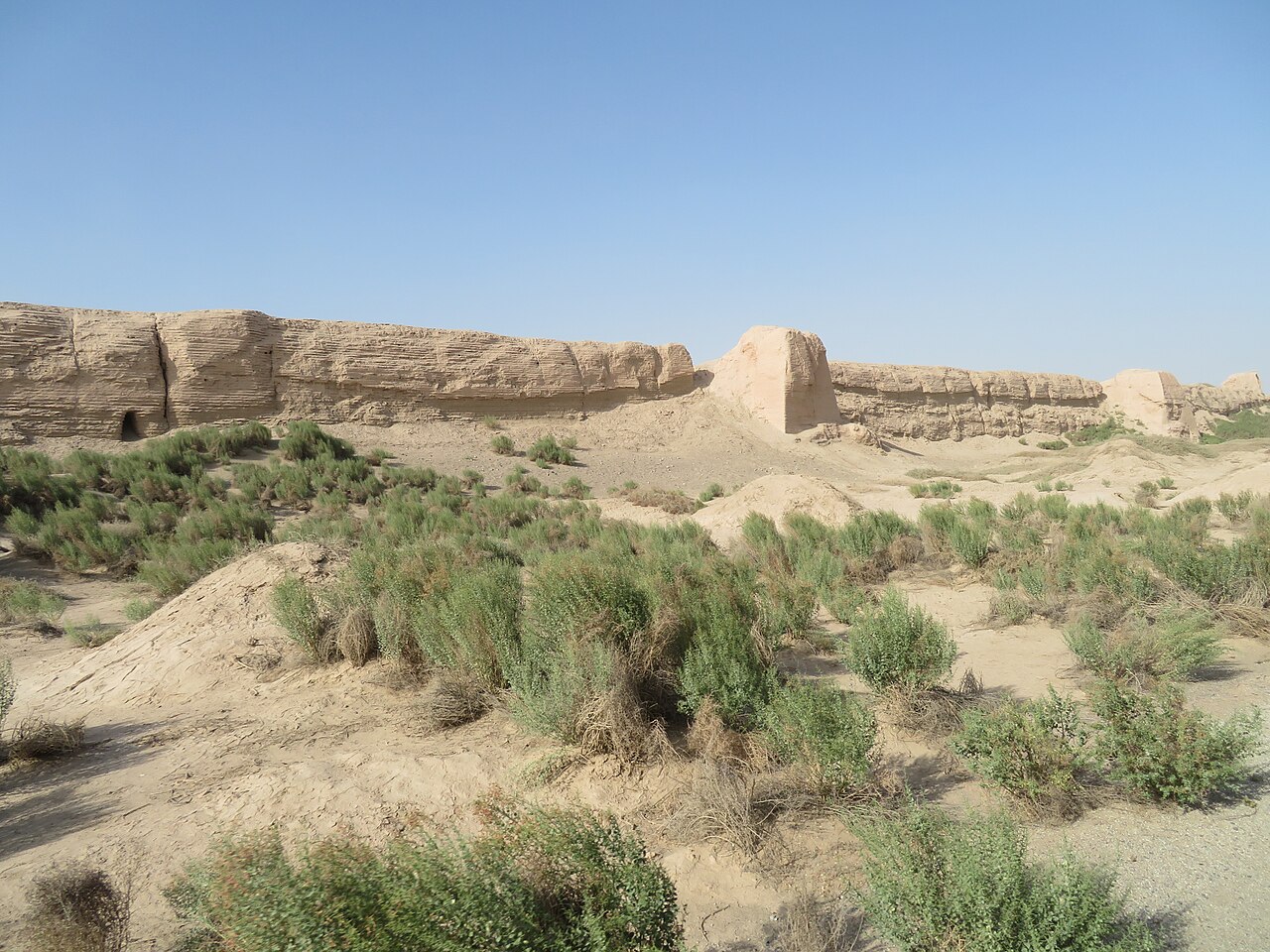
Suoyang City (Chinese: 锁阳城; pinyin: Suǒyáng Chéng), also called Kuyu (苦峪), is a ruined Silk Road city in Guazhou County of Gansu Province in northwestern China. First established as Ming'an County in 111 BC by Emperor Wu of Han, the city was relocated and rebuilt at the current site in 295 AD by Emperor Hui of the Western Jin dynasty. As the capital of Jinchang Commandery (later Guazhou Prefecture), the city prospered during the Tang and Western Xia dynasties. It was an important administrative, economic, and cultural center of the Hexi Corridor for over a millennium, with an estimated peak population of 50,000. It was destroyed and abandoned in the 16th century, after the Ming dynasty came under attack by Mansur Khan of Moghulistan.
The city ruins comprise the inner city, the outer city, and several yangmacheng (fortified animal enclosures used as fortresses in wartime). Outside the city walls, the broader archaeological park includes the original site of Ming'an County, more than 2,000 tombs, and the remains of an extensive irrigation system with over 90 kilometres (56 mi) of canals. The archaeological park also encompasses a number of Buddhist sites, including the Ta'er Temple, the Eastern Thousand Buddha Caves, Jianquanzi Caves (碱泉子石窟), and Hanxia Caves (旱峡石窟).
Suoyang City is listed as a Major National Historical and Cultural Site of China (No. 4-50). In 2014, it was inscribed on UNESCO's list of World Heritage Sites as part of Silk Roads: the Routes Network of Chang'an-Tianshan Corridor.
Text adapted from “Suoyang City” on Wikipedia, CC BY-SA 4.0.
Suoyang City ranks #3,828 of 8,134 worldwide in the atlas's castle fame ranking, and #55 of the 119 mapped in China. Founded 111 BC, it is older than 99% of the atlas's dated landmarks — one of 12 atlas entries founded in the 2nd century BC. Its Wikipedia articles were opened 1,346 times in the last 60 days, more than 56% of the atlas. See how China compares in the castle statistics.
View on the interactive castle map →Frequently asked questions
Where is Suoyang City?
Suoyang City stands in China, at 40.2467°, 96.2027°.
When was Suoyang City built?
The atlas dates its founding to 111 BC. Earlier structures may have stood on the site; this is the earliest documented founding year.
Is Suoyang City a UNESCO World Heritage Site?
Yes — it is part of a UNESCO World Heritage Site, per its Wikidata entry.
How famous is Suoyang City?
In this atlas's fame ranking: #3,828 of 8,134 worldwide, and #55 in China. Fame here combines how many Wikipedia language editions cover a landmark with how many people read them.
What is the nearest castle to Suoyang City?
Jiayuguan, about 178 km away.
More castles in China
- Pinewood Battery China · 20th century
- Hailongtun China
- Kat Hing Wai China
- Gyantse Dzong China · 14th century
More ruins
- Huchuy Qosqo Peru · 15th century
- Moy Castle Scotland · 15th century
- Ardencaple Castle Scotland · 12th century
- Dynge Castle Sweden · 13th century