Ruïne
Tongwancheng
Tongwan · 🇨🇳 China · 5e eeuw
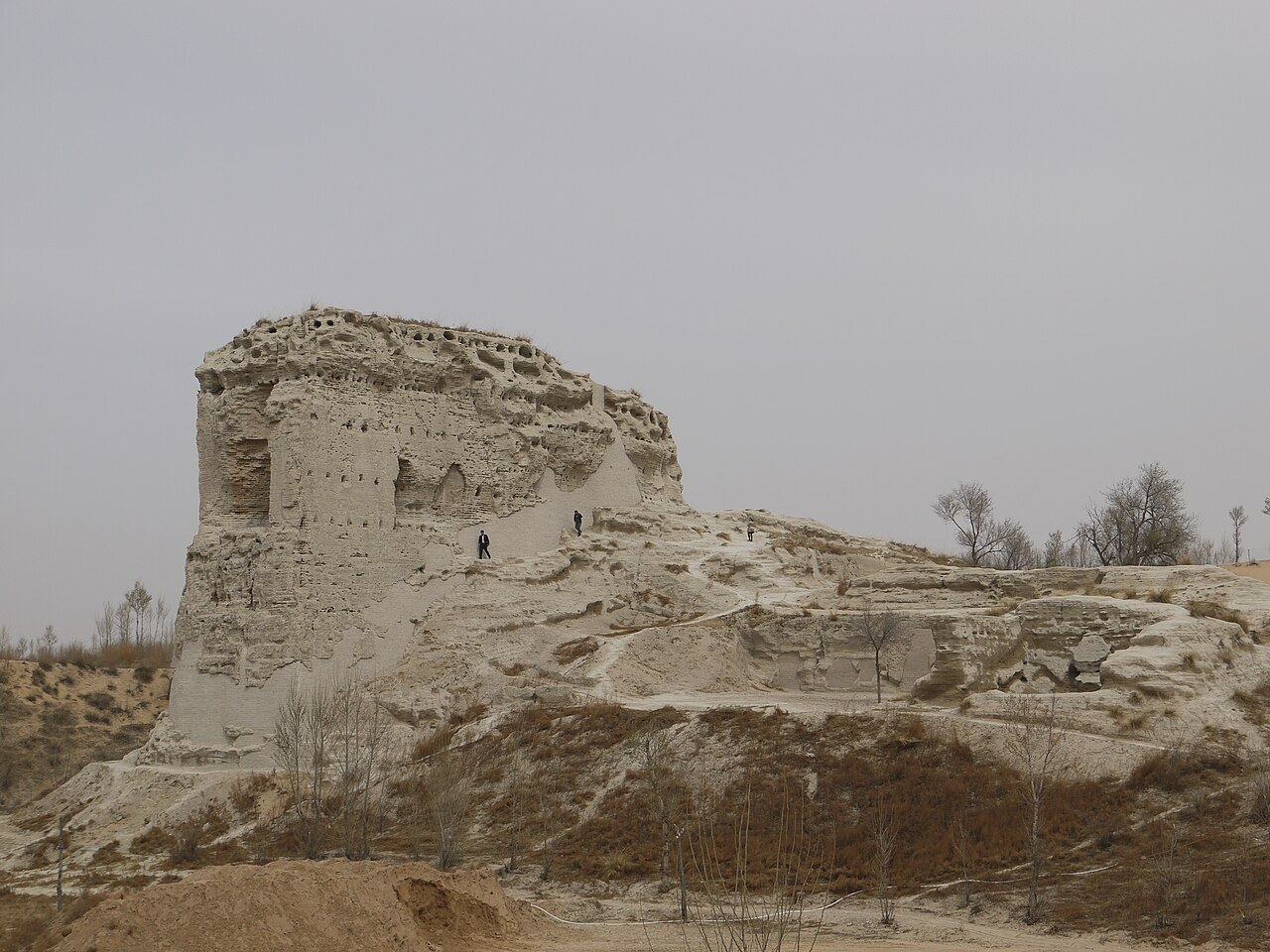
Tongwancheng (Chinees: 統萬城; pinyin: Tǒngwànchéng; Wade-Giles: T'ung3-wan4-chêng2) was de hoofdstad van de door de Xiongnu geleide Hu Xia-dynastie in Noord-China, tijdens de periode van de Zestien Koninkrijken in het begin van de 5e eeuw. De stad ligt aan de zuidrand van de Maowusu-zandvlakte van de Ordos-woestijn, op wat destijds een strategische plek in het midden van het Ordos-plateau was. Tongwancheng, wat "stad die tienduizend regeert" betekent, is het grootste stedelijke centrum van de Zuidelijke Xiongnu dat ooit is gevonden. De ruïnes van de stad zijn goed bewaard gebleven en liggen in het district Jingbian, provincie Shaanxi, nabij de grens met Binnen-Mongolië. De stad is in kaart gebracht en gedeeltelijk gerestaureerd, maar nog niet volledig opgegraven.
Vanwege de toenemende verwoestijning rond de stad en andere factoren beval keizer Taizong in 994 de vernietiging van de stad en de verhuizing van haar inwoners. Tongwancheng verviel geleidelijk tot een ruïne en werd tegen het begin van de Ming-dynastie volledig verlaten. In 1845 werden de ruïnes van Tongwancheng herontdekt en in 1956 formeel geïdentificeerd. In 1996 werd Tongwancheng aangewezen als belangrijke historische en culturele plaats onder nationale bescherming.
Machinaal vertaald uit “Tongwancheng” op de Engelstalige Wikipedia, CC BY-SA 4.0.
Tongwancheng staat op plaats 1.974 van 8.134 in de bekendheidsranglijst van deze atlas en op plaats 42 van de 119 die de atlas in China in kaart brengt. Gebouwd in 419, en daarmee ouder dan 97% van de gedateerde bouwwerken in de atlas — een van de 28 bouwwerken in de atlas die uit de 5e eeuw stammen. De Wikipedia-artikelen erover werden de afgelopen 60 dagen 2.726 keer geopend, meer dan 73% van de atlas. Zie hoe dat zich verhoudt in de kastelenstatistiek.
Bekijk op de interactieve kastelenkaart →Veelgestelde vragen
Waar ligt Tongwancheng?
Tongwancheng ligt in China, op 37.99876°, 108.84722°.
Wanneer werd Tongwancheng gebouwd?
De atlas dateert de stichting op 419. Er kunnen eerdere bouwwerken hebben gestaan; dit is het oudste gedocumenteerde bouwjaar.
Hoe bekend is Tongwancheng?
In de bekendheidsranglijst van deze atlas: plaats 1.974 van 8.134 wereldwijd, plaats 42 in China. Bekendheid combineert het aantal Wikipedia-taalversies met het aantal lezers.
Welk kasteel ligt het dichtst bij Tongwancheng?
Zhenbeitai, ongeveer 85 km verderop.
Meer kastelen in China
- Great Wall of Qi China · 5e eeuw v.Chr.
- Minggugong China · 14e eeuw
- Portas do Cerco China · 19e eeuw
- Xizhimen China
Meer ruïnes
- Castro of Santa Trega Spanje
- Sandby borg Zweden
- Châteaux de Lastours Frankrijk
- Kasteel Tschanüff Zwitserland · 12e eeuw