 China · 5th century
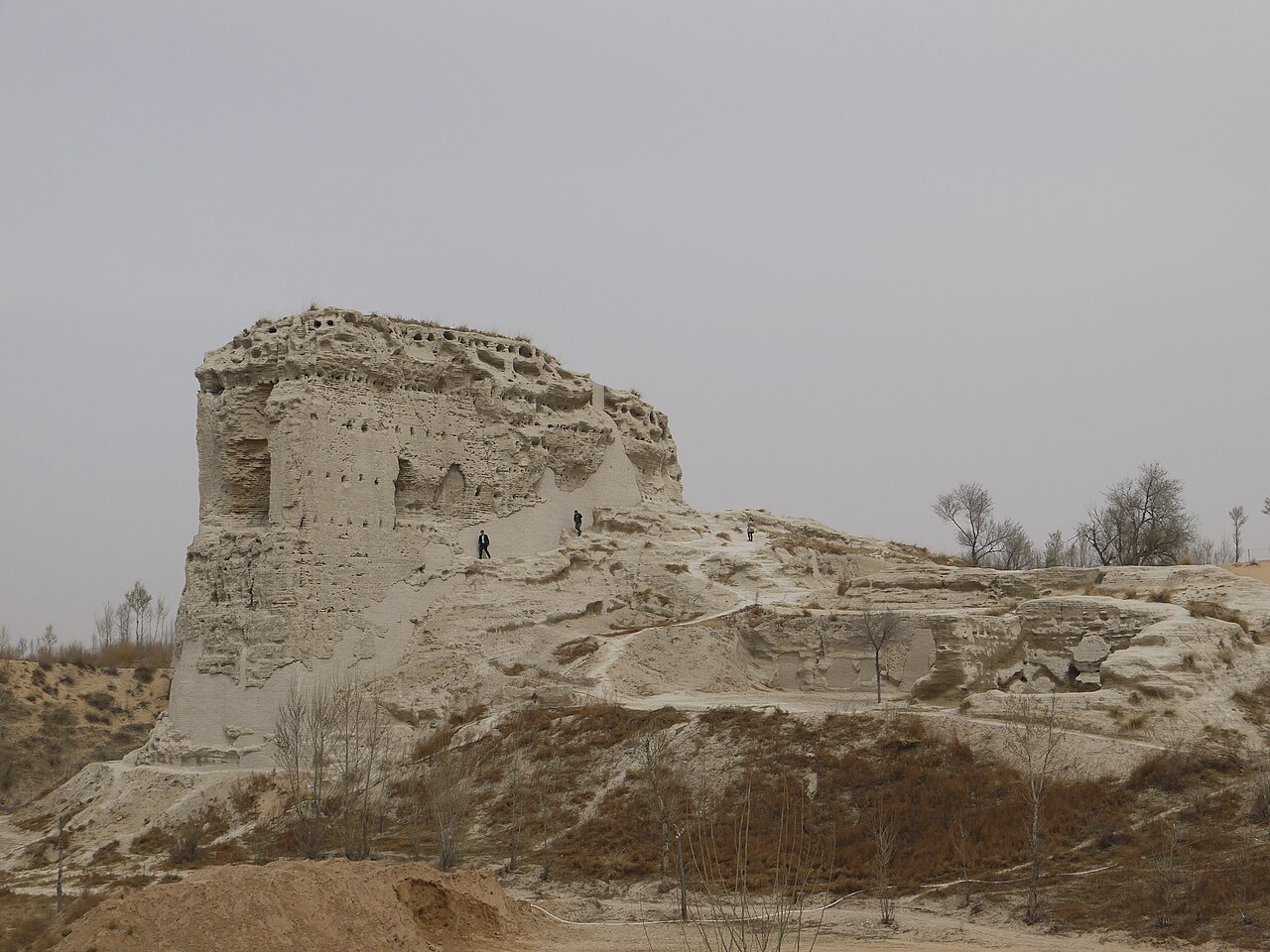
Tongwan ranks #1,911 of 9,040 worldwide in the atlas's castle fame ranking, and #38 of the 103 mapped in China. Founded 419, it is older than 97% of the atlas's dated landmarks, one of 37 atlas entries founded in the 5th century. Its Wikipedia articles were opened 2,726 times in the last 60 days, more than 76% of the atlas. See how China compares in the castle statistics.
Tongwancheng (Chinese: 統萬城; pinyin: Tǒngwànchéng; Wade–Giles: T‘ung3-wan4-chêng2) was the capital of the Xiongnu-led Hu Xia dynasty in northern China during the Sixteen Kingdoms period in the early 5th century. The city is at the southern edge of the Maowusu Sands of the Ordos Desert, on what was formerly a strategic site in the center of the Ordos Plateau. Tongwancheng, which means the "city ruling ten thousand", is the largest urban center of the Southern Xiongnu that has ever been found. The city's ruins are well preserved and located in Jingbian County, Shaanxi Province, near the border with Inner Mongolia. The city has been surveyed and has had some elements restored, but not yet fully excavated.
Due to the worsening desertification around the city and other factors, in 994 the Emperor Taizong ordered the destruction of the city and the relocation of its residents. Tongwancheng gradually fell into ruin and was completely abandoned by the early Ming dynasty. In 1845, the ruins of Tongwancheng were rediscovered, and they were formally identified in 1956. In 1996, Tongwancheng was listed as a Major Historical and Cultural Site Protected at the National Level.
Text adapted from “Tongwancheng” on Wikipedia, CC BY-SA 4.0.
View on the interactive castle map →