Vesting
Wülzburg
🇩🇪 Duitsland · 16e eeuw
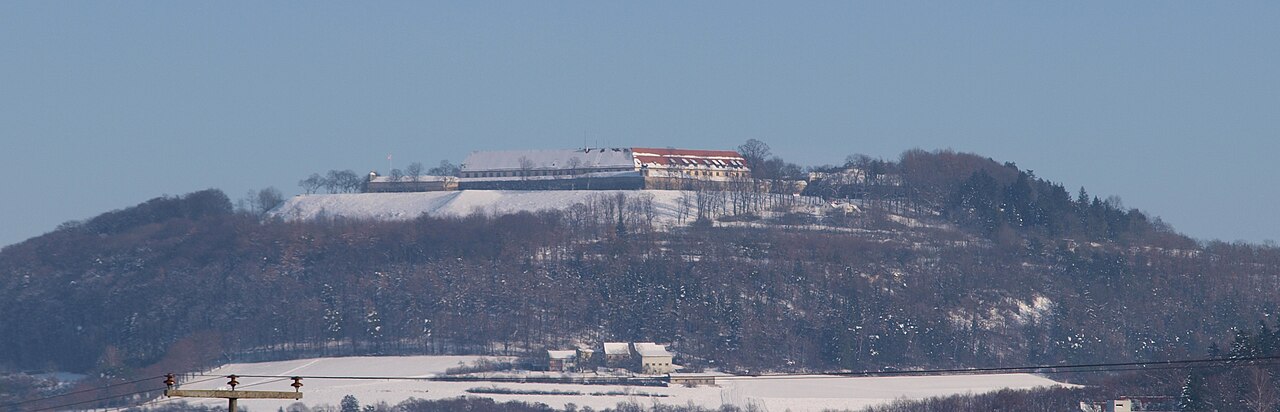
De Wülzburg is een historische vesting uit de renaissance in Duitsland. Ze ligt ongeveer twee kilometer ten oosten van het centrum van Weißenburg in Beieren. Ze staat op een heuvel, 200 meter boven Weißenburg, op een hoogte van 630,5 meter, en was oorspronkelijk een benedictijnenklooster uit de 11e eeuw.
Het is een van de best bewaarde renaissancevestingen van Duitsland. Tegenwoordig maakt het als Ortsteil (deelgemeente) deel uit van de stad Weißenburg. Van 1588 tot 1605 werd het door Georg Frederick, markgraaf van Brandenburg-Ansbach, tot vesting omgebouwd.
In de 19e eeuw was het een garnizoen van het Beierse leger. Tijdens de Eerste Wereldoorlog zat Charles de Gaulle gevangen op de Wülzburg. Ook de nazi's gebruikten het tijdens de Tweede Wereldoorlog als gevangenenkamp; hier zat de Tsjechische componist Erwin Schulhoff meer dan een jaar gevangen voordat hij aan tuberculose overleed. Na de oorlog was het een vluchtelingenkamp.
Machinaal vertaald uit “Wülzburg” op de Engelstalige Wikipedia, CC BY-SA 4.0.
Wülzburg staat op plaats 2.755 van 8.134 in de bekendheidsranglijst van deze atlas en op plaats 204 van de 505 die de atlas in Duitsland in kaart brengt. Gebouwd in 1588, en daarmee ouder dan 35% van de gedateerde bouwwerken in de atlas — een van de 755 bouwwerken in de atlas die uit de 16e eeuw stammen. De Wikipedia-artikelen erover werden de afgelopen 60 dagen 2.692 keer geopend, meer dan 73% van de atlas. Binnen 25 km staan nog 1 andere bouwwerken uit de atlas. Zie hoe dat zich verhoudt in de kastelenstatistiek.
Bekijk op de interactieve kastelenkaart →Veelgestelde vragen
Waar ligt Wülzburg?
Wülzburg ligt in Duitsland, op 49.02556°, 11.00528°.
Wanneer werd Wülzburg gebouwd?
De atlas dateert de stichting op 1588. Er kunnen eerdere bouwwerken hebben gestaan; dit is het oudste gedocumenteerde bouwjaar.
Hoe bekend is Wülzburg?
In de bekendheidsranglijst van deze atlas: plaats 2.755 van 8.134 wereldwijd, plaats 204 in Duitsland. Bekendheid combineert het aantal Wikipedia-taalversies met het aantal lezers.
Welk kasteel ligt het dichtst bij Wülzburg?
Willibaldsburg, ongeveer 19 km verderop.
Meer kastelen in Duitsland
- Welfenschloss Duitsland · 19e eeuw
- Oldenburg Castle Duitsland · 17e eeuw
- Burcht Sterrenberg Duitsland · 12e eeuw
- Burcht Reichenstein Duitsland · 11e eeuw
Meer vestingen
- Fort Franzensfeste Italië · 19e eeuw
- Christiansholm Fortress Noorwegen · 17e eeuw
- Castella de Aguada India · 17e eeuw
- Diu Fortress India · 16e eeuw