 ドイツ · 16世紀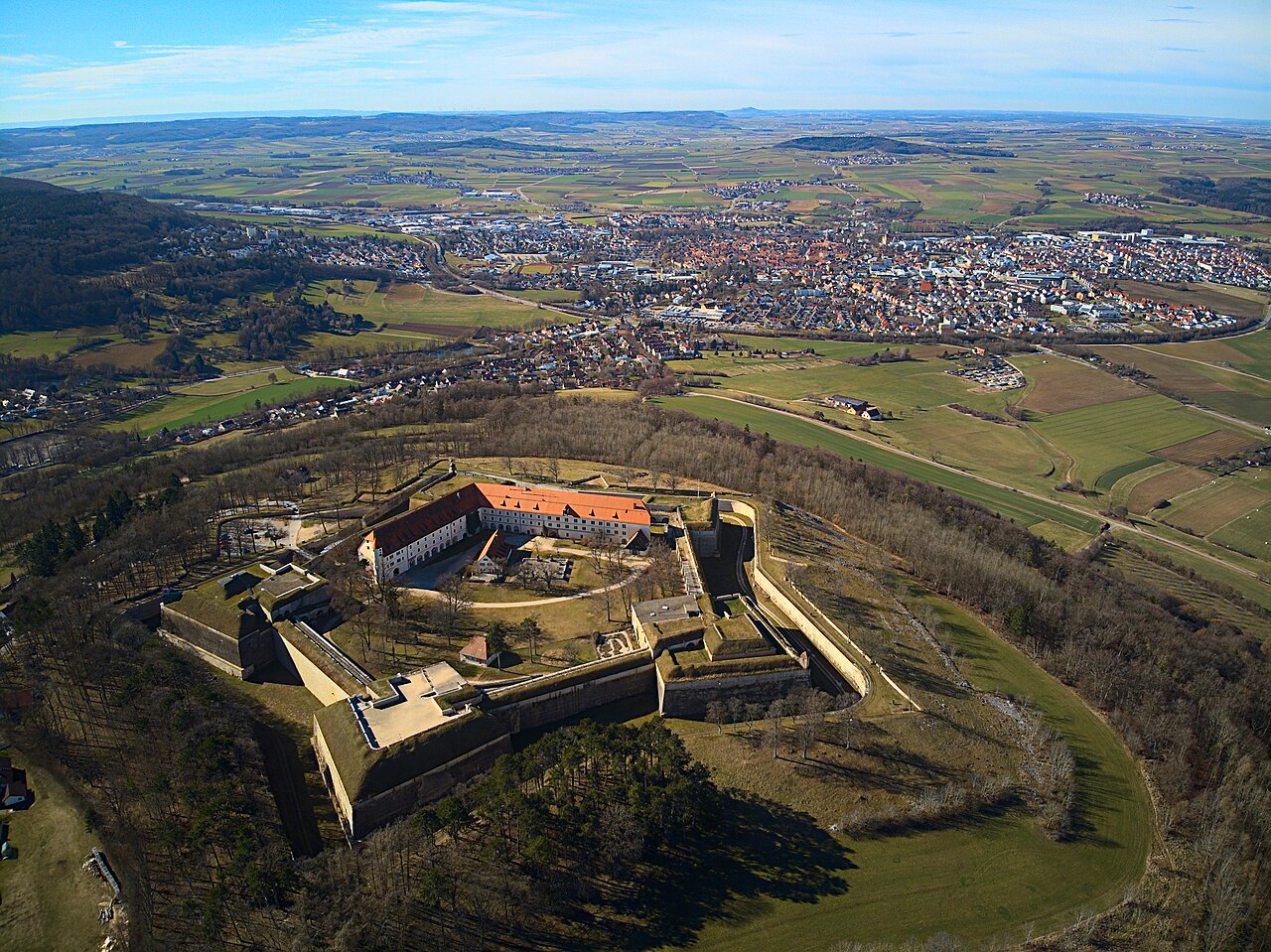
ヴュルツブルクは、ドイツにあるルネサンス期の歴史的要塞である。バイエルン州ヴァイセンブルクの中心部から東へおよそ2キロメートル(1マイル)の位置にある。ヴァイセンブルクの上方200メートル(660フィート)の丘、標高630.5メートル(2,069フィート)に立ち、もとは11世紀に遡るベネディクト会修道院であった。
ドイツで最もよく保存されたルネサンス要塞の一つである。今日では地区(Ortsteil)としてヴァイセンブルク市の一部となっている。1588年から1605年にかけて、ブランデンブルク=アンスバッハ辺境伯ゲオルク・フリードリヒによって要塞に改築された。
19世紀にはバイエルン軍の駐屯地であった。第一次世界大戦中、シャルル・ド・ゴールがヴュルツブルクに収容された。ナチスも第二次世界大戦中に捕虜収容所として使用し、ここでチェコの作曲家エルヴィン・シュルホフが結核で死去するまで1年以上拘留された。戦後は難民収容所となった。
英語版ウィキペディア「Wülzburg」より機械翻訳、CC BY-SA 4.0。
ヴュルツブルク城は、アトラスの城の知名度ランキングで世界2,632位(全9,035件中)、ドイツの709件では200位にランクされています。1588年に創建され、アトラスの年代判明済みの城の33%より古い城です(16世紀に創建されたアトラス収録の886件のひとつ)。 Wikipediaの記事は直近60日で2,692回読まれ、アトラス収録の76%より多くの読者を集めています。半径25キロ以内にはアトラス収録の城が4件あります。ドイツが他とどう比べられるかは、城の統計をご覧ください。
インタラクティブ地図で見る →