Pałac
Schloss Weimar
🇩🇪 Niemcy · XVII wiek
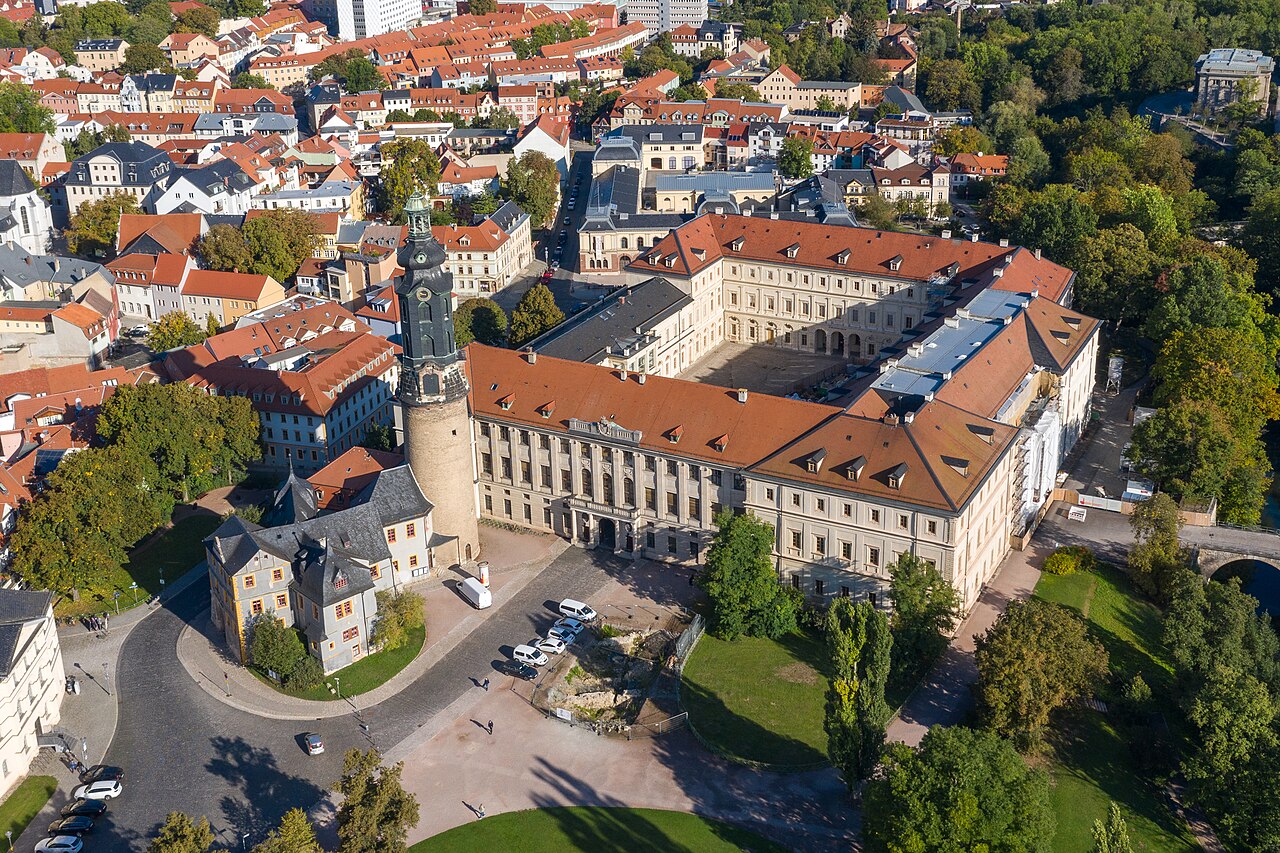
Schloss Weimar to Schloss (pałac) w Weimarze, w Turyngii, w Niemczech. Obecnie nazywany jest Stadtschloss, aby odróżnić go od innych pałaców w Weimarze i jego okolicach. Budynek położony jest na północnym krańcu miejskiego parku nad rzeką Ilm, Park an der Ilm. Stanowi część obiektu światowego dziedzictwa „Klasyczny Weimar”, wraz z innymi miejscami związanymi ze znaczeniem Weimaru jako ośrodka kultury w schyłku XVIII i w XIX wieku.
Od połowy XVI wieku był rezydencją książąt Saksonii-Weimaru, a po odziedziczeniu w 1741 roku księstwa Saksonii-Eisenach – Saksonii-Weimaru i Eisenach, które od 1809 roku aż do rewolucji niemieckiej 1918–1919 stanowiło Wielkie Księstwo Saksonii-Weimaru-Eisenach. Nazwy angielskie obejmują Palace at Weimar, Grand Ducal Palace, City Palace i City Castle.
W historii wielokrotnie ulegał zniszczeniu w wyniku pożarów. Barokowy pałac z XVII wieku, wraz z kościołem Schlosskirche, gdzie premierowo wykonano wiele dzieł Jana Sebastiana Bacha, zastąpiono budowlą neoklasycystyczną po pożarze w 1774 roku. Cztery pomieszczenia poświęcono pamięci poetów działających w Weimarze: Johanna Wolfganga von Goethego, Johanna Gottfrieda Herdera, Friedricha Schillera i Christopha Martina Wielanda. Od 1923 roku w budynku mieści się Schlossmuseum – muzeum skupiające się na malarstwie XV i XVI wieku oraz dziełach sztuki związanych z Weimarem, ośrodkiem kultury.
Tłumaczenie maszynowe artykułu „Schloss Weimar” w angielskiej Wikipedii, CC BY-SA 4.0.
Schloss Weimar zajmuje 1586. miejsce na 8134 w rankingu rozpoznawalności zamków tego atlasu i 123. wśród 505 obiektów w Niemczech. Data powstania — ok. 1650, wcześniejsza niż u 26% datowanych obiektów atlasu — jeden z 626 obiektów atlasu powstałych w XVII wieku. Artykuły o tym obiekcie w Wikipedii otwarto 3201 razy w ciągu ostatnich 60 dni — więcej niż 77% obiektów atlasu. W promieniu 25 km stoi 5 innych obiektów atlasu. Jest jednym z 22 obiektów na mapie regionalnej „Turyngia”. Zobacz w statystykach zamków, jak wypada Niemcy.
Zobacz na interaktywnej mapie zamków →Najczęstsze pytania
Gdzie znajduje się Schloss Weimar?
Schloss Weimar znajduje się w Niemczech, na współrzędnych 50.98028°, 11.33222°.
Z którego roku pochodzi Schloss Weimar?
Atlas podaje rok powstania: ok. 1650. Wcześniejsze budowle mogły stać w tym miejscu — to najstarszy udokumentowany rok.
Które miejsce w rankingu zajmuje Schloss Weimar?
W rankingu rozpoznawalności tego atlasu: 1586. miejsce na 8134, 123. miejsce w Niemczech. Rozpoznawalność łączy liczbę wersji językowych Wikipedii z liczbą czytelników.
Schloss Weimar — który zamek leży najbliżej?
Schloss Belvedere, około 4 km stąd.
Inne zamki w Niemczech
- Belweder na wzgórzu Pfingstberg Niemcy · XIX wiek
- Palais Holnstein Niemcy · XVIII wiek
- Pałac Rheinsberg Niemcy · XVI wiek
- Hohenbaden Castle Niemcy · XII wiek
Inne obiekty: pałace
- Zamek Villesavin Francja · XVI wiek
- Villa Medicea of Poggio a Caiano Włochy · XV wiek
- Gartenpalais Liechtenstein Austria · XVII wiek
- La Cuba (Palermo) Włochy · XII wiek