Ruin
Abergavenny Castle
WLS Wales · 11th century
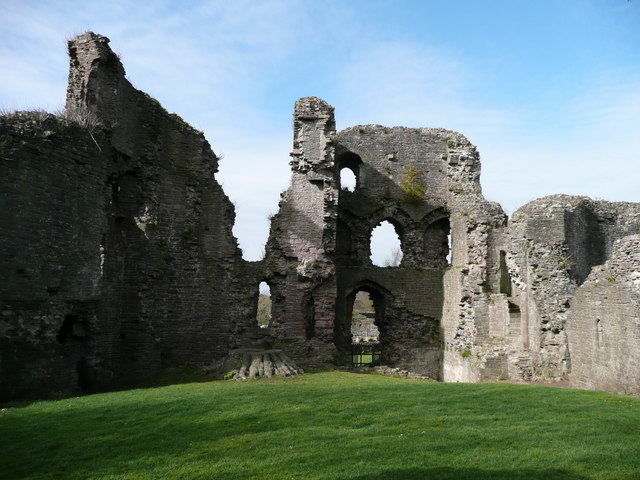
Abergavenny Castle (Welsh: Castell y Fenni) is a ruined castle in the market town of Abergavenny, Monmouthshire, Wales, established by the Norman lord Hamelin de Balun c. 1087. It was the site of a massacre of Welsh noblemen in 1175, and was attacked during the early 15th-century Glyndŵr Rising. William Camden, the 16th-century antiquary, said that the castle "has been oftner stain'd with the infamy of treachery, than any other castle in Wales." It has been a Grade I listed building since 1952.
Text adapted from “Abergavenny Castle” on Wikipedia, CC BY-SA 4.0.
Abergavenny Castle ranks #3,033 of 8,134 worldwide in the atlas's castle fame ranking, and #55 of the 100 mapped in Wales. Founded 1087, it is older than 88% of the atlas's dated landmarks — one of 325 atlas entries founded in the 11th century. Its Wikipedia articles were opened 1,425 times in the last 60 days, more than 58% of the atlas. 12 more atlas landmarks stand within 25 km. The nearest day-trip guide is Cardiff, 39 km away. See how Wales compares in the castle statistics.
View on the interactive castle map →Frequently asked questions
Where is Abergavenny Castle?
Abergavenny Castle stands in Wales, at 51.8199°, -3.01779°.
When was Abergavenny Castle built?
The atlas dates its founding to 1087. Earlier structures may have stood on the site; this is the earliest documented founding year.
How famous is Abergavenny Castle?
In this atlas's fame ranking: #3,033 of 8,134 worldwide, and #55 in Wales. Fame here combines how many Wikipedia language editions cover a landmark with how many people read them.
What is the nearest castle to Abergavenny Castle?
White Castle, about 8 km away.
More castles in Wales
- Gwydir Castle Wales · 15th century
- Dryslwyn Castle Wales · 13th century
- Penrhyn Castle Wales · 19th century
- Ruthin Castle Wales · 13th century
More ruins
- Odiham Castle England · 13th century
- Baynard's Castle England · 11th century
- Edlingham Castle England · 16th century
- Loughor Castle Wales · 12th century