Ruin
Crickhowell Castle
WLS Wales · 12th century
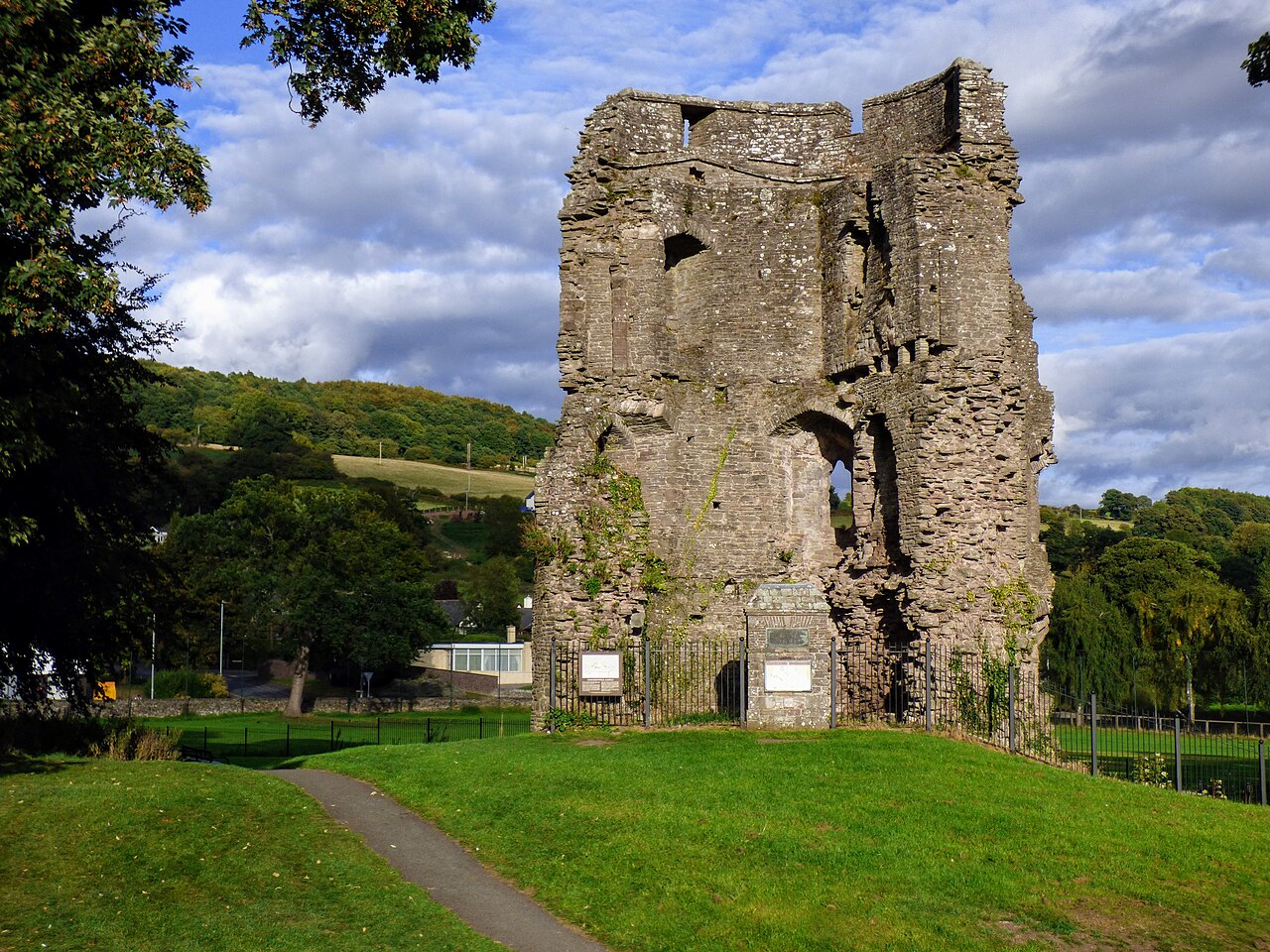
Crickhowell Castle (Welsh: Castell Crucywel) is a Grade I listed building in Crickhowell, Wales, now largely ruined. An alternative name, "Alisby's Castle", is sometimes used; this is thought to be after a former governor of the castle, Gerald Alisby.
The remaining sections of the castle walls and motte stand on a spur where a tributary stream meets the River Usk, in a more elevated position than the rest of the town, which was planned around it. It has been suggested that the castle replaced an earlier motte-and-bailey structure at nearby Maescelyn, where St Mary's Chapel, which has existed since around 1300, has also been linked with the castle by some historians. The motte is oval in shape and is still clearly visible, whilst the foundations of the shell keep are largely buried. Traces of the castle bailey have been identified in the nearby playing field.
The castle was initially a motte and bailey castle built from around 1121, probably by Robert Turberville, a member of the notable Norman family, who at the time was a tenant of the Marcher lord Bernard de Neufmarché. In 1172 it was attacked by Welsh rebels, led by one Seisyllt ap Rhirid. Henry de Turberville (died 1239), the son of another Robert, was Seneschal of Gascony in the years 1226–1231 and again in 1237–1238, and Crickhowell Castle was held at the time by a Richard Turberville. Edmund de Turberville is recorded as lord of Crickhowell later in the century. Hugh Turberville, who held Crickhowell Castle from 1273, not as tenant-in-chief but as mesne lord, also held the position of Seneschal of Gascony.
Hugh's services were called upon by King Edward I to train Welsh men-at-arms and transform the royal levy into a disciplined medieval army capable of conquering Wales; he led both cavalry and 6,000 infantry recruited in the Welsh Marches for King Edward's forces. He was later Constable of Castell y Bere in Merionethshire. He fought against Rhys ap Maredudd during his rising from 1287 to 1291, and died in 1293, the last of the family in the direct line.
The castle was refortified in stone from 1242 when Sybil Turberville, Hugh's daughter, married Sir Grimbold Pauncefote (or "Paunceforte"), who thus gained possession. It was walled with substantial stone towers and a large bailey, a home castle befitting an important Royal ally in Wales.
Text adapted from “Crickhowell Castle” on Wikipedia, CC BY-SA 4.0.
Crickhowell Castle ranks #6,403 of 8,764 worldwide in the atlas's castle fame ranking, and #105 of the 107 mapped in Wales. Founded c. 1121, it is older than 86% of the atlas's dated landmarks — one of 593 atlas entries founded in the 12th century. 13 more atlas landmarks stand within 25 km. The nearest day-trip guide is Cardiff, 42 km away. See how Wales compares in the castle statistics.
View on the interactive castle map →Frequently asked questions
Where is Crickhowell Castle?
Crickhowell Castle stands in Wales, at 51.85724°, -3.13764°.
When was Crickhowell Castle built?
The atlas dates its founding to c. 1121. Earlier structures may have stood on the site; this is the earliest documented founding year.
How famous is Crickhowell Castle?
In this atlas's fame ranking: #6,403 of 8,764 worldwide, and #105 in Wales. Fame here combines how many Wikipedia language editions cover a landmark with how many people read them.
What is the nearest castle to Crickhowell Castle?
Tretower Castle, about 4 km away.
More castles in Wales
- Fonmon Castle Wales
- Penhow Castle Wales · 12th century
- St Quintins Castle Wales
- Llandough Castle Wales · 14th century
More ruins
- Douglas Castle Scotland · 13th century
- Egremont Castle England · 12th century
- Gleaston Castle England · 14th century
- Hopton Castle England