 Egypt · 11th century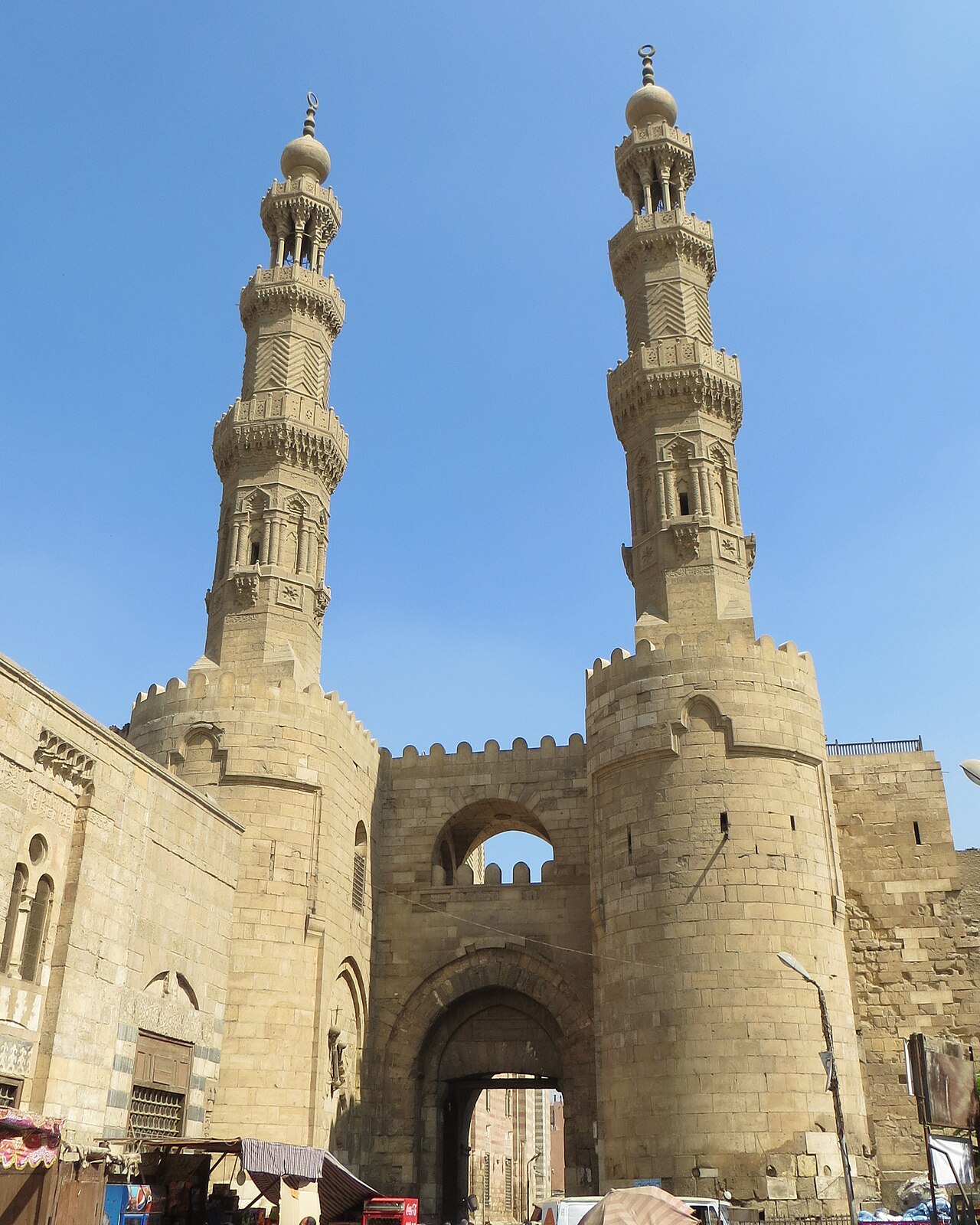
Bab Zuwayla or Bab Zuweila (Arabic: باب زويلة) is one of three remaining gates in the city walls of historic Cairo in Egypt. It was also known as Bawabat al-Mitwali or Bab al-Mitwali. The gate was built in 1092 by the Fatimid vizier Badr al-Jamali. The two minaret towers on top of it were added between 1415 and 1422 as part of the construction of the adjacent Mosque of Sultan al-Muayyad. Today it remains one of the major landmarks of Cairo.
Text adapted from “Bab Zuwayla” on Wikipedia, CC BY-SA 4.0.
Bab Zuweila ranks #1,383 of 9,035 worldwide in the atlas's castle fame ranking, and #8 of the 36 mapped in Egypt. Founded 1092, it is older than 87% of the atlas's dated landmarks, one of 439 atlas entries founded in the 11th century. Its Wikipedia articles were opened 2,607 times in the last 60 days, more than 75% of the atlas. 15 more atlas landmarks stand within 25 km. The nearest day-trip guide is Cairo, 2 km away. See how Egypt compares in the castle statistics.
View on the interactive castle map →