 Scotland · 13th century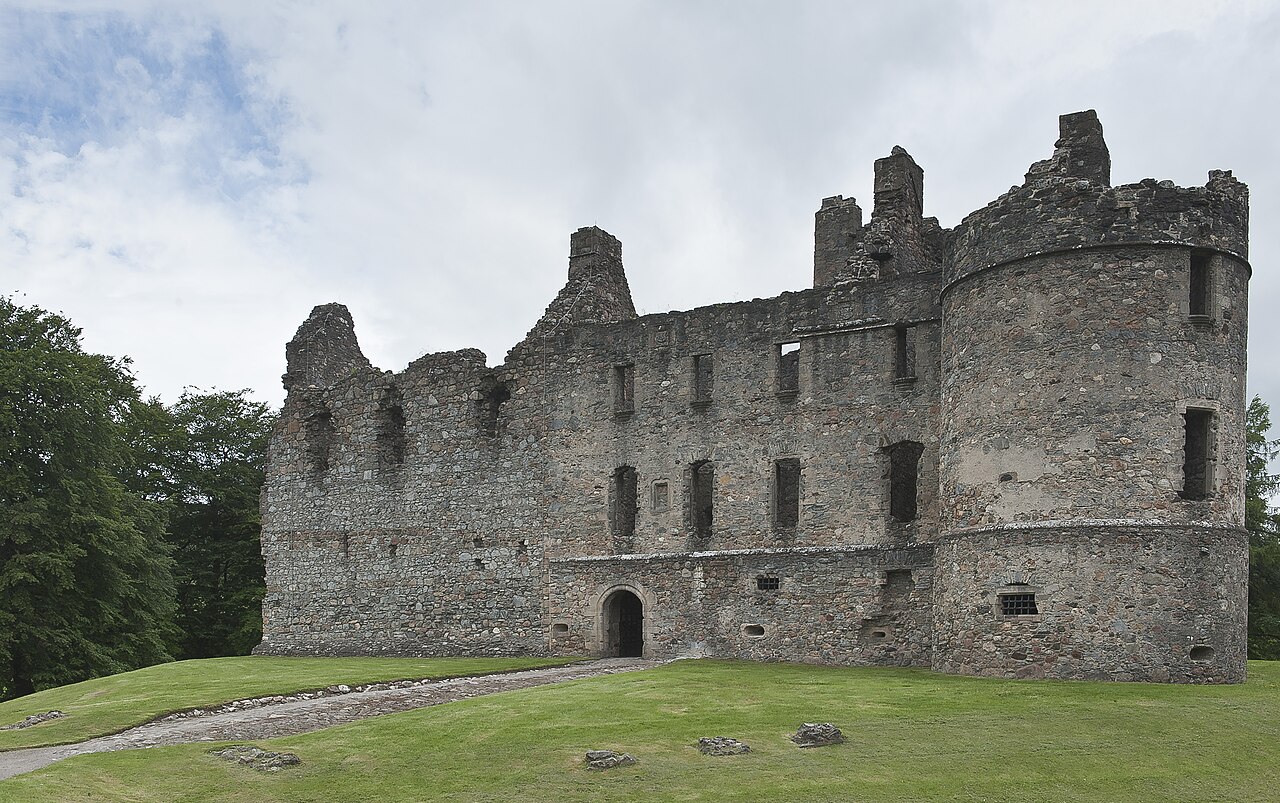
Balvenie Castle is a ruined castle 1 km north of Dufftown in the Moray region of Scotland.
Originally known as Mortlach, it was acquired by Alexander Comyn, Earl of Buchan in the 13th century after "he surrendered part of his inheritance in order to build up his north-east possessions. Significantly, Alexander Comyn exchanged territory in Tranent (East Lothian) for Mortlach and its important castle of Balvenie, in Highland Banffshire - a charter of 1285 shows this transaction had taken place a generation earlier. Balvenie was a most valuable strategic site, making a bridge between Buchan and the lordship of Badenoch (and Lochaber) the two real seats of power for the Comyns in the thirteenth-century Scotland." Balvenie Castle was extended and altered in the 15th and 16th centuries.
The castle fell out of use following an attack by Robert the Bruce in 1308, which left the property uninhabitable. At some point in the 14th century, the castle and estates of Balvenie passed to the Earl of Douglas. Nothing is documented as to how the Black Douglases first acquired the castle but the most likely account is that it came with the marriage of the heiress Joanna Murray to Archibald 'the Grim' , 3rd Earl of Douglas in 1362. His son and successor Archibald Douglas, 4th Earl of Douglas granted his younger brother James Douglas, 7th Earl of Douglas, latterly known as James 'the Gross' , the lordship of Balvenie in 1408. James's main residence was at Abercorn Castle, a coastal fortress to the west of Edinburgh and Balvenie Castle's use was as temporary accommodation when the need arose.
In 1440, William Douglas, 6th Earl of Douglas, was killed by James the Gross, probably in a conspiracy with William Crichton and Alexander Livingston of Callendar, the guardians of the then child-king James II. James 'the Gross then became the 7th earl. James immediately provided the lordship of Balvenie with its castle to his youngest son, John Douglas, Lord of Balvenie. Earl James's death in 1443 signalled a resumption of the hostility between the royal Stewarts and the Black Douglases. The Battle of Arkinholm in May 1455 saw the defeat of this, the main Douglas line by an army loyal to James II. All of their lands and titles were forfeited to the Crown, including Balvenie Castle.
Text adapted from “Balvenie Castle” on Wikipedia, CC BY-SA 4.0.
Balvenie Castle ranks #2,911 of 9,079 worldwide in the atlas's castle fame ranking, and #98 of the 226 mapped in Scotland. Founded c. 1275, it is older than 65% of the atlas's dated landmarks — one of 1080 atlas entries founded in the 13th century. Its Wikipedia articles were opened 1,230 times in the last 60 days, more than 56% of the atlas. 3 more atlas landmarks stand within 25 km. The nearest day-trip guide is Inverness, 66 km away. It is one of the 30 landmarks on the atlas's regional map of Aberdeenshire. It is stop 14 of 23 on the Aberdeenshire castle trail, Stonehaven to Aberdeen. See how Scotland compares in the castle statistics.
View on the interactive castle map →