 Iran
Iran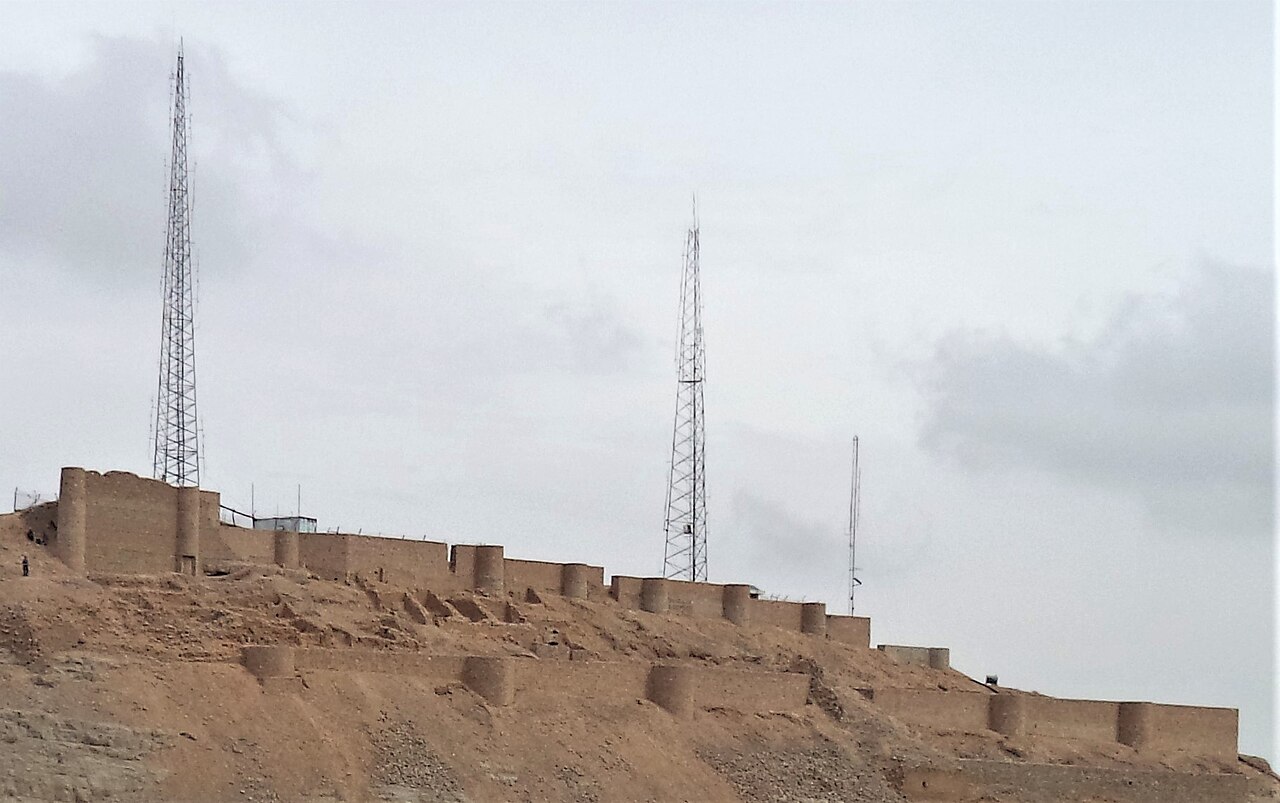
Dizkuh (Persian: دزکوه) or Shahdiz (شاهدز), was a fortress near Isfahan, Iran, notably held by the Nizari Ismailis. It was captured and destroyed in Seljuk sultan Muhammad Tapar's anti-Nizari campaign. Its conspicuous, picturesque ruins lie about 8 km south of Isfahan on a subpeak of Mount Soffeh.
Dizkuh was a fortress in central Persia, located in the strategic route leading to Isfahan, capital of the Seljuq Empire.
The historian Ibn al-Athir attributes the construction of the fortress (which he called the "Fortress (qal'a) of Isfahan") to the Seljuq sultan Malikshah, but it is more likely that it dates back earlier, even as early as the pre-Islamic Sasanian period, and the Seljuq sultan simply rebuilt the castle which was near his capital. Since then, the name Shahdiz became more common.
The castle gained its fame due to the activities of the Nizari Ismailis. The Ismailis were active in the Isfahan region in the 11th century, and the chief da'i of Persia and Iraq Abd al-Malik ibn Attash had established his headquarters at Isfahan. After Hassan-i Sabbah's capture of the Alamut Castle, Abd al-Malik ibn Attash's son, Ahmad ibn Abd al-Malik ibn Attash was encouraged to seize the castle. He posed as a schoolmaster and gradually converted the garrison force of the fortress, most of whom were of Daylami origin with Shiite tendencies. By 1100, he had seized the fortress and began its re-fortification similar to the other Ismaili castles of Persia.
Ahmad began to collect taxes from nearby districts. He had reportedly converted 30,000 people in Isfahan. Shahdiz was strategically important as it guarded the main route to Isfahan, the Seljuq capital city. Its capture had been a major strategic success for the Nizaris.
In 1107, soon after gaining power, Seljuq sultan Muhammad I Tapar, son of Malikshah, began a campaign against the Nizari Ismailis, focusing on Shahdiz, besieging the fortress with a large force. In an attempt to lift the siege, Ahmad tried to involve the Ismaili sympathizers in the Seljuq camp and the Sunni religious scholars (ulama) of Isfahan in a long religious debate, trying to convince them that the Ismailis are true Muslims, too, differing only in the matter of imamate; therefore, sultan's campaign is religiously illegitimate. The debate finally ended after a year and the siege continued.
Text adapted from “Shahdiz” on Wikipedia, CC BY-SA 4.0.
Shahdiz Castle ranks #4,053 of 9,079 worldwide in the atlas's castle fame ranking, and #42 of the 173 mapped in Iran. 5 more atlas landmarks stand within 25 km. The nearest day-trip guide is Isfahan, 7 km away. See how Iran compares in the castle statistics.
View on the interactive castle map →