Palace
Baroque Palace in Oradea
 Romania · 18th century
- Founded
- 1762
- Style
- Baroque architecture
- Architect
- Franz Anton Hillebrandt
- Heritage status
- Historic Monument
- Location
- Oradea
- Coordinates
- 47.068°, 21.9312°
- Open data
- Wikidata Q1415381
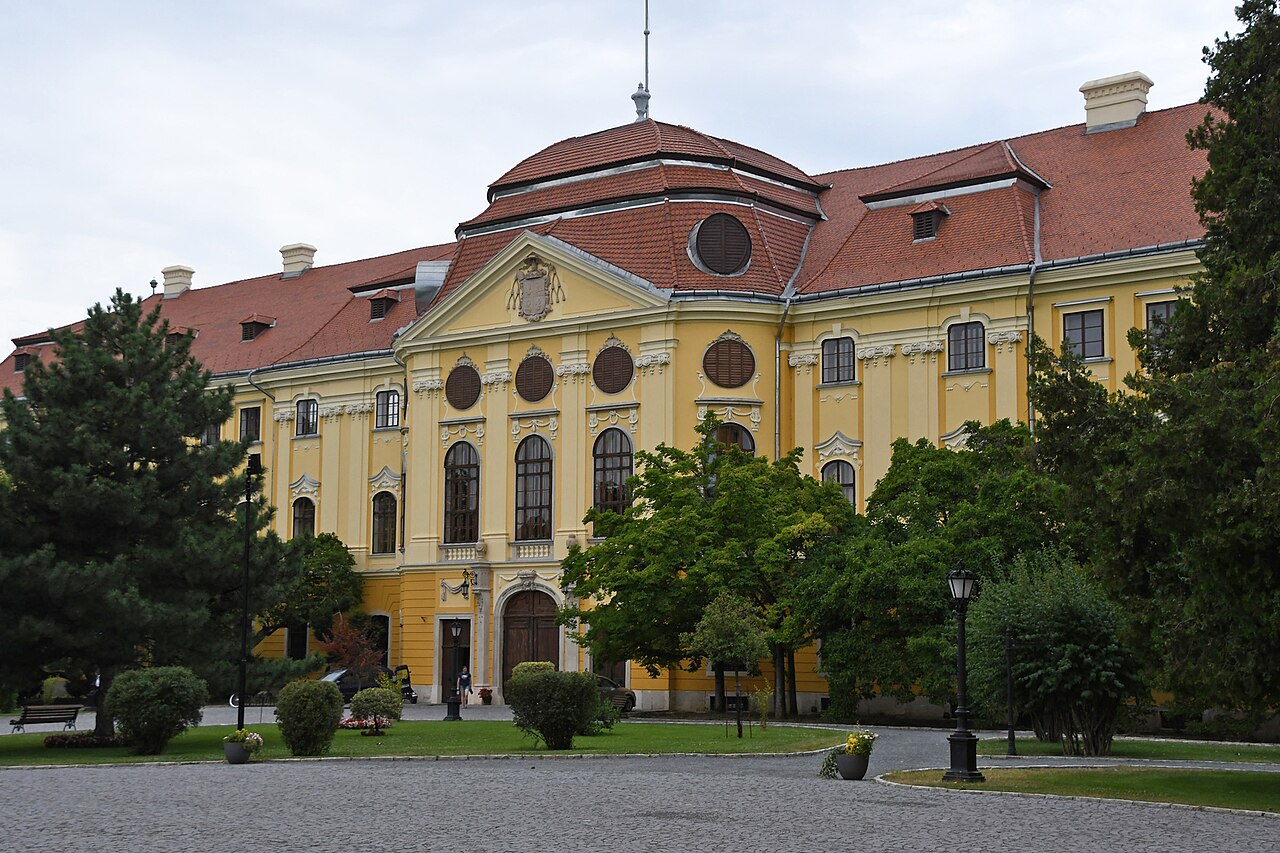
Description
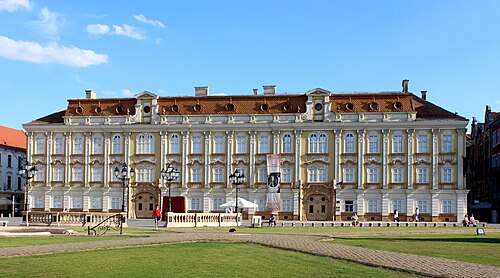
The Baroque Palace of Oradea (Romanian: Palatul Baroc din Oradea; Hungarian: Nagyváradi barokk palota), also known as the Roman Catholic Episcopal Palace of Oradea (Romanian: Palatul Episcopiei Romano-Catolice din Oradea; Hungarian: Nagyváradi római katolikus püspöki palota), of the city of Oradea in Bihor County, Romania, is a building that dates to the Baroque times.
It was founded in 1762 by the Baron Bishop Adam Patačić, as bishopric palace of the Roman Catholic Diocese of Magnovaradimum. Illustrious Viennese architect Franz Anton Hillebrandt, designer of many Austrian palaces and one of 18th century Europe's best, designed the palace and planned the city's posh side as Baroque quarter, while engineer A.J. Neumann was in charge of the massive palace's construction, complete with its 365 exterior windows resembling the days of the year and 120 large, extravagant rooms distributed on three floor plans. Construction on the building lasted from 1762 to 1777.
The architecture of the palace is of late Austrian Baroque style, a more sober and practical type compared to the highly ornamented French Baroque, for example. The building was meant to resemble on a smaller scale the famous Royal Belvedere (palace) of Vienna, which likely was one of the reasons along with other religious conflicts that made Empress Maria Theresa of Austria repudiate the founder, Adam Patachich, a Croatian nobleman and the bishop of Oradea between 1759 and 1776; he was then sent to another diocese, in Kalocsa, Hungary. Nevertheless, the baron was a charismatic, highly educated humanist and an illuminated patron of arts, who is mostly remembered for the fine music and musicians he surrounded himself with.
This is where Michael Haydn, famous composer and Joseph Haydn's brother, worked as a Kapellmeister in the bishop's orchestra. The bishop also employed at the court other famous European composers and violinists like Wenzel Pichl and Carl Ditters von Dittersdorf, who between 1765 and 1769 served as a Musikdirektor.
Finally, in 1771, the Holy Roman Empress (jure uxori), Maria Theresa of Austria, together her son, future Joseph II, Holy Roman Emperor, arrived here to visit and make peace with project she did not initially fancy.
Text adapted from “Baroque Palace of Oradea” on Wikipedia, CC BY-SA 4.0.
In the rankings
Baroque Palace in Oradea ranks #4,307 of 9,040 worldwide in the atlas's castle fame ranking, and #41 of the 125 mapped in Romania. Founded 1762, it is older than 15% of the atlas's dated landmarks, one of 685 atlas entries founded in the 18th century. 1 more atlas landmarks stand within 25 km. The nearest day-trip guide is Nyíregyháza, 99 km away. See how Romania compares in the castle statistics.
Castles nearby
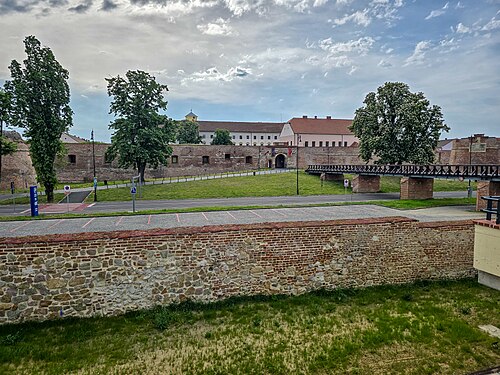
- Oradea Citadel2 km · Romania
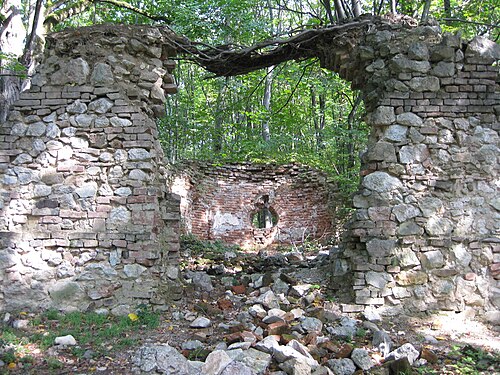
- Ruinele cetății Șinteu35 km · Romania
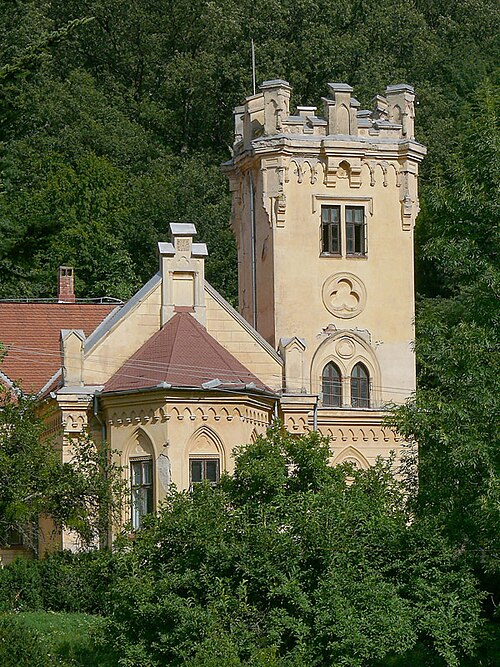
- Zichy mansion in Gheghie45 km · Romania
- Gyula Castle
 68 km · Hungary
More castles in Romania
- Baroque Palace, TimișoaraRomania · 18th century
- Fortress of AradRomania · 18th century
- Martinuzzi CastleRomania
- Brașov FortressRomania · 16th century