 Germany · 12th century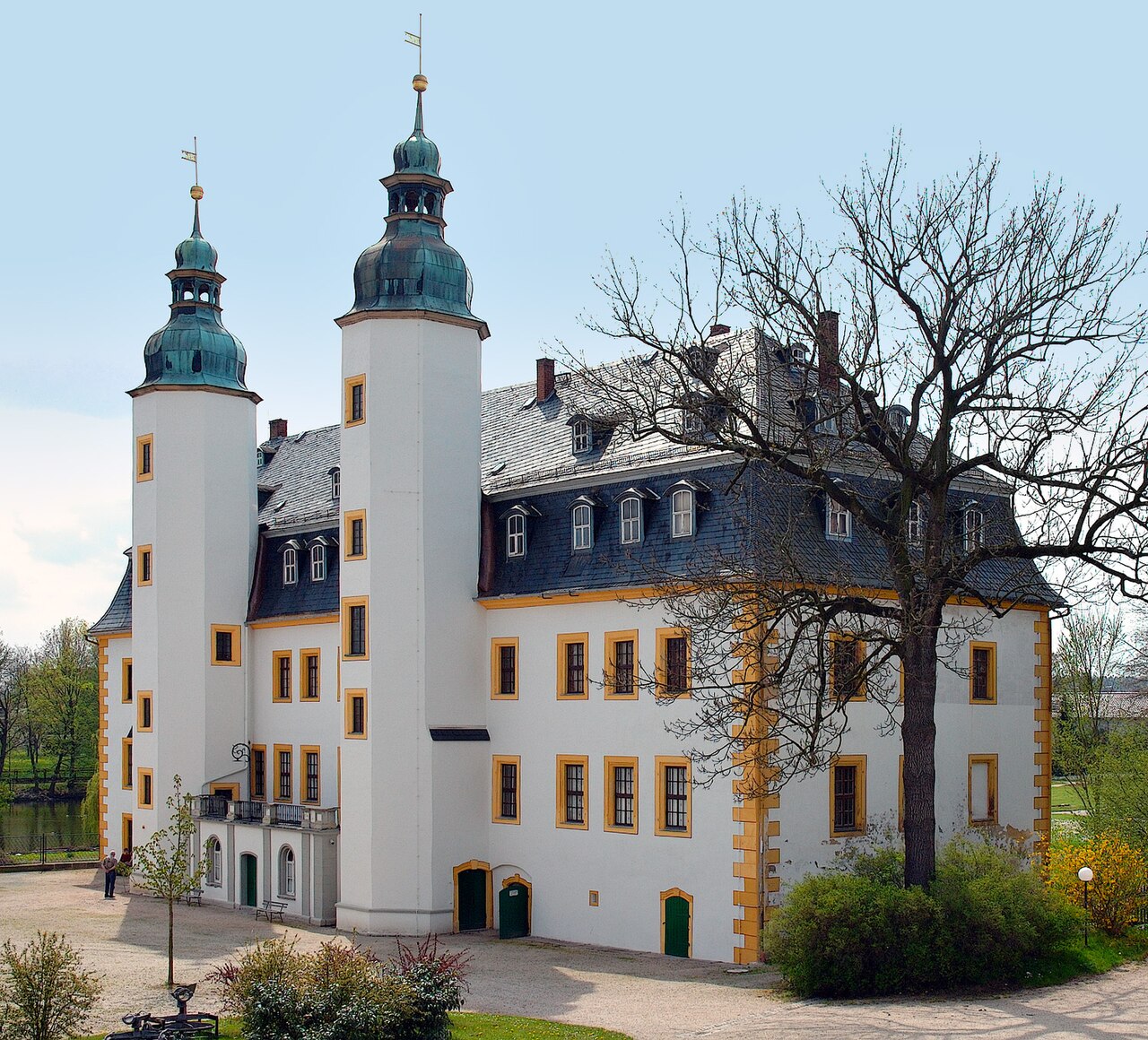
Blankenhain Castle (German: Schloss Blankenhain) is a large castle in Blankenhain near Crimmitschau, in the district of Zwickau in Saxony, Germany.
The castle dates back to the 12th century. It is first documented in 1423 as Wasserburg. Half of it burned down in 1661 and was rebuilt in 1699 (some sources say 1700). In 1765 the castle acquired its current Baroque appearance with mansard roof and domed towers. After World War II, the Soviet regime ordered the castle destroyed, but it was saved by the intervention of courageous locals. Since 1981, the castle and the surrounding land have been developed as an open-air museum of agriculture and rural life in central Germany between 1890 and 1990. The museum covers 11 hectares, including 60 buildings.
Text adapted from “Blankenhain Castle” on Wikipedia, CC BY-SA 4.0.
Blankenhain Castle ranks #3,569 of 9,079 worldwide in the atlas's castle fame ranking, and #292 of the 711 mapped in Germany. Founded c. 1150, it is older than 80% of the atlas's dated landmarks — one of 756 atlas entries founded in the 12th century. 6 more atlas landmarks stand within 25 km. The nearest day-trip guide is Karlovy Vary, 76 km away. See how Germany compares in the castle statistics.
View on the interactive castle map →