 Germany · 17th century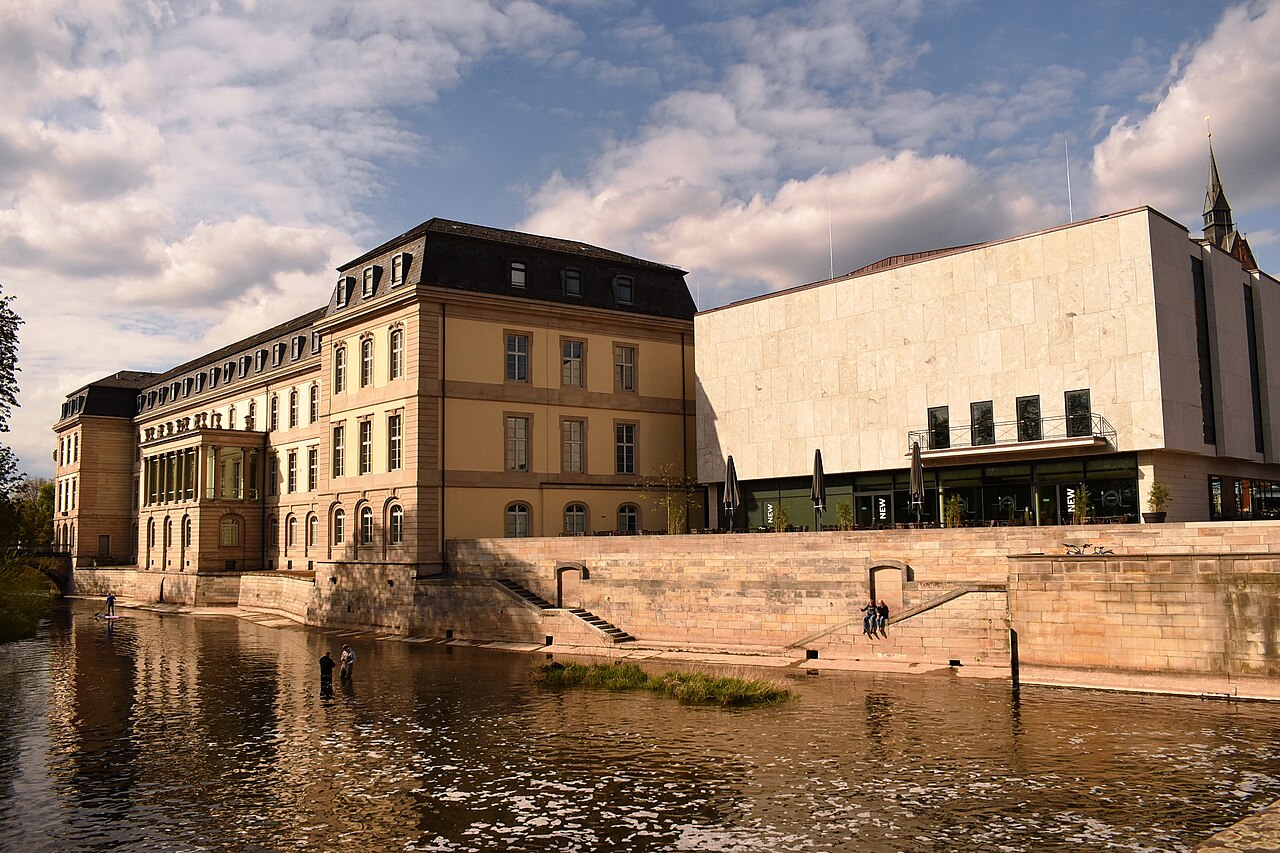
The Leine Palace (German: Leineschloss), situated on the Leine in Hanover, Germany, is a former residence of the Hanoverian dukes, electors and kings. It is now the seat of the parliament (Landtag) of Lower Saxony.
The first building on the site was a Franciscan friary, constructed in about 1300, which was abandoned in 1533 after the Protestant Reformation. In 1636, George, Duke of Brunswick-Lüneburg, began converting the monastery into a rather small late-renaissance palace as his residence as ruler of the Principality of Calenberg. The former monastery church served as a castle church and royal burial place. His son, Elector Ernest Augustus, had it enlarged and modernized and added a theatre in the late 17th century. The principality was elevated to the Electorate of Hanover in 1692. In 1742 the north-west wing was renewed. On May 28, 1660 Ernest Augustus' son, George I of Great Britain was born at the Leine Palace.
From 1814, the previously electoral palace was the residence of the Kingdom of Hanover. Between 1816 and 1844, the architect Georg Ludwig Friedrich Laves fully re-built the palace. The column portico with six Corinthian columns was built during this period. The youngest son of George III, Prince Adolphus, Duke of Cambridge, officiated as Viceroy of Hanover from 1816. Kings Ernest Augustus and George V were the first and only monarchs to have their main residence in the state capital and in the Leine Palace between 1837 and 1866. Although, it was intended to transfer the main seat to the Welfenschloss palace.
During World War II, the Leine Palace was completely destroyed by fire after Allied aerial raids. King George I of Great Britain was originally buried in the chapel of the palace, but his remains, along with his parents', were moved to the 19th-century mausoleum of Ernest Augustus in the Berggarten of Herrenhausen Palace after World War II.
Text adapted from “Leineschloss” on Wikipedia, CC BY-SA 4.0.
Leineschloss ranks #1,559 of 9,079 worldwide in the atlas's castle fame ranking, and #123 of the 711 mapped in Germany. Founded 1636, it is older than 28% of the atlas's dated landmarks — one of 721 atlas entries founded in the 17th century. Its Wikipedia articles were opened 3,774 times in the last 60 days, more than 82% of the atlas. 4 more atlas landmarks stand within 25 km. See how Germany compares in the castle statistics.
View on the interactive castle map →