 Germany · 18th century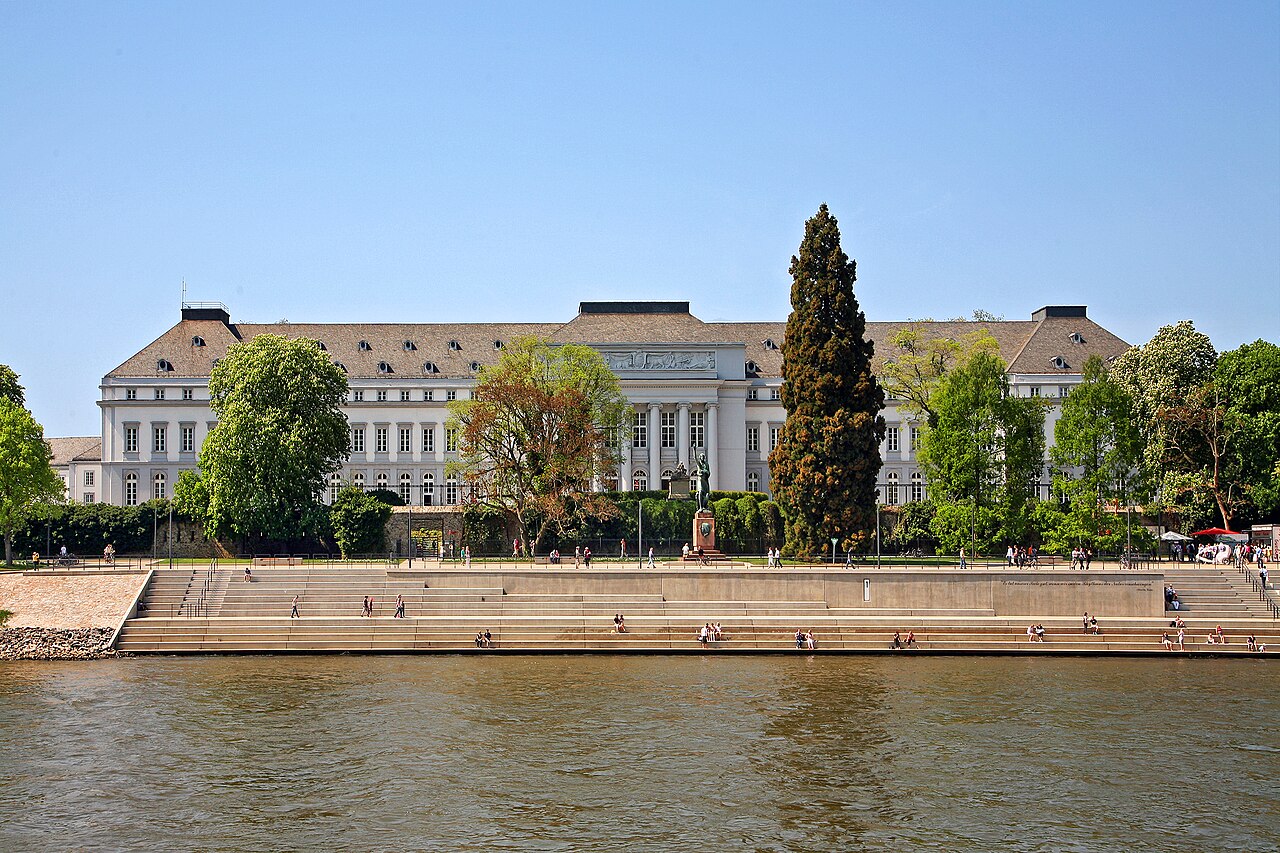
The Electoral Palace (German: Kurfürstliches Schloss) in Koblenz, was the residence of the last Archbishop and Elector of Trier, Clemens Wenceslaus of Saxony, who commissioned the building in the late 18th century. In the mid-19th century, the Prussian Crown Prince (later Emperor Wilhelm I) had his official residence there during his years as military governor of the Rhine Province and the Province of Westphalia. It now houses various offices of the federal government.
The Electoral Palace is one of the most important examples of the early French neoclassical great house in Southwestern Germany, and with Schloss Wilhelmshöhe in Kassel, the Prince Bishop's Palace in Münster and Ludwigsburg Palace, one of the last palaces built in Germany before the French Revolution. Since 2002, it has been part of the Rhine Gorge UNESCO World Heritage Site, and it is also a protected cultural property under the Hague Convention.
Text adapted from “Electoral Palace, Koblenz” on Wikipedia, CC BY-SA 4.0.
Electoral Palace Koblenz ranks #1,796 of 9,079 worldwide in the atlas's castle fame ranking, and #138 of the 711 mapped in Germany. Founded c. 1775, it is older than 14% of the atlas's dated landmarks — one of 696 atlas entries founded in the 18th century. Its Wikipedia articles were opened 2,748 times in the last 60 days, more than 76% of the atlas. 29 more atlas landmarks stand within 25 km. The nearest day-trip guide is Koblenz, 1 km away. It is one of the 39 landmarks on the atlas's regional map of the Middle Rhine. It is stop 28 of 32 on the Rhine castle route, Bingen to Koblenz. See how Germany compares in the castle statistics.
View on the interactive castle map →