Castle
Burgalimar Castle
🇪🇸 Spain · 10th century
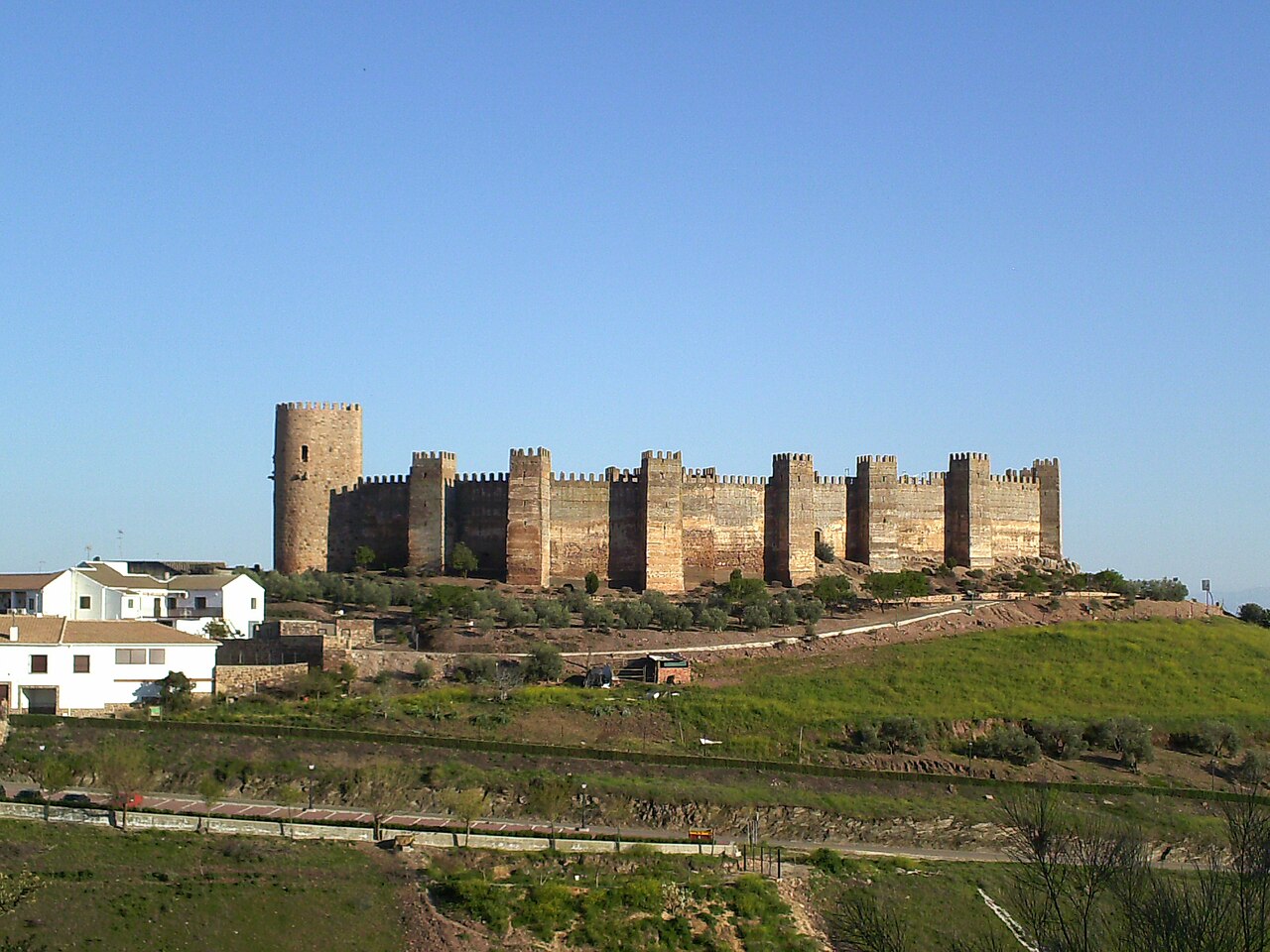
Burgalimar Castle (Spanish: Castillo de Burgalimar) is a historic castle in the town of Baños de la Encina, Jaén Province, Spain. It was built in the 10th century under the rule of the Umayyad Caliphate of Córdoba.
A marble inscription plaque found at the entrance of the castle records the date of its construction as 967 AD (357 AH), during the reign of the caliph Al-Hakam II, who is also named in the inscription. The marble plaque is now kept at the National Archaeological Museum in Madrid. The castle was built as a military base and garrison to defend the valley of the Guadalquivir River and the roads to and from the capital city of Córdoba.
In the 12th and 13th centuries, during the Reconquista, the castle changed hands multiple times between the Muslim rulers of al-Andalus and the Christian kingdoms to the north. Alfonso VII captured it in 1147 but it returned to Muslim control after his death in 1157. Alfonso VIII and Alfonso IX together captured it again for a time in 1189. It was captured by the Kingdom of Castile in 1212, shortly before the Battle of Las Navas de Tolosa, but returned to Almohad control three days after the battle. The castle was definitively conquered by Castile in 1225, when it conquered the surrounding region. The Castilians later added a keep tower called the Torre del Homenaje ("Tower of Homage") in 1466. It was designated a National Monument of Spain in 1931.
The castle consists of a large walled enclosure, of elongated but irregular shape, measuring roughly 100 meters long and 50 meters wide. Fifteen towers stand at close intervals around the perimeter. All the towers have a square or rectangular base, which was typical of caliphal fortresses in the 10th century, except for the northernmost tower, the 15th-century Torre del Homenaje, which is larger and has a semi-round profile. There are two entrance gates: one in the north and one in the south/southeast. The more important southern gate consists of a straight passage (instead of the bent entrance common in later fortifications) with horseshoe arches, set between two towers. Chambers were located above the passage with slots in the floor where missiles could be thrown down onto attackers. Inside the castle today are the remains of a cistern and the foundations of later buildings.
Text adapted from “Burgalimar Castle” on Wikipedia, CC BY-SA 4.0.
Burgalimar Castle ranks #3,766 of 8,134 worldwide in the atlas's castle fame ranking, and #154 of the 602 mapped in Spain. Founded c. 950, it is older than 93% of the atlas's dated landmarks — one of 138 atlas entries founded in the 10th century. Its Wikipedia articles were opened 2,153 times in the last 60 days, more than 69% of the atlas. 1 more atlas landmarks stand within 25 km. The nearest day-trip guide is Jaén, 45 km away. It is one of the 125 landmarks on the atlas's regional map of Andalusia. See how Spain compares in the castle statistics.
View on the interactive castle map →Frequently asked questions
Where is Burgalimar Castle?
Burgalimar Castle stands in Spain, at 38.17024°, -3.7755°.
When was Burgalimar Castle built?
The atlas dates its founding to c. 950. Earlier structures may have stood on the site; this is the earliest documented founding year.
How famous is Burgalimar Castle?
In this atlas's fame ranking: #3,766 of 8,134 worldwide, and #154 in Spain. Fame here combines how many Wikipedia language editions cover a landmark with how many people read them.
What is the nearest castle to Burgalimar Castle?
Castillo de las Huelgas, about 18 km away.
More castles in Spain
- Castell de Gardeny Spain · 12th century
- Castell de Banyeres de Mariola Spain · 13th century
- Castillo de Sancti Petri Spain · 13th century
- Castillo de Alcaudete Spain · 11th century
More castles
- Aya Castle Japan · 14th century
- Suemori Castle Japan · 16th century
- Matsukura Castle Japan · 14th century
- Chortkiv Castle Ukraine · 17th century