 Spain · 12th century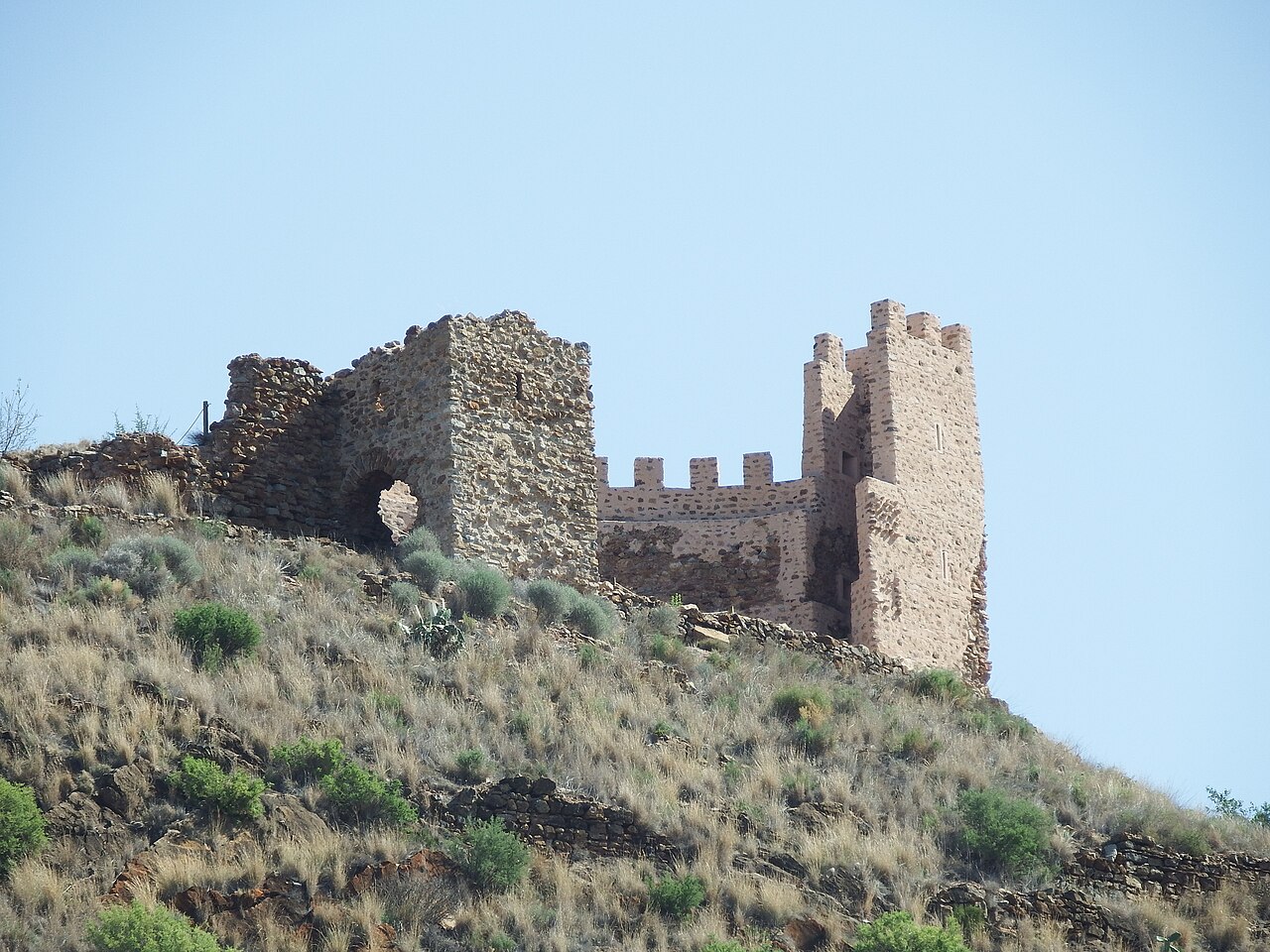
The castle of Azuébar, located in the province of Castellón, is a fortress of Muslim origin built in the 12th century with later Christian transformations, standing on top of a promontory that dominates the confluence of the ramblas of Almedíxer and Azuébar and the valley in which the town lies.
Remains of an Iberian settlement have been found on its site.
The castle of Azuébar was donated by James I in 1238 to Juan Gonzálvez de Heredia, while the Conqueror king was at El Puig de Santa María preparing the siege of the city of Valencia. There is documentary evidence of the historical vicissitudes of this castle from the 13th century, through four royal documents of King James I. These documents were published for the first time by José Martí Coronado, Official Chronicler of the Town of Azuébar, in the Bulletin of the Valencian Academy of Genealogy and Heraldry.
Machine-translated from “Castillo de Azuébar” on the Spanish Wikipedia, CC BY-SA 4.0.
Castle of Azuébar ranks #8,504 of 9,079 worldwide in the atlas's castle fame ranking, and #532 of the 607 mapped in Spain. Founded c. 1150, it is older than 80% of the atlas's dated landmarks — one of 756 atlas entries founded in the 12th century. 15 more atlas landmarks stand within 25 km. The nearest day-trip guide is Castellón de la Plana, 33 km away. See how Spain compares in the castle statistics.
View on the interactive castle map →