 Spain · 10th century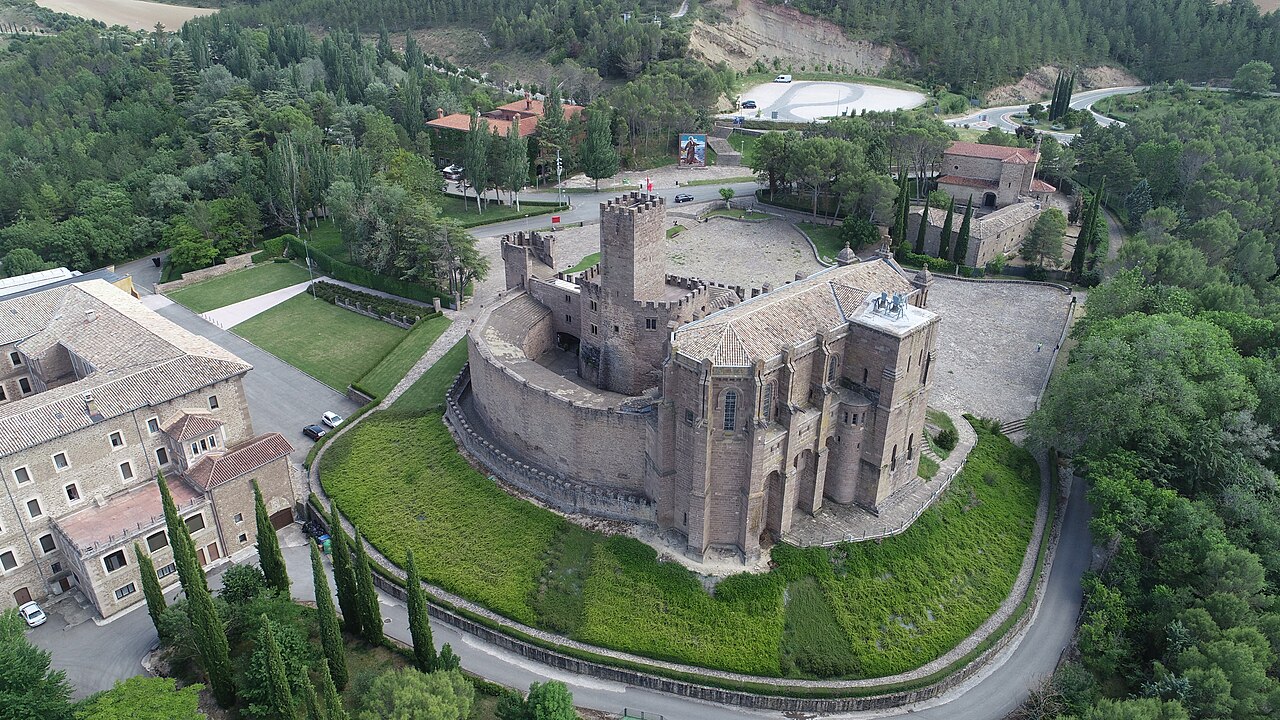
The Castle of Xavier (Basque: Xabierko gaztelua; Spanish: Castillo de Javier) is located on a hill in the town of Xavier (Navarre, Spain), 52 km east of Pamplona and 7 km east of Sangüesa. The town of Xavier was part of the Kingdom of Navarre. Built in the 10th century, this castle was the birthplace and childhood home of Saint Francis Xavier, son of the Lords of Xavier, hence his surname.
The basque name Xabier derives from the long form Etxeberri or 'new house', evolving thereafter into Xavier in Navarro-Aragonese and Javier in Spanish.
Consists of three buildings with different antiquity. The "Tower of the Kristo Santua" is the main fortified building and chapel, holding an interesting Late Gothic crucifix and a series of murals depicting the dance of the death, unique in Spain. The "Tower of Homage", call also the San Miguel Tower, is the oldest in the castle. It also harbors the museum dedicated to the life of the saint. In its foundations Muslim vestiges have been unveiled, possibly dating from the 10th century. In the 11th century, the first enclosure that sheltered the early surround rooms. In the 13th century, two polygonal bodies and two flanking towers were added in all four cardinal directions.
In the 1890s the castle was donated by its owner, Duquesa de Villahermosa, to the Jesuit Order, which intended to turn it into a missionary centre. They decided to build an adjacent basilica; it was designed by the local architect Angel Goicoechea and completed by the Navarrese contractor, Blas Morte.
The castle and village of Xavier were won by Sancho VII of Navarre in approximately 1223. An Aragonese noble got a loan of 9,000 sols from the King of Navarre, with the latter receiving Xavier as a warranty. The Aragonese noble could not afford to pay in due time, so the stronghold became property of Sancho. It was not the first time nor the last, since Sancho VII was one of the major lenders to the Crown of Aragon, and took over a number of villages and castles in return for his unpaid loans that notably strengthened his border with Aragon: Escó, Peña, Petilla, Gallur, Trasmoz, Sádaba, etc.
In 1236 the castle was handed over by King Theobald I to Adán de Sada.
Text adapted from “Castle of Xavier” on Wikipedia, CC BY-SA 4.0.
Castle of Xabier ranks #926 of 9,079 worldwide in the atlas's castle fame ranking, and #38 of the 607 mapped in Spain. Founded c. 950, it is older than 92% of the atlas's dated landmarks — one of 193 atlas entries founded in the 10th century. Its Wikipedia articles were opened 5,047 times in the last 60 days, more than 87% of the atlas. 3 more atlas landmarks stand within 25 km. See how Spain compares in the castle statistics.
View on the interactive castle map →