 France · 16th century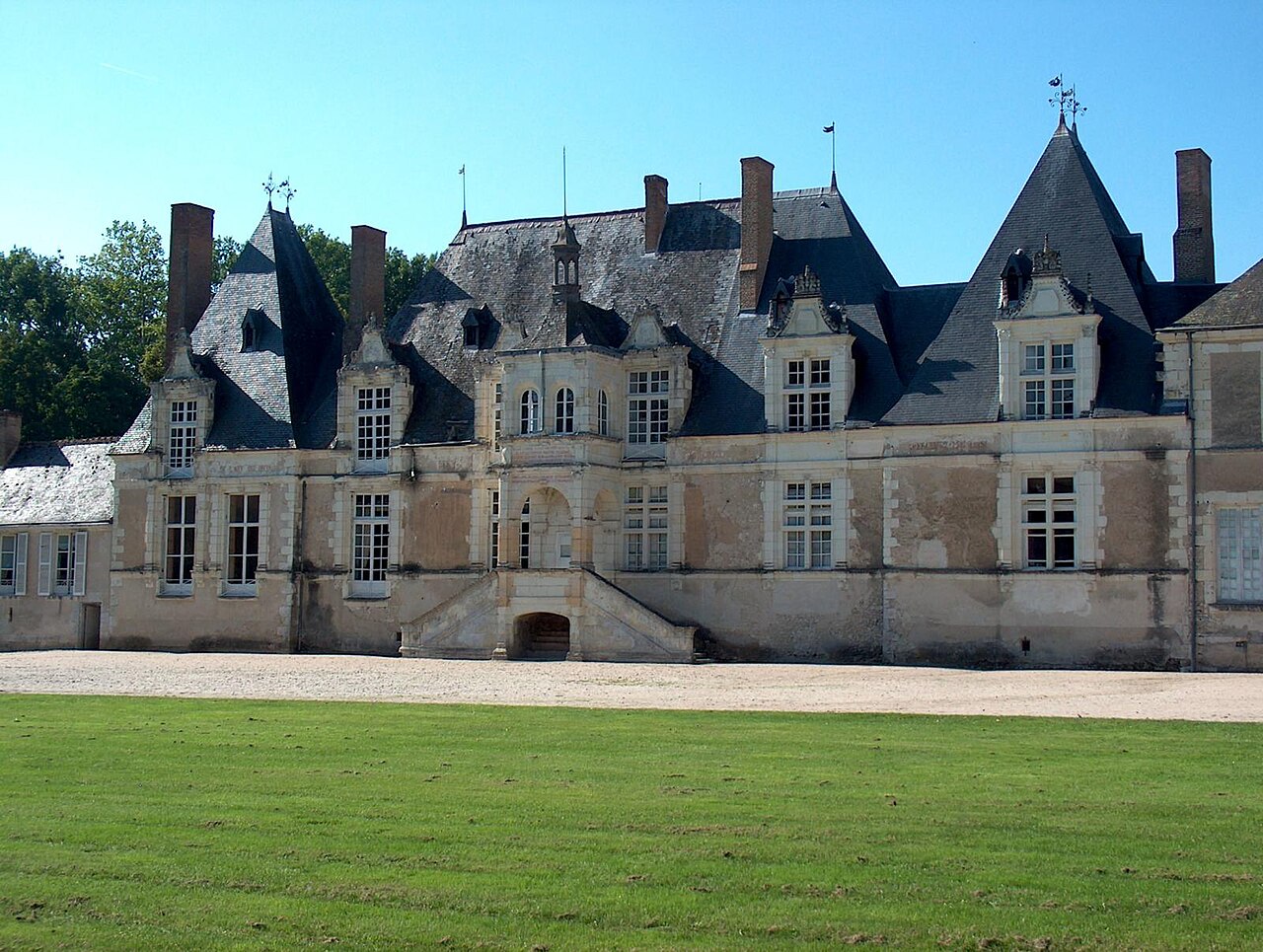
Château de Villesavin (French pronunciation: [ʃɑto də vilsavɛ̃]) is a 16th-century country house in the Tour-en-Sologne commune in Loir-et-Cher, Centre-Val de Loire, France. The château is a designated historical monument of France. It is privately owned and contains several museums open to the public.
Château Villesavin is built on the Beuvron, on what was once a Roman Gaulic settlement called Villa Savinus. A medieval manor was later built on the site, and owned by Guy de Châtillon, Count of Blois, in the early 14th century.
The present château was built by Jean le Breton, Lord of Villandry, who was the financial secretary under King François I. The château was designed by the French renaissance style by the same Italian and French masters who built Château de Chambord, 9 kilometres (5.6 mi) away, including Benvenuto Cellini. Le Breton supervised the construction of Chambord on behalf of the king, and decided to build his own home nearby using the same materials and designers, and possibly some of the same budget. The château was constructed between 1527 and 1537, during which time le Breton also built his other home, Château de Villandry.
The château consists of a main horseshoe shaped house, with dormers framed by volutes and pilasters, decorated with the royal emblem of François I. In the rear is a moat and small bridge. The spiral staircase inside appears to have been inspired by Chambord, while stained-glass windows contain scenes from Metamorphoses by the poet Ovid.
On either side of the main house are two single-story horseshoe-shaped wings, each with rectangular corner pavilions and courtyards. Le Breton skipped the round towers of châteaux like Chambord to install more innovative square corner pavilions, which had just come into fashion in France. The left pavilion contains a chapel, which includes late 16th-century murals depicting the Passion of the Christ in the style of the Second School of Fontainebleau.
In the central courtyard is an Italian marble fountain decorated with chimeras, lion masks, and dolphins.
The grounds also contain a very large and rare dovecote with 1,500 holes. The 16th-century dovecote is one of the few that survived the French Revolution, as owning doves was a royal privilege and status symbol of the nobility.
Text adapted from “Château de Villesavin” on Wikipedia, CC BY-SA 4.0.
Château de Villesavin ranks #2,486 of 9,079 worldwide in the atlas's castle fame ranking, and #197 of the 793 mapped in France. Founded 1527, it is older than 41% of the atlas's dated landmarks — one of 891 atlas entries founded in the 16th century. Its Wikipedia articles were opened 1,170 times in the last 60 days, more than 55% of the atlas. 9 more atlas landmarks stand within 25 km. The nearest day-trip guide is Blois, 15 km away. It is one of the 73 landmarks on the atlas's regional map of the Loire Valley. It is stop 29 of 32 on the Loire Valley château route, Angers to Orléans. See how France compares in the castle statistics.
View on the interactive castle map →