 France · 16th century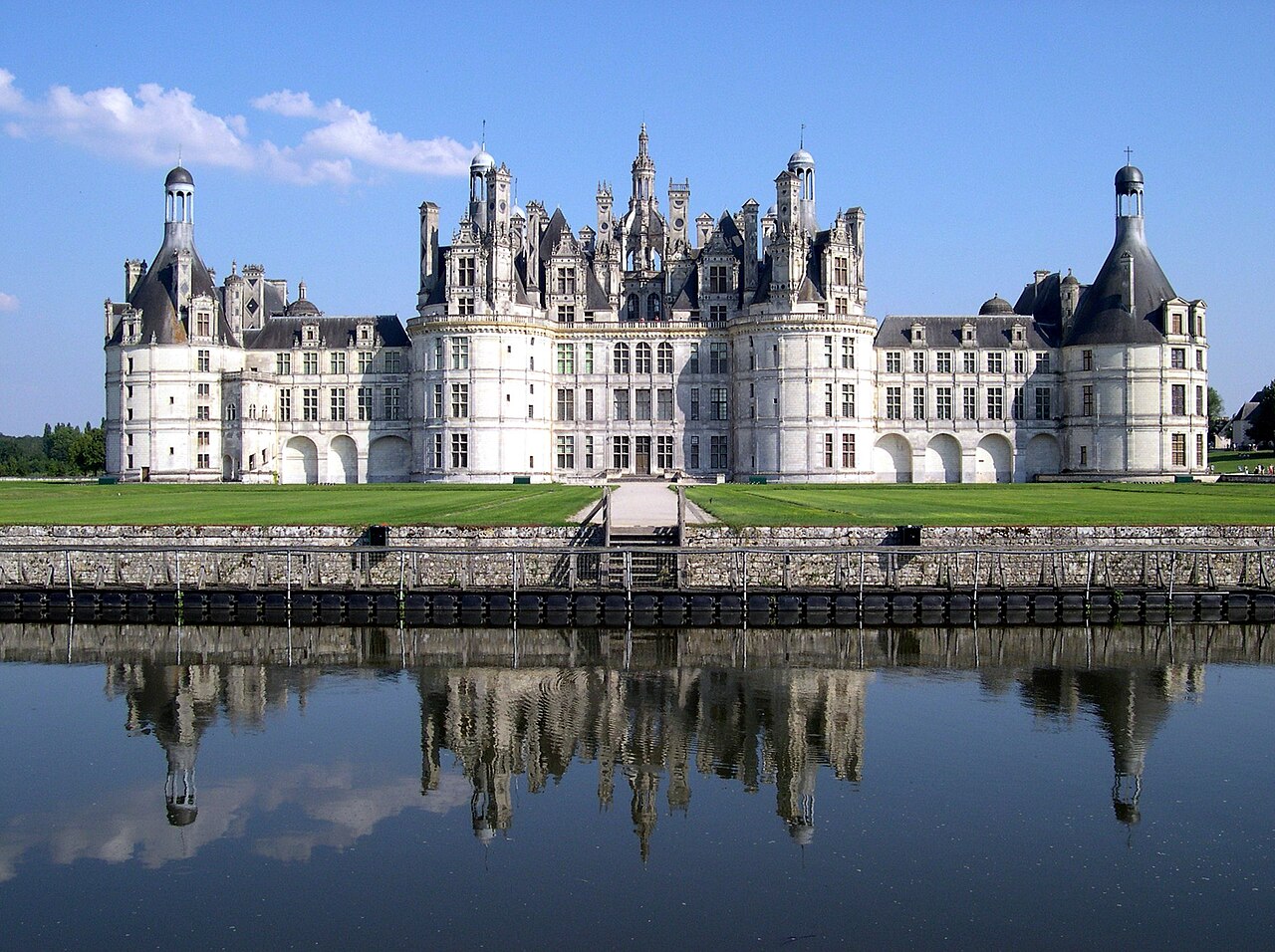
The Château de Chambord (French pronunciation: [ʃɑto d(ə) ʃɑ̃bɔʁ]) in Chambord, Centre-Val de Loire, France, is one of the most recognisable châteaux in the world because of its very distinctive French Renaissance architecture, which blends traditional French medieval forms with classical Renaissance structures. The building was commissioned by Francis I of France and built between 1519 and 1547.
Chambord is the largest château in the Loire Valley; it was built to serve as a hunting lodge for Francis I, who maintained his royal residences at the Château de Blois and Amboise. The original design of the château is attributed to the Tuscan architect Domenico da Cortona; Leonardo da Vinci may have also influenced the design.
Chambord was altered considerably during the 28 years of its construction, during which it was overseen on-site by Pierre Neveu. With the château nearing completion, Francis showed off his enormous symbol of wealth and power by hosting his old arch-rival, Charles V, Holy Roman Emperor, at Chambord.
In 1792, in the wake of the French Revolution, some of the furnishings were sold and timber removed. For a time the building was left abandoned, though in the 19th century some attempts were made at restoration. During the Second World War, art works from the collections of the Louvre and the Château de Compiègne were moved to the Château de Chambord. The château is now open to the public, receiving 700,000 visitors in 2007. Flooding in June 2016 damaged the grounds but not the château itself.
Text adapted from “Château de Chambord” on Wikipedia, CC BY-SA 4.0.
Château de Chambord ranks #25 of 9,079 worldwide in the atlas's castle fame ranking, and #3 of the 793 mapped in France. Founded 1519, it is older than 42% of the atlas's dated landmarks — one of 891 atlas entries founded in the 16th century. Its Wikipedia articles were opened 77,868 times in the last 60 days, more than 99% of the atlas. 10 more atlas landmarks stand within 25 km. The nearest day-trip guide is Blois, 14 km away. It is one of the 73 landmarks on the atlas's regional map of the Loire Valley. It is stop 30 of 32 on the Loire Valley château route, Angers to Orléans. See how France compares in the castle statistics.
View on the interactive castle map →