 Ghana · 15th century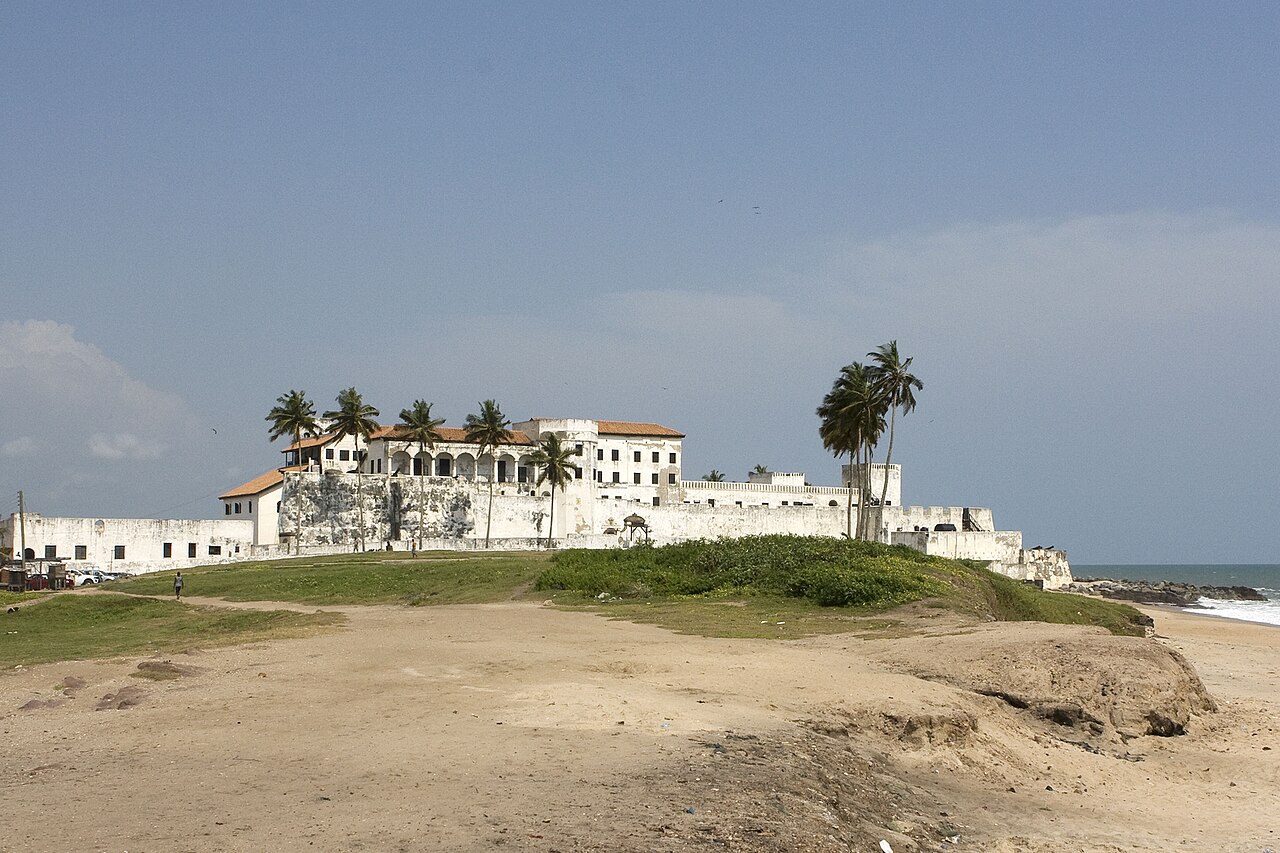
Elmina Castle, or Fort St. George, was erected by the Portuguese in 1482 as Castelo de São Jorge da Mina ('St. George of the Mine Castle'), also known as Castelo da Mina or simply Mina (or Feitoria da Mina), in present-day Elmina, Ghana, formerly the Gold Coast. It holds several profound distinctions: it was the first trading post built on the Gulf of Guinea and is the oldest extant European building in Sub-Saharan Africa.
First established as a trade settlement for indigenous people of the region, the castle later became one of the most important stops of the Atlantic slave trade. The Dutch West India Company seized the fort from the Portuguese in 1637, after an unsuccessful attempt in 1596; they took over all of the Portuguese Gold Coast in 1642. The slave trade continued under the Dutch until 1814.
In 1872, the Dutch Gold Coast, including the fort, became a possession of the United Kingdom in its treaty with the Dutch that divided dominance and forts in colonial territories.
The Gold Coast gained its independence as Ghana from the United Kingdom in 1957. It controls the castle.
Elmina Castle is a historical site and destination. The castle is recognised by UNESCO as a World Heritage Site, along with other castles and forts in Ghana, because of its place in the Atlantic slave trade. It is a major tourist attraction in Ghana. German director Werner Herzog used it as a major filming location for his drama Cobra Verde (1987).
Text adapted from “Elmina Castle” on Wikipedia, CC BY-SA 4.0.
Elmina Castle ranks #200 of 9,079 worldwide in the atlas's castle fame ranking, and #1 of the 35 mapped in Ghana. Founded 1482, it is older than 45% of the atlas's dated landmarks — one of 554 atlas entries founded in the 15th century. Its Wikipedia articles were opened 17,938 times in the last 60 days, more than 97% of the atlas. 8 more atlas landmarks stand within 25 km. The nearest day-trip guide is Cape Coast, 11 km away. See how Ghana compares in the castle statistics.
View on the interactive castle map →