 Germany · 12th century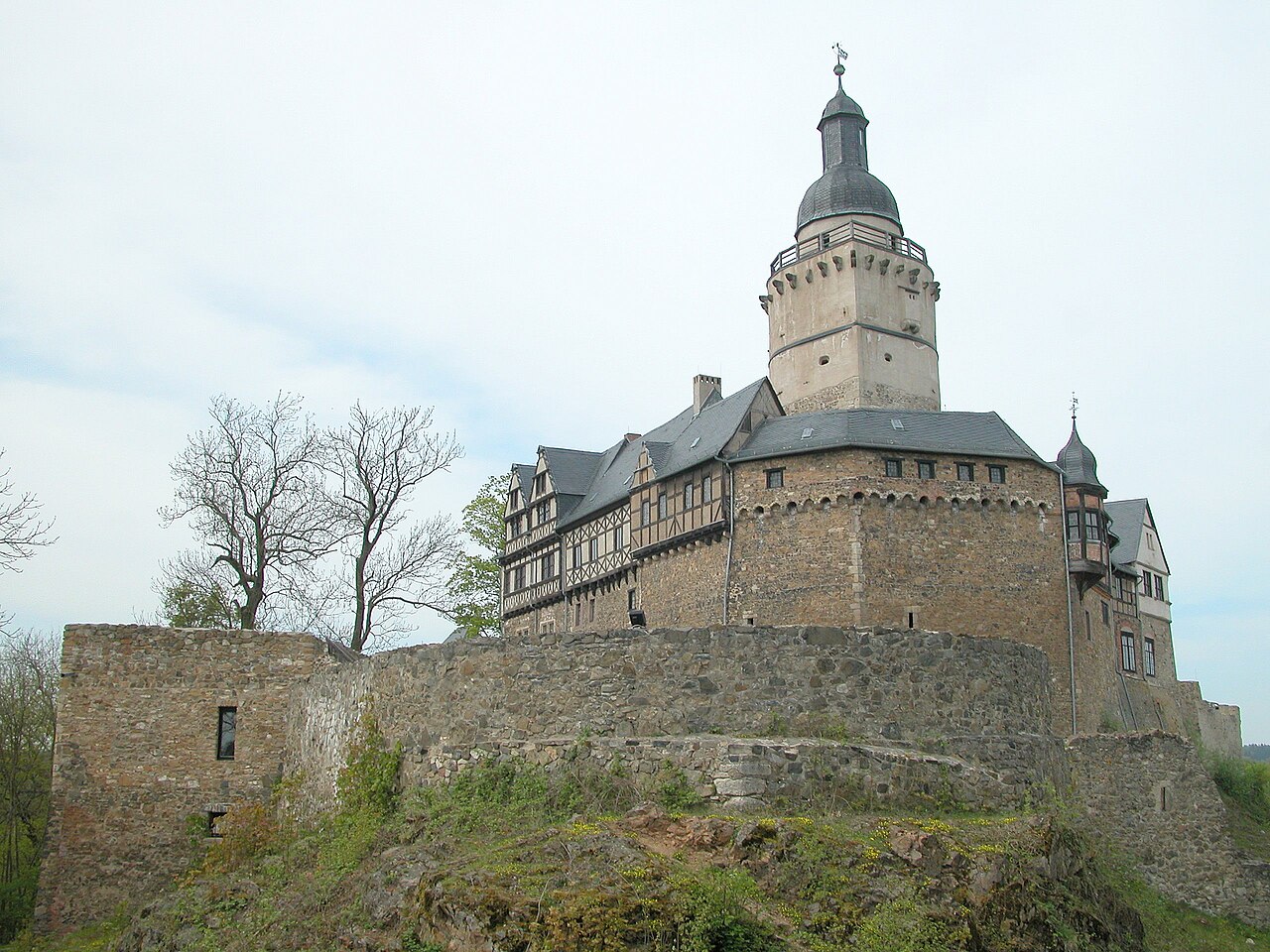
Falkenstein Castle (German: Burg Falkenstein), also formerly called New Falkenstein Castle (Burg Neuer Falkenstein) to distinguish it from Old Falkenstein Castle, is a German hill castle in the Harz Mittelgebirge, dating to the High Middle Ages. It is located in the town of Falkenstein between Aschersleben and Harzgerode.
The castle lies at a height of about 320 m (1,050 ft) above the Selke valley near the village of Meisdorf in the Harz district, in the German state of Saxony-Anhalt. It is located within extended forests, today a protected area (Naturschutzgebiet). Also nearby are the ruined medieval castles of Ackeburg and Old Falkenstein Castle.
Falkenstein was built between 1120 and 1150 by the lords of the Konradsburg who henceforth styled themselves as Grafen von Falkenstein (Counts).
According to legend, Falkenstein Castle has its origins in a murder: around 1080, the Saxon nobleman Egeno II of Konradsburg slew Count Adalbert II of Ballenstedt in a fight, whereupon the murderer was allegedly made to give up his family seat to be converted into a monastery. As a result, Egeno's son, Burchard of Konradsburg, had the new Falkenstein Castle built.
In 1220, during the reign of Prince Henry of Anhalt the Anhalt ministerialis, Eike of Repgow, from what is now Reppichau, drew up the Sachsenspiegel the first German law book here. The book is dedicated to its commissioner, Hoyer of Falkenstein. In 1437 the castle was given as a fief by the Bishopric of Halberstadt to the House of Asseburg, in whose hands the castle remained until its confiscation after the Second World War.
The castle was one of several backdrops in the seven-part children's series shot by GDR television, Spuk unterm Riesenrad, and one of the locations for the DEFA fairy tale film Schneeweißchen and Rosenrot ("Snow White and Rose Red"), as well as featuring in the Polizeiruf 110 episode Die Entdeckung.
The original Falkenstein Castle was built between 1120 and 1150 in Romanesque style. Although it has been modified frequently since then, notably in the mid-16th century, it still retains the character of a medieval castle.
The castle was protected by seven gates and five zwingers. The side at which the main attacks were anticipated had a 17 metre high shield wall. The castle site covers an area of about 310 x 90 metres.
Text adapted from “Falkenstein Castle (Harz)” on Wikipedia, CC BY-SA 4.0.
Falkenstein Castle (Harz) ranks #1,927 of 9,035 worldwide in the atlas's castle fame ranking, and #150 of the 709 mapped in Germany. Founded 1120, it is older than 84% of the atlas's dated landmarks, one of 763 atlas entries founded in the 12th century. Its Wikipedia articles were opened 4,870 times in the last 60 days, more than 86% of the atlas. 3 more atlas landmarks stand within 25 km. See how Germany compares in the castle statistics.
View on the interactive castle map →