 United States · 18th century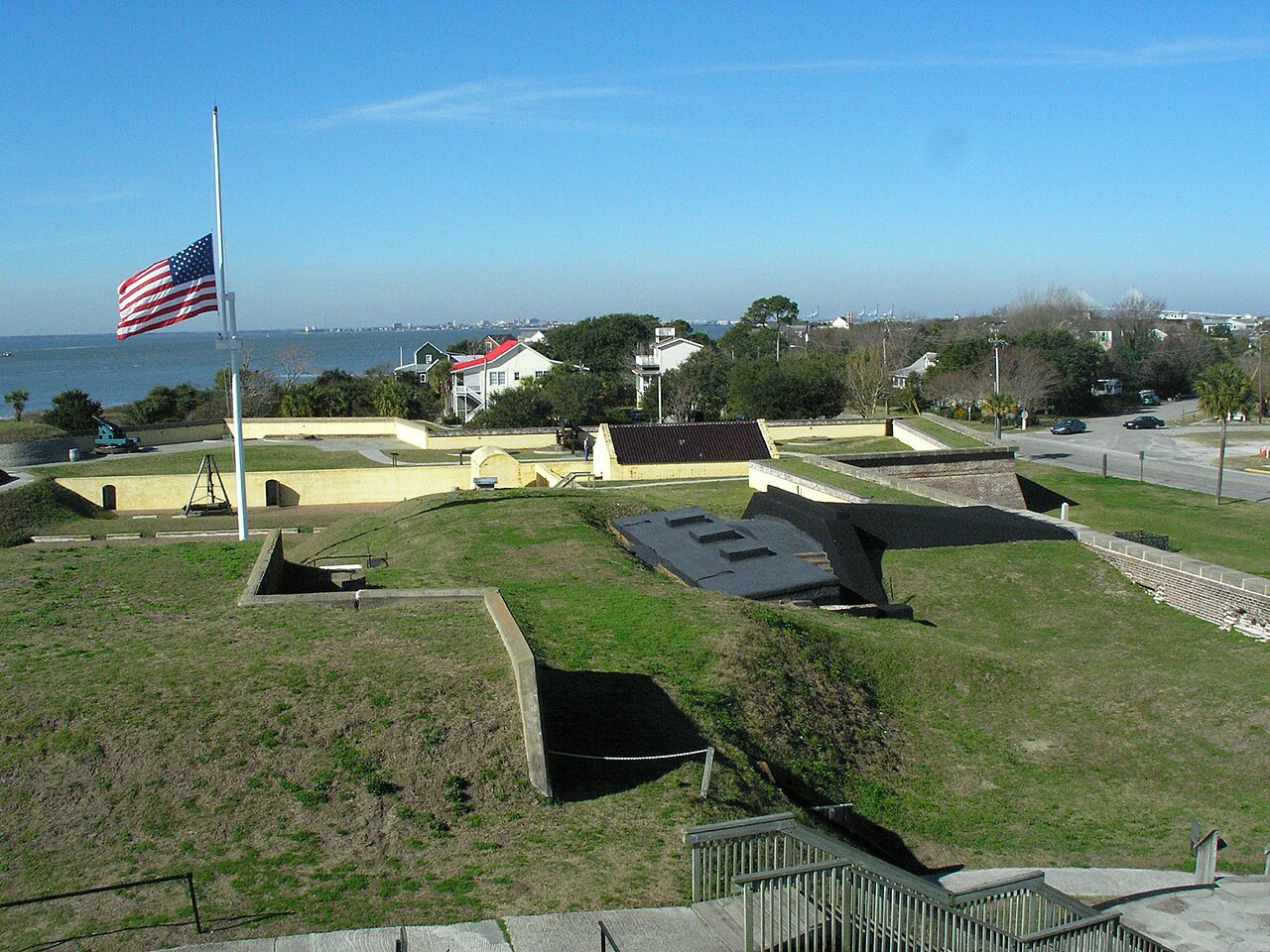
Fort Moultrie is a series of fortifications on Sullivan's Island, South Carolina, built to protect the city of Charleston, South Carolina. The first fort, formerly named Fort Sullivan, built of palmetto logs, inspired the flag and nickname of South Carolina, as "The Palmetto State". The fort was renamed for the U.S. patriot commander in the Battle of Sullivan's Island, General William Moultrie. During British occupation, in 1780–1782, the fort was known as Fort Arbuthnot.
Text adapted from “Fort Moultrie” on Wikipedia, CC BY-SA 4.0.
Fort Moultrie ranks #1,353 of 9,079 worldwide in the atlas's castle fame ranking, and #24 of the 110 mapped in United States. Founded 1776, it is older than 14% of the atlas's dated landmarks — one of 696 atlas entries founded in the 18th century. Its Wikipedia articles were opened 7,113 times in the last 60 days, more than 90% of the atlas. 2 more atlas landmarks stand within 25 km. See how United States compares in the castle statistics.
View on the interactive castle map →