Fortress
Fort São Tiago da Barra
🇨🇳 China · 17th century
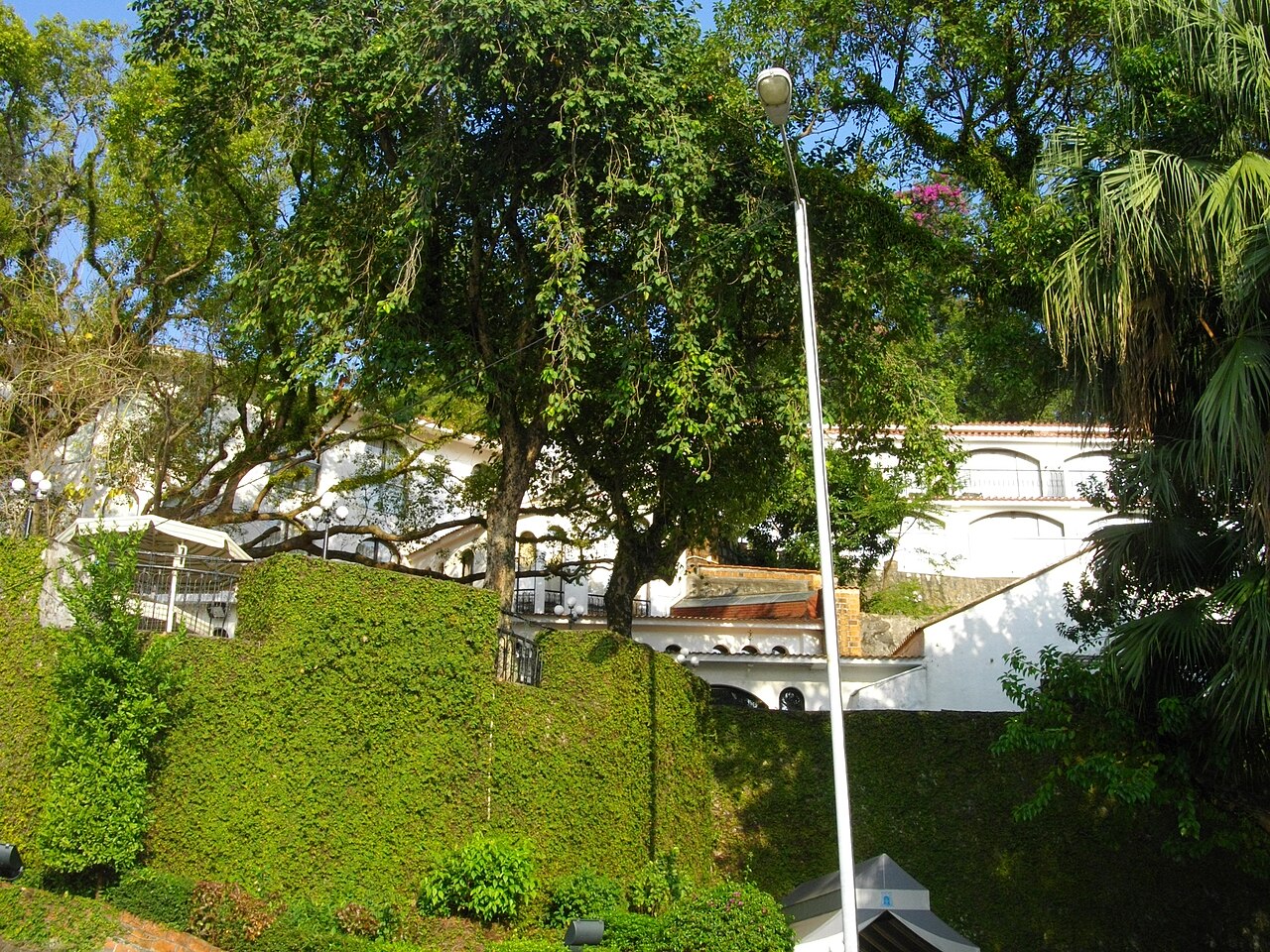
The Fort São Tiago da Barra (Fortaleza de São Tiago da Barra in Portuguese) also known as Barra Fort (Forte da Barra in Portuguese) is located in the base of the Barra Hill, in front of Lapa Island in Macau, China, once one of the most important fortresses in the city.
The fort was built in 1629 on the site of a previous artillery battery, erected after the Battle of Macau with the Dutch in 1622, with the function of defending the inner anchorage. The bulwarks and batteries were close to the water level, but more platforms were built up the hill. As the Portuguese had mostly blocked the channel way, ships had to sail by very close to the fort, conferring it great effectiveness. On the hills at the southern end of the Macao peninsula, it was a citadel within the city. Its walls were six meters at the base, 3.3 meters at the top, rising to 30 feet in height. Its captain was appointed directly by the king of Portugal.
Its main platform measured 113m x 42m, housing, a cistern with a capacity of 3,000 liters and facilities for the commander and 60 soldiers. Further up the hill was a guardhouse, and at ground level, stores for ammunition and supplies and a spacious house. The fort now has a chapel named after São Tiago, patron of the army, from 1746, when the fort was reinforced and expanded. By thein the upper stronghold was equipped with 16 guns (twelve 24-caliber and four 50-caliber cannons), and another 6 long range (24-caliber) guns within another bulwark. Like other defensive structures, it fell into disrepair over the centuries until, during World War II, the old cannons were sold to buy rice to feed refugees from Hong Kong and China.
Over the years the fort was gradually demolished for road construction and from 1976 onwards it was no longer used by the Maritime Police. The Tourism Department of the Government of Macau restored it and reclassified it as a guesthouse, the "Pousada de São Tiago", inaugurated in 1981, today one of Macau's main attractions. Visitors can visit the chapel inside, where the image of the Virgin and patron-saint São Tiago stand out. A popular folk story is associated with the statue of São Tiago, as it is said that it would leave at night to patrol, being found in its place with muddy boots by morning.
In front of the fort the armillary sphere that used to adorn the Senate Square can be seen.
Text adapted from “Fort São Tiago da Barra” on Wikipedia, CC BY-SA 4.0.
Fort São Tiago da Barra ranks #6,611 of 8,134 worldwide in the atlas's castle fame ranking, and #75 of the 119 mapped in China. Founded 1629, it is older than 30% of the atlas's dated landmarks — one of 626 atlas entries founded in the 17th century. 9 more atlas landmarks stand within 25 km. The nearest day-trip guide is Zhuhai, 11 km away. See how China compares in the castle statistics.
View on the interactive castle map →Frequently asked questions
Where is Fort São Tiago da Barra?
Fort São Tiago da Barra stands in China, at 22.18242°, 113.53075°.
When was Fort São Tiago da Barra built?
The atlas dates its founding to 1629. Earlier structures may have stood on the site; this is the earliest documented founding year.
How famous is Fort São Tiago da Barra?
In this atlas's fame ranking: #6,611 of 8,134 worldwide, and #75 in China. Fame here combines how many Wikipedia language editions cover a landmark with how many people read them.
What is the nearest castle to Fort São Tiago da Barra?
Mandarin's House, about 1 km away.
More castles in China
- Stanley Fort China · 19th century
- Tung Lung Fort China · 17th century
- Yongtai Fortress China · 17th century
- Fortaleza de Mong Há China · 19th century
More fortresses
- Yuejiang Lou China
- Miaojiang Great Wall China · 16th century
- Trelleborg ring fort Sweden
- Mola Fortress Spain · 19th century