 France · 19th century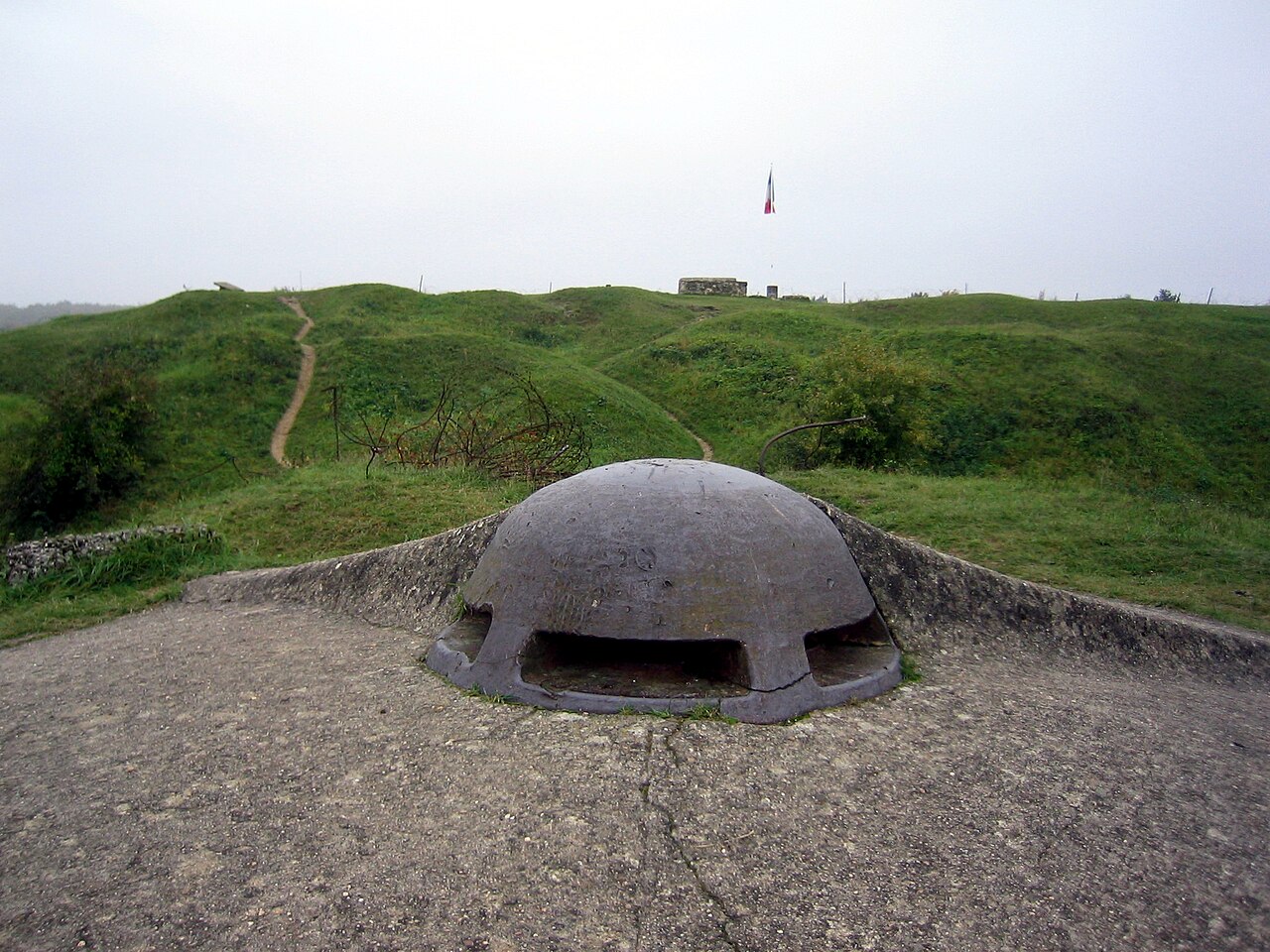
Fort Vaux (French: Fort de Vaux), in Vaux-Devant-Damloup, Meuse, France, was a polygonal fort forming part of the ring of 19 large defensive works intended to protect the city of Verdun. Built from 1881 to 1884 for 1,500,000 francs, it housed a garrison of 150 men. Vaux was the second fort to fall in the Battle of Verdun after Fort Douaumont, which was captured by a small German raiding party in February 1916 in the confusion of the French retreat from the Woëvre plain. Vaux had been modernised before 1914 with reinforced concrete top protection like Fort Douaumont and was not destroyed by German heavy artillery fire, which had included shelling by 420-millimetre (17 in) howitzers. The superstructure of the fort was badly damaged but the garrison, the deep interior corridors and stations were intact when the fort was attacked on 2 June by German Stormtroops.
The defence of Fort Vaux was marked by the heroism and endurance of the garrison, including Major Sylvain-Eugene Raynal. Under his command, the French garrison repulsed German assaults, including fighting underground from barricades inside the corridors, during the first big engagement inside a fort during the First World War. The last men of the French garrison gave up after running out of water (some of which was poisoned), ammunition, medical supplies and food. Raynal sent several messages by homing pigeon (including Le Vaillant), requesting relief for his soldiers. In his last message, Raynal wrote "This is my last pigeon".
After the surrender of the garrison on 7 June, Crown Prince Wilhelm, the commander of the 5th Army, presented Major Raynal with a French officer's sword as a sign of respect. Raynal and his soldiers remained in captivity in Germany until the Armistice of 11 November 1918.
Text adapted from “Fort Vaux” on Wikipedia, CC BY-SA 4.0.
Fort Vaux ranks #848 of 9,079 worldwide in the atlas's castle fame ranking, and #77 of the 793 mapped in France. Founded 1881 — one of 717 atlas entries founded in the 19th century. Its Wikipedia articles were opened 10,527 times in the last 60 days, more than 94% of the atlas. 2 more atlas landmarks stand within 25 km. The nearest day-trip guide is Metz, 52 km away. See how France compares in the castle statistics.
View on the interactive castle map →