 Finland · 18th century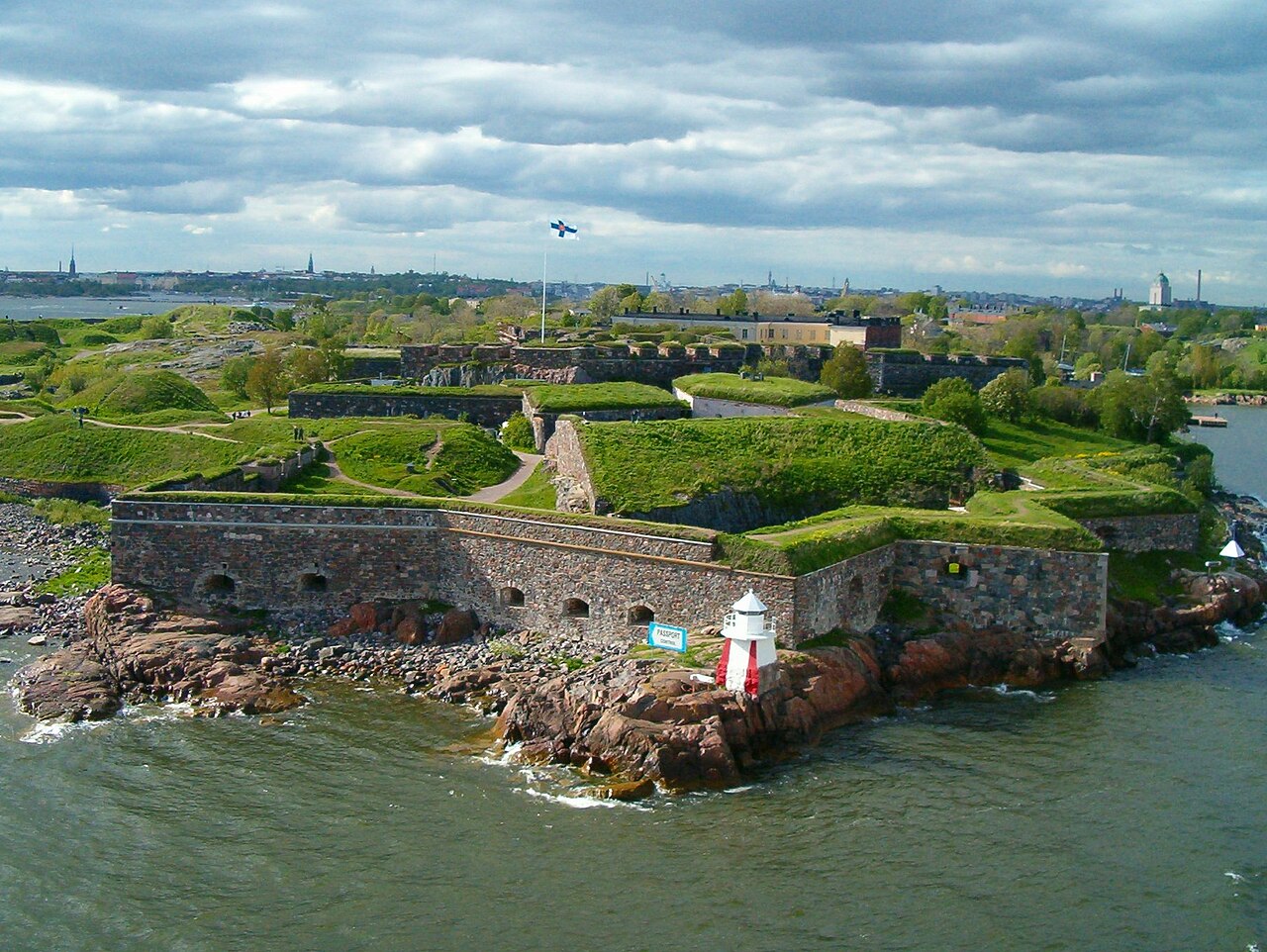
Suomenlinna (Finnish: [ˈsuo̯menˌlinːɑ]), or Sveaborg (Swedish: [ˈsvɛːɑˈborj]), is a sea fortress composed of eight islands, of which six have been fortified. Located about four kilometres (2.5 mi) southeast of the city center of Helsinki, Finland, Suomenlinna is a popular destination for both tourists and locals, who enjoy it as a picturesque picnic site.
Construction of the fortress began in 1748 under the Swedish Crown as a defense against Russia. The general responsibility for the fortification work was given to Admiral Augustin Ehrensvärd. The original plan of the bastion fortress was heavily influenced by Vauban, a renowned French military engineer, and incorporated the principles of the star fort style of fortifications, albeit adapted to a group of rocky islands.
During the Finnish War, Russian forces besieged the fortress in 1808. Despite its formidable reputation as the "Gibraltar of the North", the fortress surrendered after only two months, on 3 May 1808. Its loss paved the way for Russia's seizure of Finland in 1809, and the subsequent establishment of the Grand Duchy of Finland, an autonomous state within the Russian Empire.
Under Russian rule, the fortress served as a base for the Baltic Fleet during World War I, and in 1915, construction began on the Krepost Sveaborg defense system. Russian forces abandoned the fortress after Finland declared independence in 1917. Originally named Sveaborg ("Fortress of Sweden") and known as Viapori ([ˈviaˌpori]) in Finnish, it was renamed Suomenlinna ("Fortress of Finland") in 1918. In Swedish, however, it retains its original name. In the aftermath of the Finnish Civil War, the islands housed the Suomenlinna prison camp for captured Red soldiers.
Suomenlinna remained under the control of the Finnish Defense Department until 1973, when most of it was transferred to civilian administration.
Text adapted from “Suomenlinna” on Wikipedia, CC BY-SA 4.0.
Suomenlinna ranks #73 of 9,079 worldwide in the atlas's castle fame ranking, and #1 of the 27 mapped in Finland. Founded 1748, it is older than 18% of the atlas's dated landmarks — one of 696 atlas entries founded in the 18th century. Its Wikipedia articles were opened 31,349 times in the last 60 days, more than 99% of the atlas. 2 more atlas landmarks stand within 25 km. The nearest day-trip guide is Helsinki, 4 km away. See how Finland compares in the castle statistics.
View on the interactive castle map →