 Germany · 17th century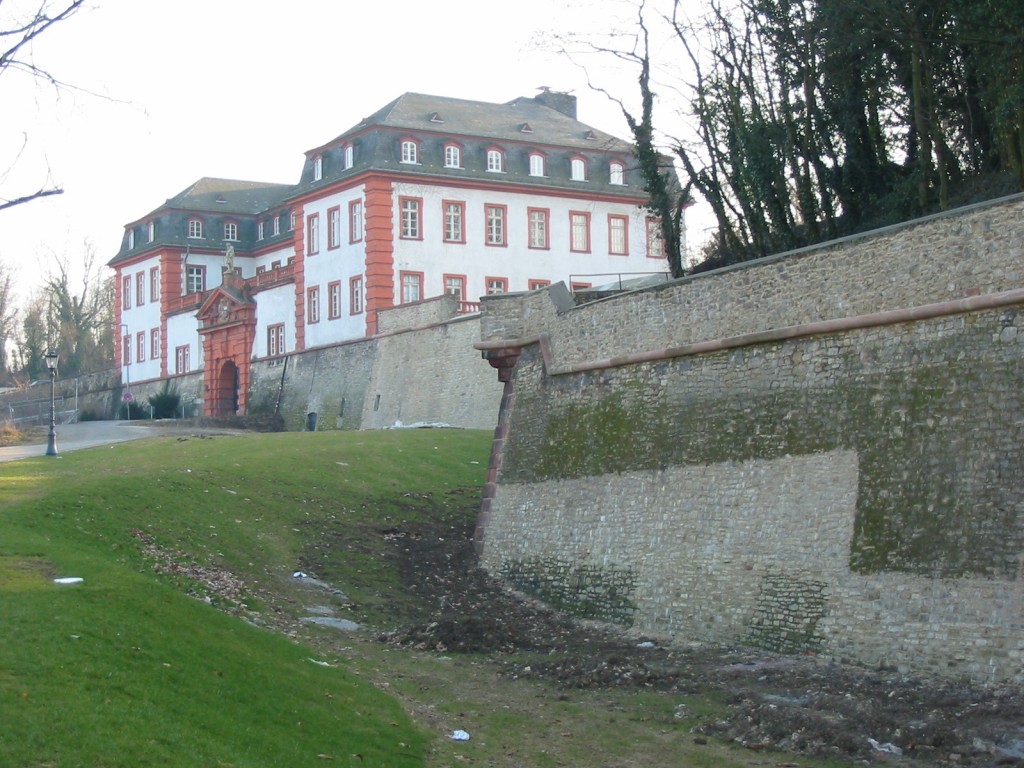
The Fortress of Mainz was a fortressed garrison town between 1620 and 1918. At the end of the Napoleonic Wars, under the term of the 1815 Peace of Paris, the control of Mainz passed to the German Confederation and became part of a chain of strategic fortresses which protected the Confederation. With the dissolution of the Confederation and the Austro-Prussian War, control of the fortress first passed to Prussia, and, after the 1871 Unification of Germany, to the German Empire.
Text adapted from “Fortress of Mainz” on Wikipedia, CC BY-SA 4.0.
Fortress of Mainz ranks #2,879 of 9,079 worldwide in the atlas's castle fame ranking, and #223 of the 711 mapped in Germany. Founded 1619, it is older than 29% of the atlas's dated landmarks — one of 721 atlas entries founded in the 17th century. Its Wikipedia articles were opened 1,563 times in the last 60 days, more than 63% of the atlas. 12 more atlas landmarks stand within 25 km. The nearest day-trip guide is Wiesbaden, 10 km away. See how Germany compares in the castle statistics.
View on the interactive castle map →