 France · 20th century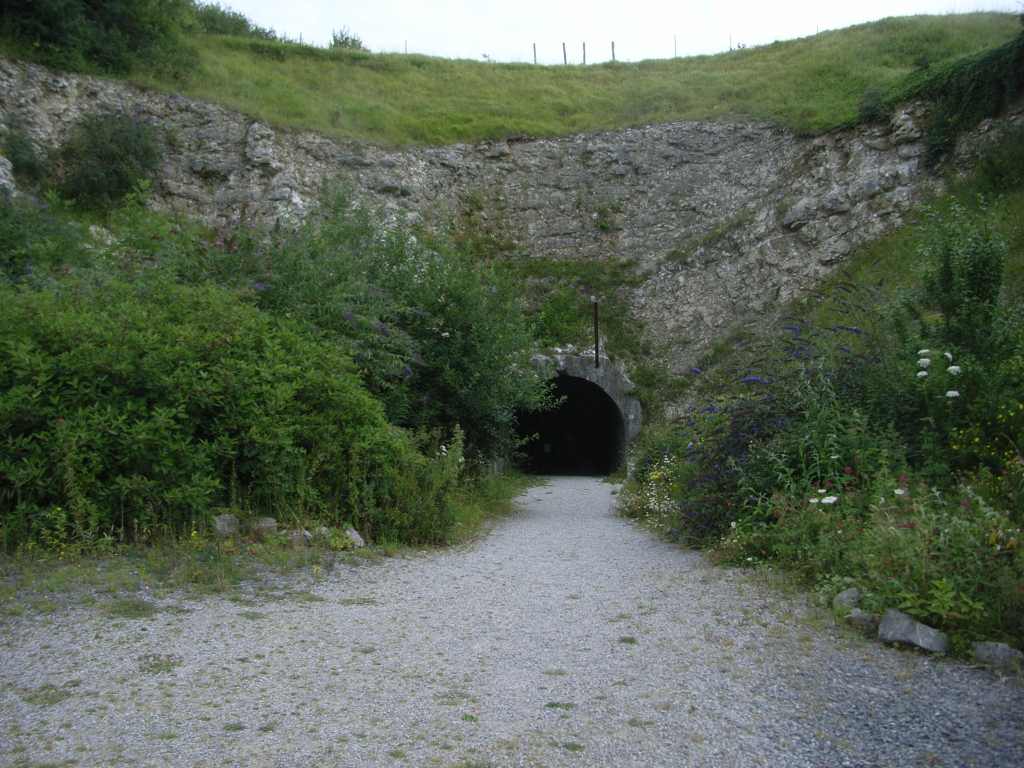
The Fortress of Mimoyecques (French pronunciation: [mimɔjɛk]) is the modern name for a Second World War underground military complex built by the forces of Nazi Germany between 1943 and 1944. It was intended to house a battery of fixed V-3 cannons permanently aimed at London, 165 kilometres (103 mi) away. Originally codenamed Wiese ("Meadow") or Bauvorhaben 711 ("Construction Project 711"), it is located in the commune of Landrethun-le-Nord in the Pas-de-Calais department of northern France, near the hamlet of Mimoyecques about 20 kilometres (12 mi) from Boulogne-sur-Mer. It was constructed by a mostly German workforce recruited from major engineering and mining concerns, augmented by prisoner-of-war slave labour.
The complex consists of a network of tunnels dug under a chalk hill, linked to five inclined shafts in which 25 V-3 guns would have been installed, all aimed at London. The guns would have been able to fire ten dart-like explosive projectiles a minute – 600 rounds every hour – into the British capital, which Winston Churchill later commented would have constituted "the most devastating attack of all". The Allies knew nothing about the V-3 but identified the site as a possible launching base for V-2 ballistic missiles, based on reconnaissance photographs and fragmentary intelligence from French sources.
Mimoyecques was targeted for intensive bombardment by the Allied air forces from late 1943 onwards. Construction work was seriously disrupted, forcing the Germans to abandon work on part of the complex. The rest was partly destroyed on 6 July 1944 by No. 617 Squadron RAF, who used ground-penetrating 5,400-kilogram (12,000 lb) "Tallboy" earthquake bombs to collapse tunnels and shafts. This also entombed hundreds of slave workers underground.
Text adapted from “Fortress of Mimoyecques” on Wikipedia, CC BY-SA 4.0.
Fortress of Mimoyecques ranks #1,255 of 9,079 worldwide in the atlas's castle fame ranking, and #99 of the 793 mapped in France. Founded 1943, one of 169 atlas entries founded in the 20th century. Its Wikipedia articles were opened 9,073 times in the last 60 days, more than 93% of the atlas. 2 more atlas landmarks stand within 25 km. The nearest day-trip guide is Ostend, 91 km away. See how France compares in the castle statistics.
View on the interactive castle map →