 Japan · 17th century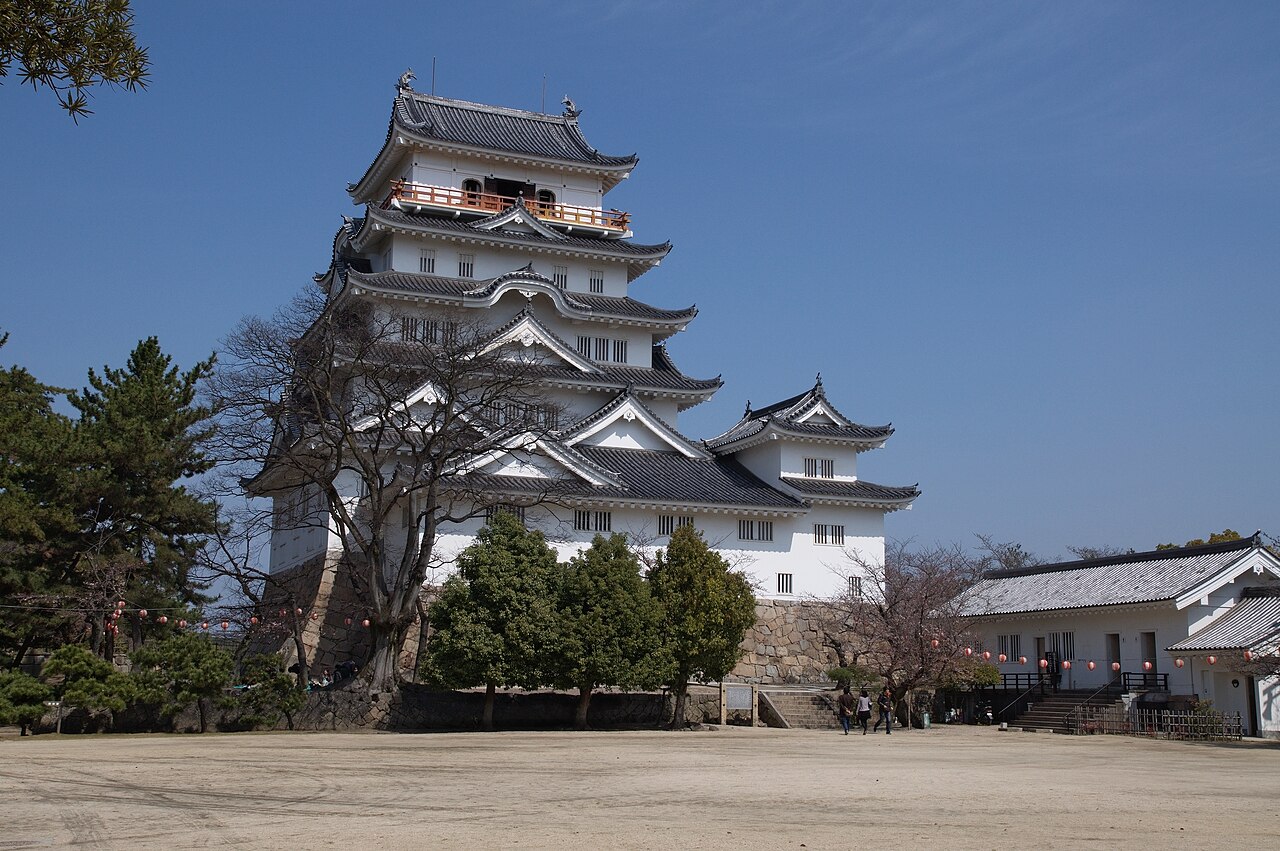
Fukuyama Castle (福山城, Fukuyama-jō), sometimes called Hisamatsu Castle (久松城, Hisamatsu-jō) or Iyō Castle (葦陽城, Iyō-jō) was the castle of the Bingo-Fukuyama Han during the Edo period of Japanese history. The grounds of the castle have been designate a National Historic Site since 1964. The castle is located in Fukuyama Park in Fukuyama, Hiroshima near Fukuyama Station.
Fukuyama Castle is located at a hill in the center of Fukuyama city. Prior to the Edo Period, this area was a large tidal flat. The Sanyōdō highway, which connects the Kinai region with Kyushu, ran to the north of the modern city center, and Tomonoura, a port on the Seto Inland Sea from the Heian period, was to the south. The main power center for Bingo Province was at Kannabe Castle to the northeast. After the Battle of Sekigahara in 1600,Fukushima Masanori was awarded control of both Aki Province and Bingo Province; however, in 1619, the Tokugawa shogunate used the pretext that he had made repairs to Hiroshima Castle without permission to seize a portion of his domain, awarding a 100,000 koku portion of Bingo Province to Tokugawa Ieyasu's cousin, Mizuno Katsunari. Katsunari had an outstanding military record and it was expected that he would act as a bulwark on the Sanyōdō highway against possible rebellion by the powerful tozama daimyō of western Japan, such as the Mōri clan.
Mizuno found that Kannabe Castle was located in a narrow mountain valley and was inconvenient both to manage his domain and to defend against attack, some received a special exception from the shogunate's "one domain - one castle" rule to build a new castle and castle town on reclaimed land. Construction started in 1619 and was completed in 1622.
The new Fukuyama Castle occupied a hill with a length of 400 meters and width of 200 meters. The inner bailey occupies the southern half of the hill, and contains a five-story tenshu at its northern edge. The southern edge was protected by two yagura turrets. The Fushimi yagura was a white three-story structure transferred from abolished Fushimi Castle in Kyoto. The Tsukumi yagura has a red handrail balcony. Between these two yagura is the main gate of the castle, also transferred from Fushimi Castle.
The secondary bailey occupied the north half of the hill, and outer bailey surrounded south half of the hill.
Text adapted from “Fukuyama Castle” on Wikipedia, CC BY-SA 4.0.
Fukuyama Castle ranks #1,411 of 9,035 worldwide in the atlas's castle fame ranking, and #74 of the 295 mapped in Japan. Founded 1619, it is older than 29% of the atlas's dated landmarks, one of 708 atlas entries founded in the 17th century. Its Wikipedia articles were opened 9,473 times in the last 60 days, more than 93% of the atlas. The nearest day-trip guide is Okayama, 54 km away. See how Japan compares in the castle statistics.
View on the interactive castle map →