Ruin
Niitakayama Castle
🇯🇵 Japan · 16th century
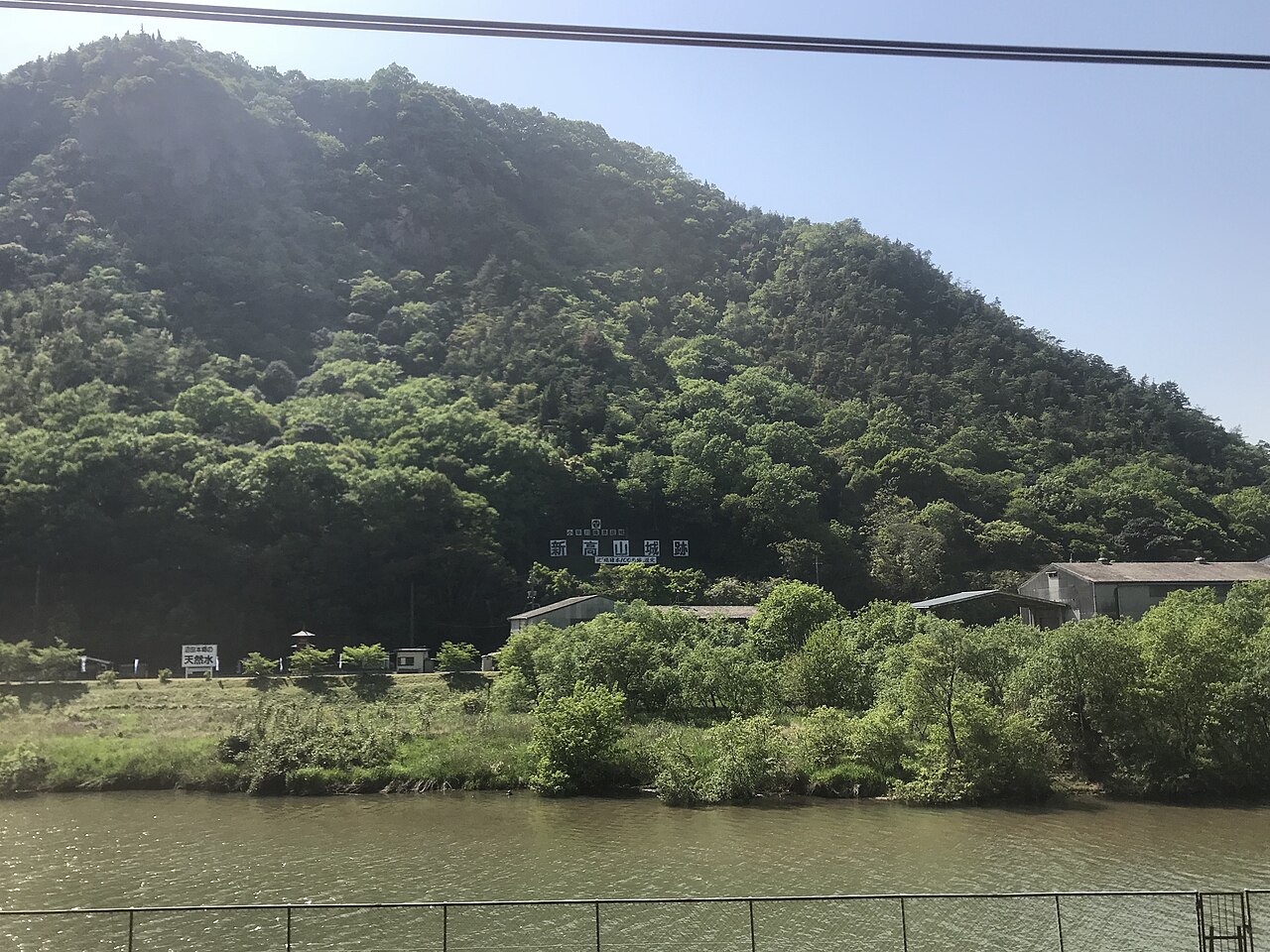
Niitakayama Castle (新高山城, Niitakayama-jō) of Aki Province was a yamajiro-style Japanese castle located in what is today the Hongō neighborhood of the city of Mihara in Hiroshima Prefecture. Its ruins have been protected by the central government as a National Historic Site since 1957.
Under Minamoto no Yoritomo, Doi Sanehira was awarded for his achievements in the Genpei War against the Heike clan, and was appointed governor of the three provinces of Bizen, Bitchu and Bingo. Sanehira's son Enpei took the name of "Kobayakawa", which was the place name of his residence, but was subsequently awarded the Nuta shōen in Aki Province for his distinguished service in the Jōkyū War and relocated to Aki. His grandson, Kobayakawa Shigehira completed Takayama Castle in 1206 as the clan's stronghold. Takayama Castle was built on Mount Tsumataka, a 150 meter height overlooking the Nuta River, about 10 kilometers west of current center of Mihara city.
On the opposite of the river is Mount Niitaka, with an elevation of 197.6 meters, and these two mountains stand like the pillars of gate. In 1276, Kobayakawa Masahei built a secondary fortification on the site of the current Niitakayama. In 1552, Kobayakawa Takakage relocated his seat from Takayama Castle to Niitakayama Castle and rebuilt the fort into a castle. The new castle extended for 400 meters from west-to-west and was protected by the Nuta River to the north and east. It consisted of several enclosures protected by stone walls and dry moats. The site was the original location of the Kobayakawa clan bodaiji, Kyoshi-ji, which dated from the Kamakura period. The temple was removed to make room for the castle.
In 1561, his father Mōri Motonari visited Niitakayama and stayed for several days. Over the next 20 years, the Kobayakawa clan helped the Mōri clan defeat the Ouchi clan and the Amago clan to secure supremacy over the Chugoku region of Japan. The Mōri entrusted the Kobayakawa with the San'yo region, whereas Kobayakawa Takakage's elder brother Kikkawa Motoharu was entrusted with the San'in region. The Mōri and Kobayakawa eventually came into conflict with Oda Nobunaga, and subsequently with Toyotomi Hideyoshi. On Nobunaga's assassination in 1582, The Kobayakawa reached an accord with Hideyoshi, and Kobayakawa eventually became a vassal of Hideyoshi, who needed the Kobayakawa navy in the Seto Inland Sea.
Text adapted from “Niitakayama Castle” on Wikipedia, CC BY-SA 4.0.
Niitakayama Castle ranks #6,313 of 8,134 worldwide in the atlas's castle fame ranking, and #289 of the 297 mapped in Japan. Founded 1552, it is older than 39% of the atlas's dated landmarks — one of 755 atlas entries founded in the 16th century. 1 more atlas landmarks stand within 25 km. The nearest day-trip guide is Okayama, 90 km away. See how Japan compares in the castle statistics.
View on the interactive castle map →Frequently asked questions
Where is Niitakayama Castle?
Niitakayama Castle stands in Japan, at 34.42017°, 132.97556°.
When was Niitakayama Castle built?
The atlas dates its founding to 1552. Earlier structures may have stood on the site; this is the earliest documented founding year.
How famous is Niitakayama Castle?
In this atlas's fame ranking: #6,313 of 8,134 worldwide, and #289 in Japan. Fame here combines how many Wikipedia language editions cover a landmark with how many people read them.
What is the nearest castle to Niitakayama Castle?
Mihara Castle, about 10 km away.
More castles in Japan
- Himeji Castle Japan · 14th century
- Osaka Castle Japan · 16th century
- Tokyo Imperial Palace Japan · 19th century
- Nagoya Castle Japan · 16th century
More ruins
- Fort De Veer Ghana
- Fort of the Emperor Algeria · 16th century
- Cerovo Castle Slovakia
- Kuchyňa Castle Slovakia