 South Korea · 5th century
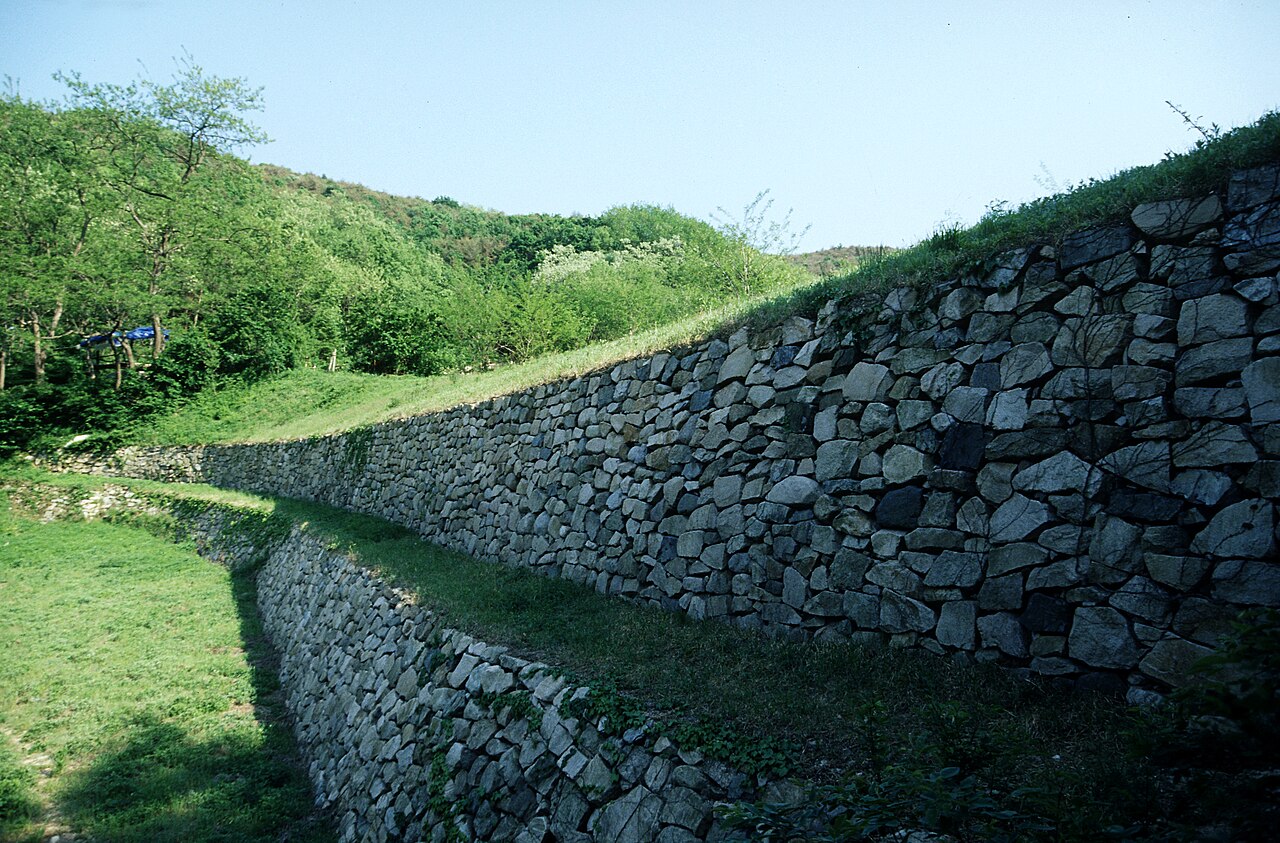
Myeonghwalseong Fortress ranks #8,779 of 9,040 worldwide in the atlas's castle fame ranking, and #37 of the 57 mapped in South Korea. Founded 405, it is older than 97% of the atlas's dated landmarks, one of 37 atlas entries founded in the 5th century. 5 more atlas landmarks stand within 25 km. The nearest day-trip guide is Gyeongju, 4 km away. See how South Korea compares in the castle statistics.
Myeonghwalseong (Korean: 명활성; Hanja: 明活城) or Myeonghwalsanseong (명활산성; 明活山城) was a Silla-era Korean fortress on the mountain Myeonghwalsan in what is now Gyeongju, South Korea. On January 21, 1963, it was made Historic Site of South Korea No. 47. It is part of the UNESCO World Heritage Site entitled Gyeongju Historic Areas, as part of the Sanseong Fortress Belt.
It is not known with certainty when the fortress was first constructed. There is a record in the Samguk sagi of the fortress being attacked in 405 AD (Korean calendar). It was attacked by Japanese invaders in 431. It was repaired in 473, and King Jabi moved into it in 475. There are records of it being rebuilt in 551, 554, and 593. It was likely abandoned after 647, after it was captured by Bidam's rebels. There are no known signs of activity at this site that date to after the 7th century.
Currently, the fortress is mostly in ruins. Archaeological digs have identified six sites where buildings likely once stood. A survey on the site was performed in 1998. From 2012 to 2014, another survey was conducted, which found further evidence that the fortress was reconstructed a number of times.
Text adapted from “Myeonghwalseong” on Wikipedia, CC BY-SA 4.0.
View on the interactive castle map →