 China · 1st century BC
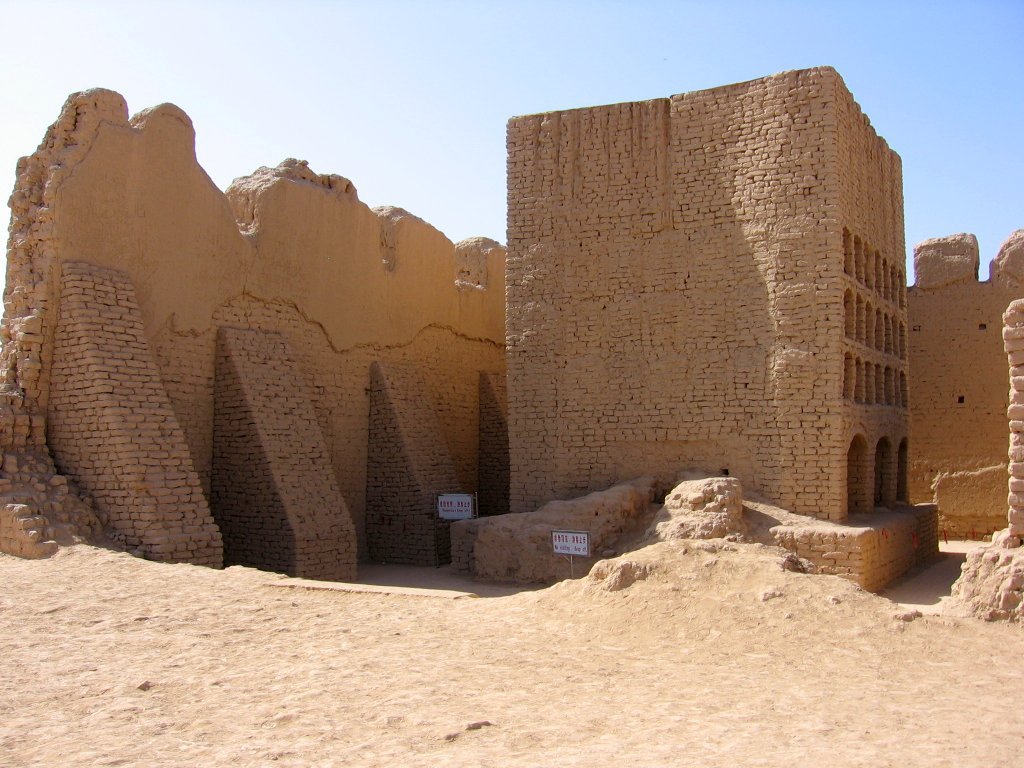
Gaochang ranks #420 of 9,040 worldwide in the atlas's castle fame ranking, and #11 of the 103 mapped in China. Founded c. 50 BC, it is older than 99% of the atlas's dated landmarks, one of 16 atlas entries founded in the 1st century BC. Its Wikipedia articles were opened 8,355 times in the last 60 days, more than 92% of the atlas. See how China compares in the castle statistics.
Gaochang (Chinese: 高昌; pinyin: Gāochāng; Old Uyghur: Qocho), also called Khocho, Karakhoja, Qara-hoja, Kara-Khoja or Karahoja (قاراغوجا in Uyghur), was an ancient oasis city on the northern rim of the inhospitable Taklamakan Desert in present-day Sanbu Township, Xinjiang, China. The site is also known in published reports as Chotscho, Khocho, Qocho or Qočo. During the Yuan dynasty and Ming dynasty, Gaochang was referred to as "Halahezhuo" (哈拉和卓) (Qara-khoja) and Huozhou.
A busy trading center, it was a stopping point for merchant traders traveling on the Silk Road. It was destroyed in wars during the 14th century and old palace ruins and inside and outside cities can still be seen today. Along with other sites along the historic Silk Road, Gaocheng was inscribed in 2014 on the UNESCO World Heritage List as the Silk Roads: the Routes Network of Chang'an-Tianshan Corridor World Heritage Site.
Near Gaochang is another major archeological site: the Astana tombs.
Text adapted from “Gaochang” on Wikipedia, CC BY-SA 4.0.
View on the interactive castle map →