 England · 11th century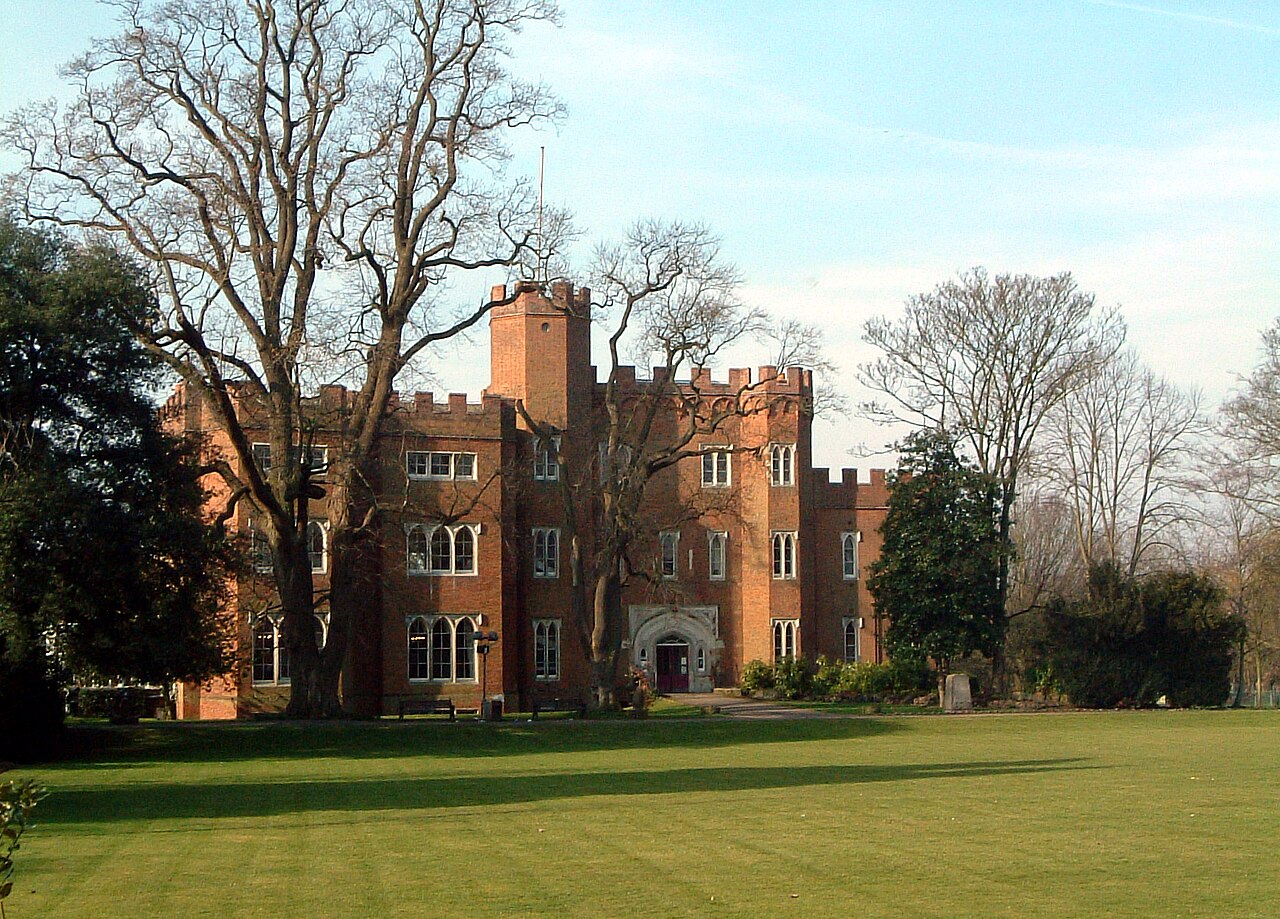
Hertford Castle is a Norman era castle built beside the River Lea in Hertford, the county town of Hertfordshire, England. Most of the internal buildings of the structure have been demolished.
The main surviving section is the Tudor gatehouse, which is a Grade I listed building. Parts of the bailey walls on the east side of the castle also still stand, and are a Grade II* listed building.
Hertford Castle was built on a site first fortified by Edward the Elder around 913. By the time of the Norman Invasion in 1066, a motte and bailey were on the site surrounded by a moat. William the Conqueror granted the castle to Peter de Valognes, the High Sheriff of Essex and Hertfordshire.
Henry II took a great interest in the castle and its potential and it was practically reconstructed between 1170 and 1174. This included the building of the flint walls, drawbridges and gatehouses. The castle was further strengthened during the reign of Richard I by his regent, William Longchamp. By this time the castle was governed by the Crown after Robert de Valognes had died in 1184 leaving no male heirs. However it had been claimed by Robert Fitzwalter, Robert de Valoignes's son-in-law. He seized the castle and installed his own tenants and garrison. Although he was subsequently evicted by King John, he was eventually appointed governor of the castle.
Following the death of Angelo Salvo in 1216, a French invasion besieged the castle for a month until the governor, Walter de Godarvil, surrendered. However the country then supported Henry III and by 1217 the French had left. Following this the castle's military role became secondary to its use as a royal residence and in 1299 Edward I gave it to his second wife Margaret.
During the reign of Edward II the castle saw its first political prisoners, some of the Knights Templar, in 1309. Edward's wife Isabella of France and their son, Edward III both spent much time in the castle, and Isabella died in the castle in 1358.
During the Hundred Years' War the castle was used to detain prisoners of royal and noble rank. These included King David II of Scotland and, in 1359, King John II of France. The following year the castle was granted to Edward's third son, John of Gaunt who spent much time there, using it as his chief country home when not abroad on campaigns. The defences were repaired and strengthened again at this time.
Text adapted from “Hertford Castle” on Wikipedia, CC BY-SA 4.0.
Hertford Castle ranks #2,248 of 9,079 worldwide in the atlas's castle fame ranking, and #154 of the 360 mapped in England. Founded 1066, it is older than 88% of the atlas's dated landmarks — one of 436 atlas entries founded in the 11th century. Its Wikipedia articles were opened 2,229 times in the last 60 days, more than 72% of the atlas. 3 more atlas landmarks stand within 25 km. The nearest day-trip guide is London, 32 km away. See how England compares in the castle statistics.
View on the interactive castle map →