Palace
Hylands
 England · 18th century
- Founded
- 1730
- Heritage status
- Grade II* listed park and garden · Grade II* listed building
- Location
- Writtle
- Coordinates
- 51.7112°, 0.43728°
- Open data
- Wikidata Q17545162
- Links
- OpenStreetMap · Wikimedia Commons
Description
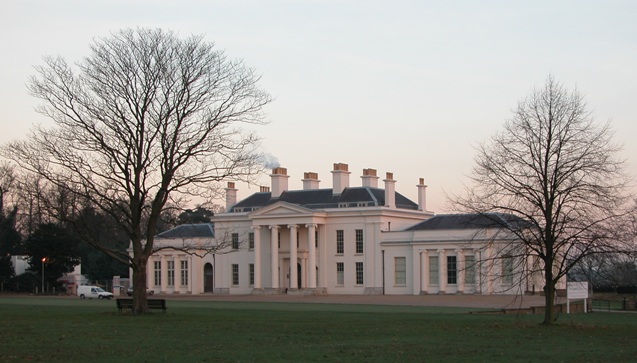
Hylands House is a Grade II* neo-classical villa situated within Hylands Park a 232-hectare (574 acre) park southwest of Chelmsford in Essex in South East England. It is owned and operated by Chelmsford City Council.
The last private owner lived in Hylands House until her death in 1962. In 1966, with the house in a desperate state of disrepair, that Chelmsford Borough Council purchased the Park for the people of Chelmsford to enjoy. Hylands Park was opened to the public only 10 days later. It was agreed by Chelmsford Borough Council that Hylands House should be restored to its former glory and, having stood empty for 20 years, the first phase of restoration took place in 1986. The final stage was completed in September 2005.
Around 1726, Sir John Comyns, a local lawyer, purchased the manor of Shaxstones in Writtle, and commissioned the construction of a new family home on the estate, . Completed in 1730, Hylands House was an elegant two-storey red brick building in the Queen Anne style. The grounds were set out in the formal geometric style fashionable at the time, with a pleasure garden and small kitchen garden to the north of the house.
Sir John Comyns died in 1740, without surviving children, and left the estate to his nephew, John Comyns of Romford.
In 1797 Cornelius Kortright bought Hylands House and employed the well-known landscape architect Humphry Repton, who advised the addition of east and west wings, a colonnaded portico, and covering the whole house in white stucco. Kortright purchased an additional 150 acres of land to accommodate the scheme and by 1814 the changes made to the estate were extensive.
Pierre Cesar Labouchere, a Dutch-born merchant banker, bought the estate in 1814 and set about completing Repton's scheme for expansion and improvement of the house and parkland. This resulted in the symmetrical neo-classic facade that exists today. Labouchere created the formal Pleasure Gardens and under the guidance of architect Williams Atkinson, the Georgian stable block and coachman's cottage. He also collected neo-classical sculptures, including works by the Danish sculptor Bertel Thorvatldsen, replicas of which are on display in the house today.
After Labouchère's death, his son Henry Labouchere sold Hylands House and Estate to Mr John Attwood, former owner of an ironworks in Birmingham.
Text adapted from “Hylands House” on Wikipedia, CC BY-SA 4.0.
In the rankings
Hylands ranks #3,312 of 9,902 worldwide in the atlas's castle fame ranking, and #250 of the 397 mapped in England. Founded 1730, it is older than 19% of the atlas's dated landmarks, one of 757 atlas entries founded in the 18th century. Its Wikipedia articles were opened 870 times in the last 60 days, more than 50% of the atlas. 2 more atlas landmarks stand within 25 km. The nearest day-trip guide is Southend-on-Sea, 27 km away. See how England compares in the castle statistics.
Castles nearby
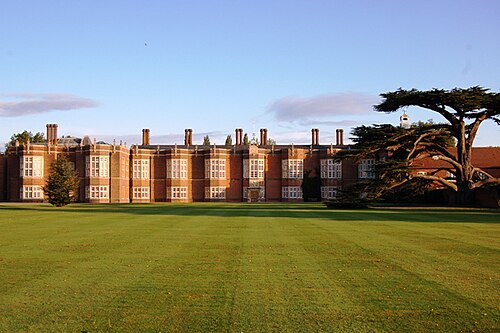
- Palace of Beaulieu8 km · England
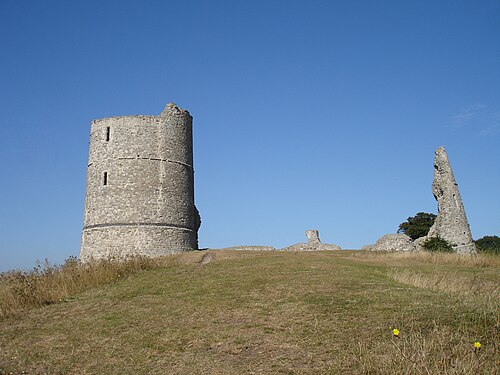
- Hadleigh Castle22 km · England
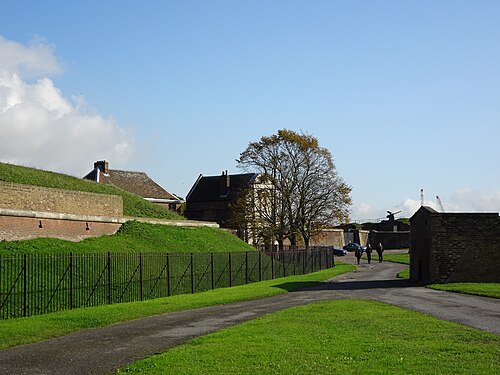
- Tilbury Fort29 km · England
- Cooling Castle29 km · England
More castles in England
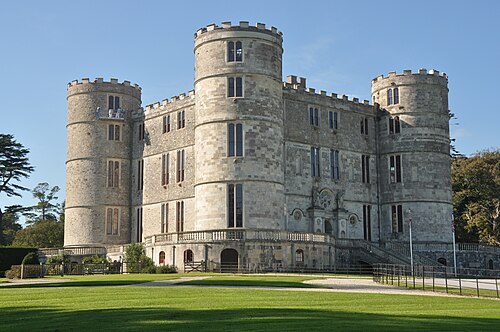
- Lulworth CastleEngland · 17th century
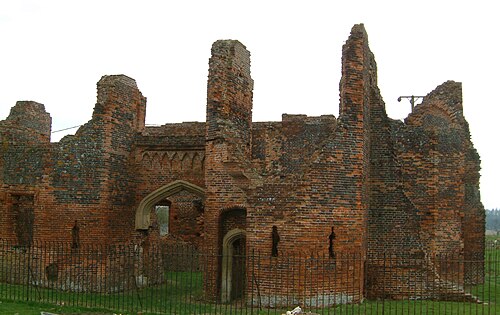
- Someries CastleEngland · 15th century
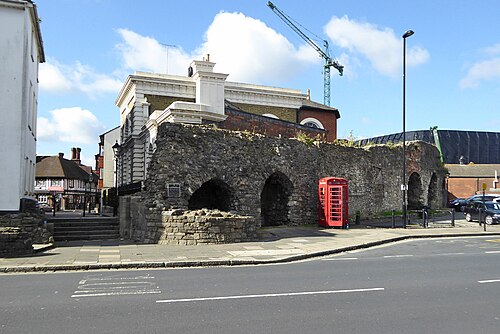
- Southampton CastleEngland
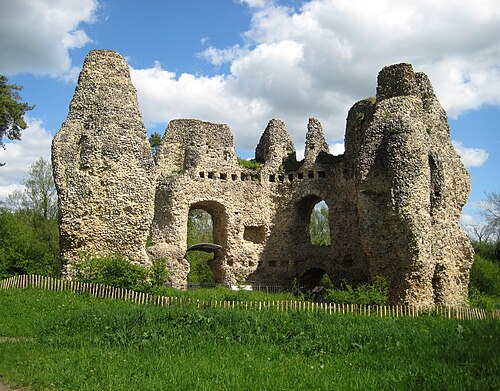
- Odiham CastleEngland · 13th century