Ruin
Ismantorp Fortress
🇸🇪 Sweden · 17th century
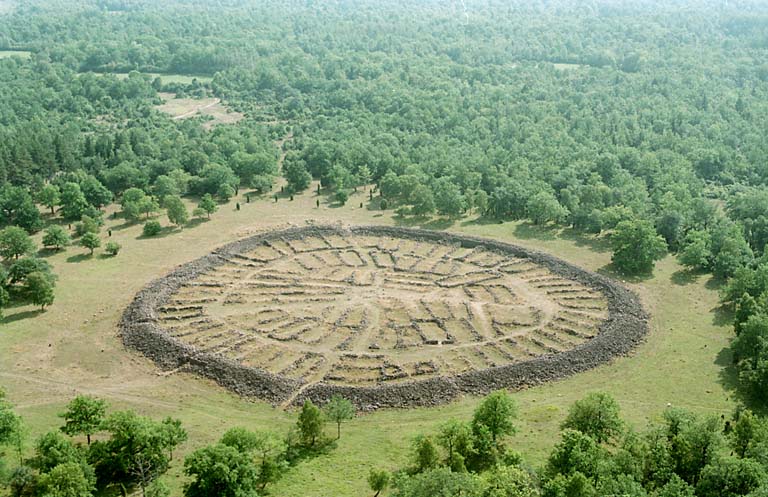
Ismantorp Fortress (Swedish: Ismantorps fornborg) is the ruins of a ringfort located on Öland Island in Sweden.
One of approximately 20 known ringforts located on Öland, Ismantorp was constructed during the Migration Period.
Ismantorp was never permanently occupied following its construction in about 200 CE, but used occasionally until abandoned around 650 CE. The ringfort consists of a limestone wall approximately 300 meters long and has nine gates. Inside the ringfort are 95 houses arranged in 12 blocks around a central open area with a circular building. Ismantorp is the largest and probably the oldest of the ringforts on Öland.
The castle was visited by Carl Linnaeus on his trip to Öland.
Text adapted from “Ismantorp Fortress” on Wikipedia, CC BY-SA 4.0.
Ismantorp Fortress ranks #3,364 of 8,134 worldwide in the atlas's castle fame ranking, and #88 of the 206 mapped in Sweden. Founded 1634, it is older than 29% of the atlas's dated landmarks — one of 626 atlas entries founded in the 17th century. Its Wikipedia articles were opened 1,420 times in the last 60 days, more than 58% of the atlas. 6 more atlas landmarks stand within 25 km. See how Sweden compares in the castle statistics.
View on the interactive castle map →Frequently asked questions
Where is Ismantorp Fortress?
Ismantorp Fortress stands in Sweden, at 56.74544°, 16.64268°.
When was Ismantorp Fortress built?
The atlas dates its founding to 1634. Earlier structures may have stood on the site; this is the earliest documented founding year.
How famous is Ismantorp Fortress?
In this atlas's fame ranking: #3,364 of 8,134 worldwide, and #88 in Sweden. Fame here combines how many Wikipedia language editions cover a landmark with how many people read them.
What is the nearest castle to Ismantorp Fortress?
Gråborg, about 9 km away.
More castles in Sweden
- Torsburgen Sweden · 1st century
- Bollerup Sweden
- Steninge Palace Sweden · 17th century
- Axel Oxenstierna Palace Sweden · 17th century
More ruins
- Castrum Anderitum England · 3rd century
- Earl's Palace Scotland · 16th century
- Château de Marracq France · 18th century
- Estaus Palace Portugal · 15th century