 Russia · 18th century
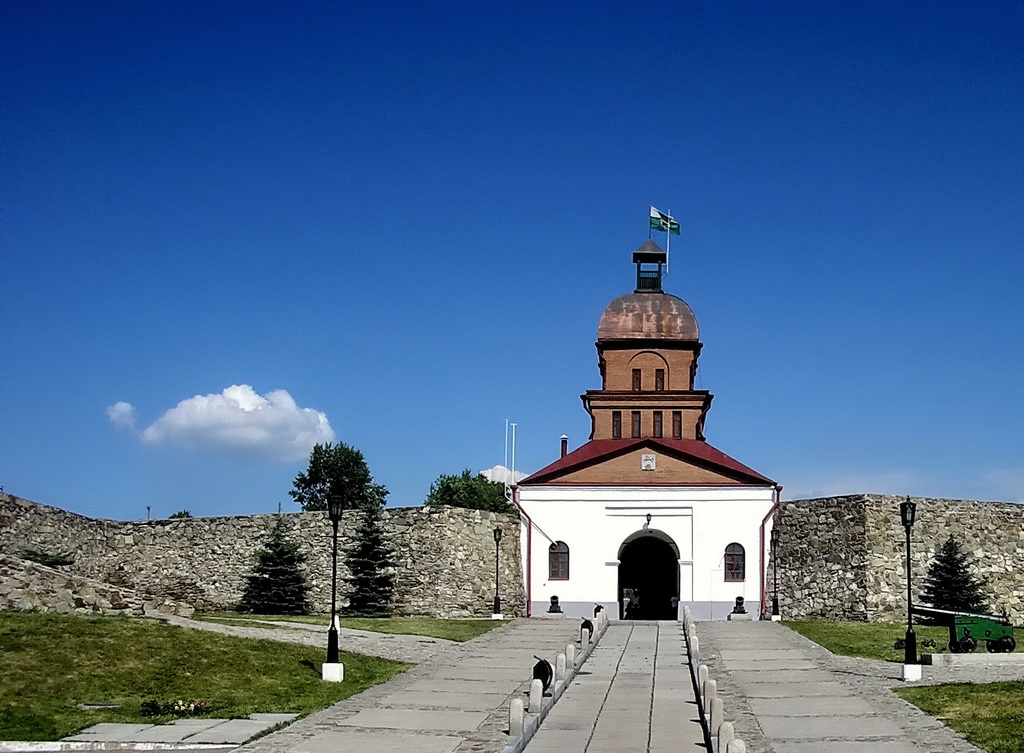
Kuznetsk Fortress ranks #6,427 of 9,040 worldwide in the atlas's castle fame ranking, and #115 of the 145 mapped in Russia. Founded 1800, it is older than 12% of the atlas's dated landmarks, one of 685 atlas entries founded in the 18th century. Its Wikipedia articles were opened 1,095 times in the last 60 days, more than 53% of the atlas. See how Russia compares in the castle statistics.
Kuznetsk Fortress (Russian: Кузне́цкая крепость, Kuznetskaya krepost) is a Russian fortress, a bastion of the Siberian line on the upper reaches of the Tom river, located in the Kuznetsk district of the city of Novokuznetsk, in Kemerovo Oblast–Kuzbass. It has been a cultural heritage object of federal importance since 1960. The stone fortress, on Voznesenskaya mountain, was built in the town of Kuznetsk in 1800–1820 by order of Emperor Paul I, as part of the Siberian line intended to protect southern Siberia from the Chinese threat. It has never taken part in hostilities since its construction.
In 1846 Kuznetsk Fortress was removed from the general staff and transferred to the Altai Mining Department. Today there is a museum in the fortress. In 1919 it was burnt down during the Russian Civil War. The image of the fortress is used as an emblem by some organisations in Novokuznetsk, notably by the newspaper Kuznetsky Rabochiy. It has been a museum since November 1991, and was restored in 1998, 2008 and 2018.
Machine-translated from “Forteresse de Kouznetsk” on the French Wikipedia, CC BY-SA 4.0.
View on the interactive castle map →